Show Notes
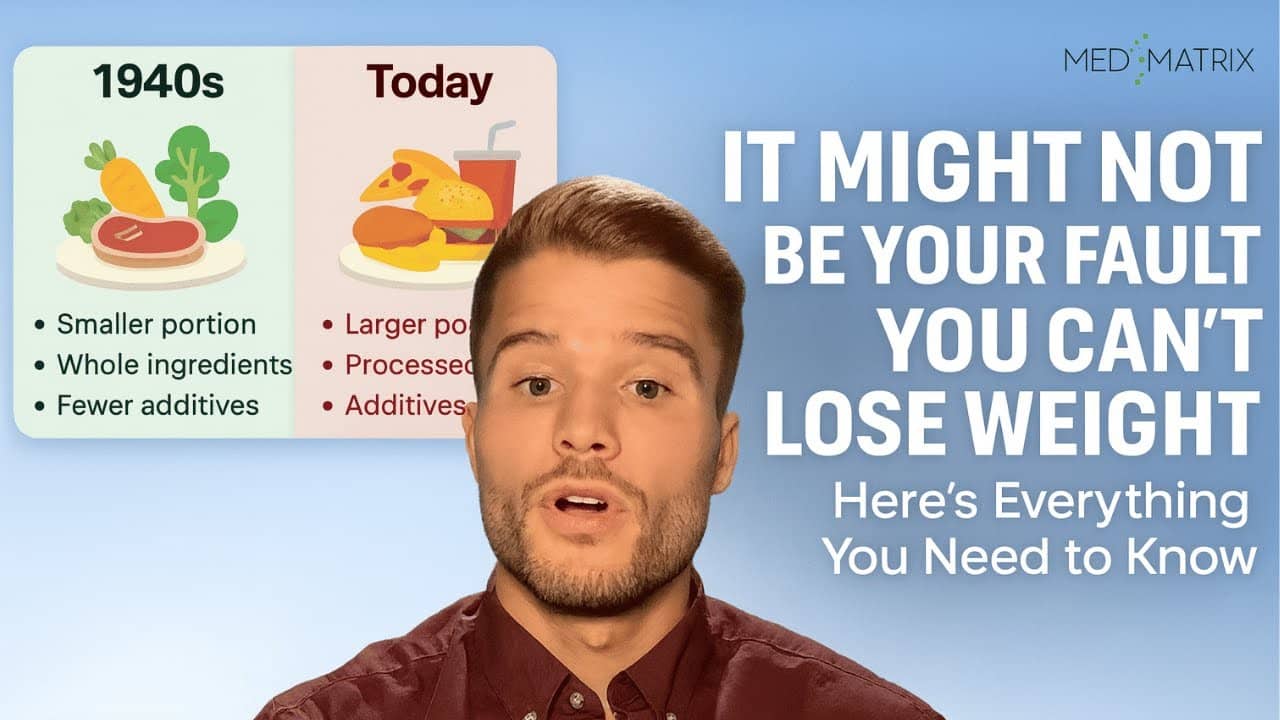
If you’ve been trying to lose weight… eating better, moving more, doing “all the right things”… and the scale still won’t budge, this video is for you.While it might be diet, lack of movement, or a season where you haven’t cared for your body the way you wanted to… it also might be something your doctor has never checked…
Your body may be working against you — not because you’re doing something wrong, but because something deeper is out of balance.
In today’s episode, Functional Medicine PA, Collin Dees, breaks down the real reasons so many adults struggle with stubborn weight:
🤫 Hidden hormone imbalances that your regular doctor never tests
🥱 Why low energy and poor sleep make weight loss feel impossible
😖 How stress, inflammation, and nutrient deficiencies silently slow your metabolism
🫠 And why the “calories in, calories out” model fails millions every year
If you’ve ever wondered “What’s wrong with me?” — you’re not alone. Patients come to Med Matrix every day feeling frustrated, dismissed, and told “everything looks normal”… even when nothing feels normal.
This video will help you understand why your body isn’t responding — and what you can ACTUALLY do about it.
Credit
Host: Cole Siefer
FAQ
1. Why do smart, disciplined people still struggle to lose weight?
Even highly disciplined people can struggle because modern life creates constant obstacles. Chronic stress, poor sleep, processed food environments, and exposure to chemicals and pesticides disrupt hormones and metabolism. Small daily choices also add up over time. Gaining just five pounds per year can result in fifty pounds over a decade without obvious changes in behavior.
2. What are the most common hidden drivers of weight gain Colin sees in patients?
The most common drivers include frequent restaurant or delivery meals, mindless evening snacking, chronic stress with elevated cortisol, poor sleep quality, and underlying hormonal dysfunction. These factors often go unrecognized but significantly affect fat loss.
3. Why does eating out make weight loss harder even when tracking calories?
Restaurant meals are designed for taste, not metabolic health. Chefs often add extra fats and sugars, making meals far more calorie-dense than expected. Some restaurant meals can contain an entire day’s worth of calories, which can undo a weekly calorie deficit very quickly.
4. What is insulin resistance and how does it slow fat loss?
Insulin resistance occurs when cells stop responding properly to insulin. Glucose stays in the bloodstream instead of entering cells for energy. This blocks fat burning and makes weight loss physiologically harder, even when calories are controlled.
5. Can someone with insulin resistance still lose weight?
Yes, fat loss is still possible with insulin resistance, but it requires more targeted strategies. Insulin resistance blocks lipolysis, which means the body has a harder time accessing stored fat, making progress slower without addressing the root cause.
6. What lab markers suggest insulin resistance is affecting weight?
Markers include elevated triglycerides, high fasting glucose, elevated A1C, and abnormal cholesterol levels. In the episode, Colin describes a patient with severe metabolic dysfunction whose labs improved significantly once insulin resistance was addressed.
7. When does Colin recommend a carnivore diet for weight loss?
He uses carnivore selectively, often as a temporary elimination diet or in cases of severe metabolic dysfunction. The goal is to remove carbohydrates and gut irritants in the simplest way possible, not to promote long-term restriction.
8. Is the carnivore diet effective because of protein or food elimination?
Colin emphasizes that most benefits come from removing inflammatory or problematic foods rather than adding protein. In some patients, eliminating trigger foods improves inflammation-related issues like joint pain or skin conditions.
9. How does poor sleep interfere with weight loss?
Poor sleep raises cortisol, which promotes fat storage around the midsection and destabilizes blood sugar. It also increases ghrelin, the hunger hormone, and lowers leptin, the hormone that signals fullness. Even short-term sleep deprivation can disrupt appetite regulation.
10. Is lack of sleep one of the most overlooked weight-loss factors?
Yes. Many people focus on diet and exercise but underestimate sleep. Research shows the average person sleeps less than previous generations, which contributes to hormonal disruption and stalled fat loss.
11. Does it become harder to lose weight with age?
Weight loss can become more difficult with age due to hormonal changes, particularly declining sex hormones. These shifts affect insulin sensitivity, energy levels, motivation, and how nutrients are stored in the body.
12. How do sex hormones like testosterone affect weight and motivation?
Testosterone improves insulin sensitivity and nutrient partitioning, helping calories go toward muscle instead of fat. Low testosterone also reduces motivation and energy, leading to less movement and lower activity levels.
13. How does thyroid function impact weight beyond metabolism?
Thyroid hormones regulate basal metabolic rate and cellular energy production. Low thyroid function reduces calorie burn at rest and decreases ATP production, which can make the brain think the body is starving and increase appetite.
14. Why do many people still struggle with weight even when thyroid labs are “normal”?
Conventional medicine often focuses on preventing disease rather than optimizing thyroid function. Functional medicine looks at optimal ranges and active thyroid hormone levels, which can explain why people feel unwell despite normal labs.
15. When are GLP-1 medications helpful and when should they be avoided?
GLP-1 medications are most helpful for people with obesity, diabetes, or consistent overeating. They reduce appetite and cravings but are not meant to replace long-term habits. Colin avoids using them in people with eating disorder patterns or those already near their goal weight.
