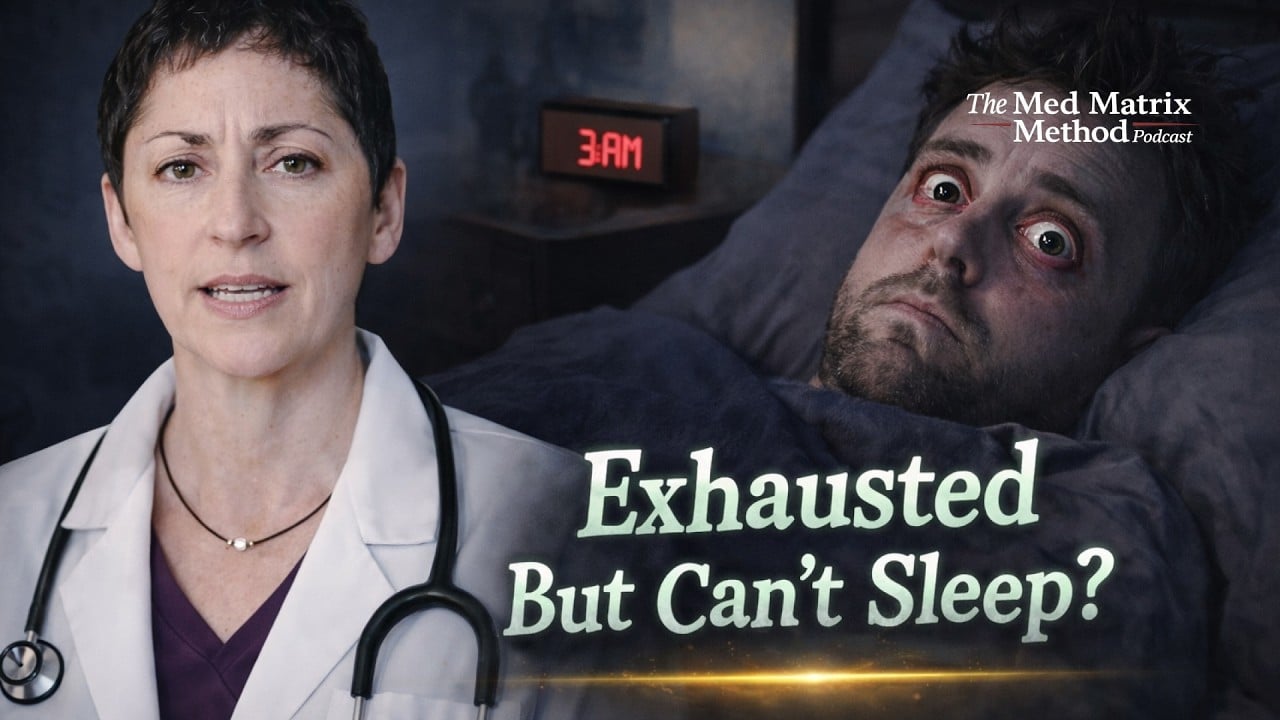
If you keep waking up around 3AM, it is not “just stress.”
A lot of the time, it is your stress system turning on at the wrong time.
In functional medicine, we look at the whole stress pathway, not just one lab number. That pathway is called the HPA axis. It is one of the biggest reasons people feel:
- Tired all day
- Wired at night
- Stuck with belly weight
- Low stress tolerance
- Light, broken sleep
Here’s what that means for you.
What the HPA axis is, in plain English
HPA stands for:
- Hypothalamus (in your brain)
- Pituitary (also in your brain)
- Adrenal glands (sit on top of your kidneys)
This is like a phone chain.
Your brain senses stress, then sends messages down the chain until your adrenal glands release cortisol. Cortisol is often called the “stress hormone.”
Cortisol is not bad. You need it.
The real issue is when your cortisol rhythm gets flipped.
Your cortisol rhythm is supposed to look like this
Ideally, cortisol follows a daily pattern.
- Highest in the morning (so you can wake up and feel alert)
- Then it drops through the day
- Lowest at night (so you can fall asleep and stay asleep)
When that rhythm gets off, your sleep gets off too.
And yes, that can show up as waking up at 3AM.
Why 3AM wake-ups can happen
If your cortisol is rising when it should be low, your body can pop you awake.
People often describe this as:
- You are tired, but your brain feels “on”
- You wake up and your mind starts thinking
- You feel anxious for no clear reason
- You can fall asleep at first, but cannot stay asleep
That “wired but tired” pattern is a classic sign of cortisol dysregulation.
The common root causes that push cortisol out of rhythm
This usually builds over time. Some of the most common drivers include:
1) Living in fight-or-flight for years
If your nervous system rarely feels safe, your body learns to stay “on.” Over time, it can affect cortisol output and sleep.
2) Shift work or late nights for a long time
When your schedule forces you to be awake at times your body expects sleep, your cortisol rhythm can shift.
3) Early childhood trauma
When stress happens while your brain and nervous system are still forming, the body can “wire in” a high-alert pattern. Even later in life, you may be safe now, but your body still acts like danger is nearby.
4) Stimulants like energy drinks, and sometimes ADHD stimulants
Some stimulants can push your system into a more “revved up” state and confuse your natural stress rhythm.
5) Overtraining and never getting real recovery
Some people can run hard for a while… until the body stops bouncing back. Sleep gets worse, anxiety can rise, and fatigue starts to feel heavy.
“Adrenal fatigue” vs real diagnoses
A lot of people say “adrenal fatigue,” but it is not an official medical diagnosis.
There are true medical conditions like:
- Addison’s disease (too little cortisol)
- Cushing’s disease (too much cortisol)
Those are real, but they are also relatively rare.
Most people are dealing with cortisol dysregulation, meaning cortisol is high or low at the wrong times.
Why the time of your cortisol test matters
Cortisol changes throughout the day.
So an 8AM blood draw and a 4PM blood draw should not look the same. The “normal range” is different depending on the time of day.
This is also why some people need deeper testing, like salivary cortisol, to see the full curve.
Your gut, liver, and hormones are more connected than you think
Your stress response is not only cortisol.
Your gut also plays a role through neurotransmitters, especially serotonin receptors in the gut.
And your liver matters because it helps manage cholesterol, and cholesterol is the raw material used to make pregnenolone, which then supports many hormones, including cortisol.
That means “fixing sleep” is often not just about melatonin. It can be about restoring the whole system.
What a real-world plan can look like
There is no one-size-fits-all plan, especially for the busy parent or the person who cannot “just take a week off.”
But there are patterns that help.
Here are the big buckets we look at:
1) Protect your nervous system every day
You may not be able to change your life responsibilities overnight, but you can change your internal response over time. Boundaries and support matter.
2) Clean up caffeine if it’s becoming a crutch
If you need four cups of coffee to function, that is usually a sign your sleep and cortisol rhythm are struggling.
Many people do fine with one to two cups, depending on how they personally handle caffeine.
3) Support the “low-hanging fruit” labs
In one example, chronic fatigue was linked with low cortisol, plus low vitamin D and low B12, even when thyroid labs looked normal.
When those basics improve, energy often starts to come back.
4) Gentle movement, not punishment
For people who feel depleted, the first step is often simple walking and gentle stretching, not crushing workouts.
5) If trauma is part of the story, it deserves real care
In that same example, addressing trauma with a strong therapist was part of the healing plan.
That is not “all in your head.”
It is your body learning safety again.
When you should get help
If you have tried the basics and you are still waking up at 3AM, dragging all day, or leaning on caffeine to survive, it is worth looking deeper.
This is where functional medicine testing and a personalized plan can be a game changer, especially if your labs have been called “normal” but you do not feel normal.
FAQ:
1. What is the HPA axis, and why does it matter so much?
It is the brain-to-adrenal communication pathway that controls cortisol and your stress response. When it is off, sleep, energy, mood, and weight can all suffer.
2. Where does this whole stress pathway start?
It starts in the hypothalamus, which begins the hormone signal that ends with cortisol release.
3. Can you restate the connection between the HPA axis and cortisol simply?
The brain sends messenger hormones that signal the adrenal glands to make cortisol, which shapes your stress response.
4. Is the HPA axis addressed in conventional medicine, or is it overlooked?
Conventional care recognizes true adrenal diseases like Addison’s and Cushing’s, but many people with cortisol dysregulation do not get deeper testing or answers.
5. What is “adrenal fatigue,” and is it a real diagnosis?
“Adrenal fatigue” is a popular phrase, but it is not a formal diagnosis. Most people mean cortisol dysregulation.
6. What are common causes of cortisol dysregulation?
Long-term stress, trauma, and shift work can all push cortisol out of rhythm over time.
7. What kinds of lifestyles create this problem?
Examples include the overworked high-achiever who runs on stimulants and overtraining, and the overwhelmed parent who is exhausted but cannot slow down.
8. What does the busy mom or dad do if they cannot just “take time off”?
You cannot always change your external stressors fast, but you can build boundaries and change your internal response, plus optimize sleep and support the adrenal system with a personalized plan.
9. How does coffee affect cortisol, and what does a healthy relationship with coffee look like?
People respond differently, but needing large amounts, like four cups in the morning, often signals dependence and possible cortisol and sleep issues. Many people do fine with one to two cups if anxiety and insomnia are not the main issue.
10. How does the gut affect your ability to deal with stress?
The gut affects neurotransmitters like serotonin, and the liver-gut system supports hormone building blocks needed for cortisol balance.
11. What other medications might affect the HPA axis?
Some stimulant medications used for ADHD can push the body toward a more “revved up” stress state and confuse natural rhythms over time.
12. How does early childhood trauma affect the HPA axis differently than trauma later in life?
Early trauma can shape the nervous system while it is still forming, wiring in hypervigilance and high nighttime cortisol that can take time and the right support to unwind.
13. What is mitochondrial dysfunction?
It is when your cells struggle to make energy efficiently, often after long-term stress and depletion.
14. Can you share a patient example of HPA axis dysregulation and what helped?
One example included long-term fatigue with low cortisol, low vitamin D, and low B12, plus a flattened cortisol curve. The plan included correcting nutrients, gentle movement, adrenal adaptogens, and psychotherapy support, with gradual improvement over time.
15. If someone has gone through conventional doctors and still has no answers, where should they go next?
The answer was to look for a root-cause, personalized approach where testing and the plan match the person, not just the diagnosis label.
16. “My cortisol spikes at night and drops hard mid-morning. What do I do?”
That pattern fits cortisol dysregulation. The key is getting the right testing and building a personalized plan instead of guessing with random supplements.
17. If someone has severe uncontrolled type 2 diabetes for years, what markers matter most and what is the strategy?
Key markers include A1C (3-month average blood sugar) and insulin (for insulin resistance). Strategy starts with diet, exercise, and tools that lower blood sugar, then personalizing from there.