
Does Thyroid Cause Weight Gain? What an Underactive Thyroid Really Adds

Forbes Health Advisory Board · Naturopathic Doctor · Updated October 14, 2026
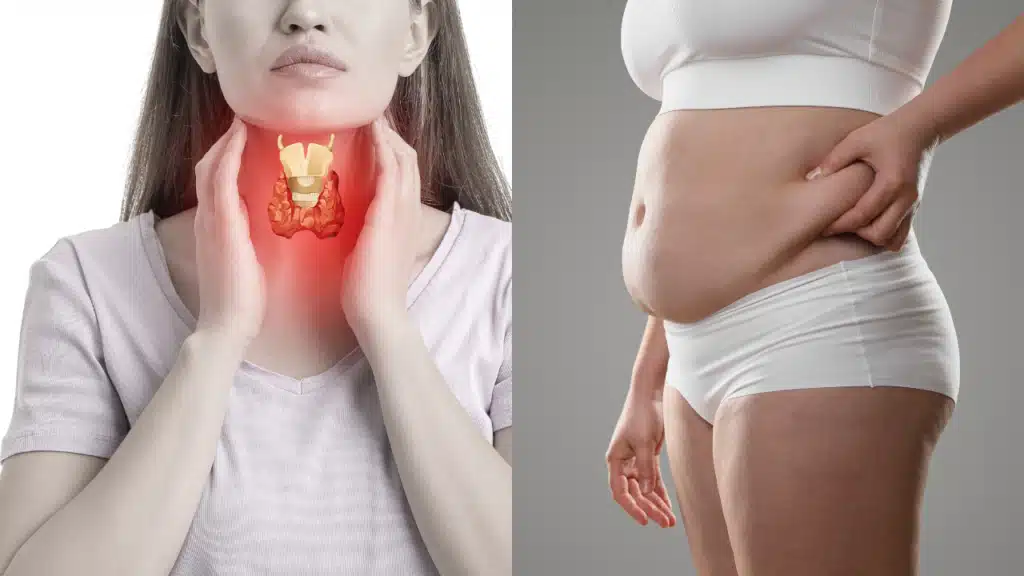
Yes, an underactive thyroid can cause weight gain, but usually less than people expect. The American Thyroid Association puts it at about 5 to 10 pounds for most patients, and says most of that is salt and water, not fat. If you've gained more than that, your thyroid may be part of the story, but something else may be behind the rest, and that's worth testing for.
That's a frustrating answer if you've gained 20 or 30 pounds and were hoping one blood test would explain all of it. It's also a useful one. Once you know how much the thyroid can account for, you can go looking for the rest instead of waiting for it to come off on its own.
What Are the Key Takeaways About Thyroid and Weight Gain?
- An underactive thyroid typically accounts for about 5 to 10 pounds, mostly salt and water, according to the American Thyroid Association.
- Nearly 5 out of 100 Americans ages 12 and older have hypothyroidism, according to the National Institute of Diabetes and Digestive and Kidney Diseases (NIDDK).
- The thyroid gland is essential for regulating metabolism and weight management.
- Hypothyroidism slows metabolism, leading to weight gain.
- Treatment for hypothyroidism is available but requires a holistic approach for best results.
- Addressing diet, exercise, and sleep is crucial for effective weight management in thyroid patients.
Does Thyroid Cause Weight Gain?
An underactive thyroid can, and an overactive one usually does the opposite. When the gland makes too little hormone (hypothyroidism), your body burns less energy at rest and holds on to more salt and water. That combination is where thyroid weight comes from.
The fluid part surprises most people. The American Thyroid Association says plainly that "most of the weight gained is actually due to retaining salt and water." So thyroid problems and weight gain do go together, but the thyroid's share is usually modest, and the ATA notes that the more severe the hypothyroidism, the more weight it can add.
Hashimoto's disease, an autoimmune condition, is the most common cause of hypothyroidism according to NIDDK. That's the link between Hashimoto's and weight gain: the weight follows the low thyroid hormone the disease causes.
How Much Weight Can Hypothyroidism Cause?
For most patients, about 5 to 10 pounds, per the American Thyroid Association. Underactive thyroid weight gain in that range is real, and it's worth treating. Gain well beyond that range is less likely to be thyroid alone, especially when the hypothyroidism is mild, though severe cases can add more.
When the gain is bigger than that, other causes can be stacked on top. Months of exhaustion that cut your activity to almost nothing. Sleep that stopped being restful. Blood sugar and insulin drifting up. Lost muscle. Midlife hormone shifts. Other medications. Usually more than one.
The ATA makes a related point about treatment: if your other hypothyroid symptoms improve once your thyroid is treated but the weight barely moves, "it is unlikely that the weight gain was only due to the thyroid." That tells you where to look next.
What is the Thyroid and Its Importance in Metabolism?
The thyroid gland is a key part of our body’s endocrine system. It’s shaped like a butterfly and sits in the neck. This small organ is vital for thyroid and metabolism by making important hormones.
Understanding Thyroid Function
The thyroid gland makes three hormones: Thyroxine (T4), Triiodothyronine (T3), and Calcitonin. Calcitonin helps with calcium, but T4 and T3 are key for metabolism and energy. These hormones boost cell activity and energy use.
Common Thyroid Disorders
Thyroid problems include hypothyroidism and Hashimoto’s thyroiditis. These issues affect hormone levels. An underactive thyroid can slow down metabolism and cause underactive thyroid weight gain.
Role of Thyroid Hormones in Metabolism
Thyroid hormones are crucial for many body functions, like energy use and temperature. They keep our body working well. If they’re off balance, our metabolism slows, and we might gain weight.
How Do Thyroid Disorders Contribute to Weight Gain?
Many people struggle with weight changes that don’t respond to diet or exercise. These changes might be linked to thyroid issues, which affect metabolism and body shape. Understanding thyroid disorders helps us see how they impact weight.
Hypothyroidism and Weight Gain
Hypothyroidism means the thyroid gland doesn’t work well, slowing down metabolism. This often leads to weight gain. The thyroid’s reduced function makes it harder for the body to burn calories.
With a slower metabolism and extra salt and water on board, the scale can climb even when your diet and exercise haven't changed. The American Thyroid Association puts that thyroid share at about 5 to 10 pounds for most patients, and once treatment brings thyroid levels back to normal, weight responds to diet and activity the same way it does for anyone else.
Connection Between Thyroid Health and Body Composition
Thyroid health is key to a balanced body. Thyroid hormones, T3 and T4, control many metabolic processes. They help decide how energy is used by muscles and fat.
When thyroid function is off, this balance is disrupted. Hypothyroidism adds weight that is mostly salt and water rather than fat. Hyperthyroidism can cause muscle loss and fat reduction, affecting strength and endurance.
| Thyroid Disorder | Impact on Weight | Body Composition Changes |
|---|---|---|
| Hypothyroidism | Weight Gain | Mostly salt and water retention |
| Hyperthyroidism | Weight Loss | Decreased fat and muscle mass |
| Normal Thyroid Function | Stable Weight | Balanced fat and muscle distribution |
What Does Thyroid Weight Gain Look Like?
Because most of it is salt and water, thyroid weight is more often puffiness than a new layer of fat. We've written a full guide to what a thyroid belly looks like and why it happens.
Does Hyperthyroidism Cause Weight Gain?
Usually the opposite. An overactive thyroid speeds up how fast you burn energy, and NIDDK lists "weight loss despite an increased appetite" among its symptoms. Graves' disease, an autoimmune condition, is the most common cause of hyperthyroidism, so the same applies to Graves'.
There are two exceptions worth knowing. The American Thyroid Association notes that some people with hyperthyroidism actually gain weight, depending on how much more they eat. And once treatment brings thyroid levels back to normal, the weight lost to extra thyroid hormone comes back. Some people gain beyond that, because they got used to eating more while the appetite was high.
Fast weight loss can look like good news and hide how serious an overactive thyroid is. Left untreated, it can also cause muscle loss. If you're losing weight without trying, or can't keep weight on, that's a reason to get tested. It isn't something to self-treat.
How Do You Recognize Symptoms of Thyroid-Related Weight Issues?
It’s important to know if your weight problems are linked to your thyroid. A healthy thyroid helps your body burn energy right. If it’s not working well, it can affect your weight and health.
Common Symptoms of Thyroid Dysfunction
Thyroid problems can show in many ways. You might feel:
- Fatigue
- Muscle weakness
- Hair thinning
- Weight changes
These signs can be hard to spot and might look like other health issues. If you notice them lasting, it’s best to see a doctor.
Distinguishing Signs of Weight Gain Due to Thyroid Issues
Weight gain can be a sign of thyroid problems. Look out for these signs:
- Weight gain without changing what you eat or how much you exercise.
- Dry skin and feeling very tired.
- Feeling cold more than usual.
- Swelling in the neck or hoarseness.
Spotting these signs early can help you get help sooner. This might stop more problems later.
| Symptom | Thyroid Dysfunction | Other Potential Causes |
|---|---|---|
| Weight Fluctuations | Hypothyroidism, Hyperthyroidism | Poor diet, Lack of exercise |
| Fatigue | Hypothyroidism | Sleep disorders, Anemia |
| Hair Thinning | Hypothyroidism | Nutrient deficiencies, Stress |
| Dry Skin | Hypothyroidism | Dehydration, Skin conditions |
Knowing how thyroid problems affect weight can help you manage your health better. Regular check-ups and watching for these symptoms are key. They can make a big difference in handling thyroid-related weight issues.
How Are Thyroid Problems Diagnosed?
Accurate diagnosis of thyroid problems is key for managing thyroid and weight management. Advanced thyroid function tests help identify thyroid gland issues. This leads to better treatment options.
Importance of Advanced Lab Testing
Advanced lab testing is crucial for diagnosing thyroid issues. It measures thyroid-stimulating hormone (TSH) levels. This gives us insights into thyroid activity.
Early detection through these tests helps with thyroid and weight management. It also makes it easier to handle weight-related concerns.
Tests Used to Assess Thyroid Function
Several thyroid function tests are used to check thyroid health. These include:
- TSH Test: Measures thyroid-stimulating hormone levels, showing thyroid activity.
- Free T4 Test: Checks free thyroxine levels, helping diagnose hyperthyroidism or hypothyroidism.
- Free T3 Test: Looks at the active thyroid hormone, important for metabolism.
- Thyroid Antibody Tests: Finds autoimmune conditions like Hashimoto’s or Graves’ disease.
| Test Name | Purpose | Indicators |
|---|---|---|
| TSH Test | Measures thyroid-stimulating hormone | Primary indicator of thyroid activity |
| Free T4 Test | Assesses free thyroxine | Hyperthyroidism or hypothyroidism diagnosis |
| Free T3 Test | Evaluates free triiodothyronine | Thyroid metabolism understanding |
| Thyroid Antibody Tests | Identifies autoimmune conditions | Hashimoto’s or Graves’ disease diagnosis |
What Are the Most Effective Treatment Options for Thyroid Conditions?
Dealing with thyroid issues requires a blend of traditional and modern medical methods. These treatments aim to fix hormonal imbalances. They help achieve optimal health and manage weight effectively.
Conventional Treatments vs. Functional Medicine
Traditional thyroid treatments, like synthetic hormones, are well-proven and widely used. They aim to bring hormone levels back to normal. On the other hand, functional medicine focuses on the whole person, not just symptoms. It seeks to find and fix the underlying problems.
Using both traditional and functional medicine together can offer a more complete approach. This combination helps in managing thyroid conditions and weight better.
| Treatment Option | Approach | Benefits |
|---|---|---|
| Conventional Treatment | Levothyroxine | Restores thyroid hormone levels |
| Functional Medicine | Holistic and personalized | Addresses root causes |
Will Treating My Thyroid Take the Weight Off?
It usually reverses the thyroid part, and not much more. The American Thyroid Association says treating hypothyroidism returns body weight to where it was before the hypothyroidism started, and that once thyroid levels are normal, gaining or losing weight works the same as it does for anyone else. So treatment takes off the thyroid share of the weight, and weight gained for other reasons needs its own plan.What levothyroxine actually does to your weight covers the 2026 evidence.
What Lifestyle Changes Support Thyroid Health?
Keeping your thyroid healthy often means making lifestyle changes. Eating right and staying active are key. Let’s explore how to care for this important gland.
Nutritional Considerations for Thyroid Support
For nutrition for thyroid health, certain nutrients are essential. Selenium and zinc are crucial. Selenium helps turn thyroid hormones into their active forms. Zinc aids in hormone production and keeps metabolism running smoothly.
Importance of Regular Exercise
Exercise is more than just for weight control, it’s vital for thyroid health. It boosts hormone production and metabolism. This helps keep your weight in check and boosts your overall health.
Try activities like brisk walking, yoga, or swimming to support your thyroid. Pairing these with a diet rich in nutrients is a strong way to support your thyroid health.
How to Lose Weight With Hypothyroidism
Start by making sure the thyroid itself is treated and the dose is actually working. Then treat the rest of the weight as its own project, because it usually is one.
- Get the whole thyroid picture. A TSH test alone doesn't show how much active hormone you have. Free T4, free T3, reverse T3 and both thyroid antibodies (TPO and thyroglobulin) fill in what it misses. More on that in why a normal TSH can still leave you with symptoms.
- Split the number into fat, muscle and water. Hypothyroidism adds fluid, so scale weight blurs what's happening. A body composition scan separates the three and shows whether the fluid share is shrinking as treatment takes hold.
- Test blood sugar alongside the thyroid. Fasting insulin and HbA1c belong on the same draw as your thyroid panel, because insulin trouble and low thyroid are separate problems that can stack.
- Keep your muscle. Muscle helps set how much energy you burn at rest, which matters more when the thyroid has already slowed that down. Our page on muscle loss covers why.
- Check the habits low thyroid wore down. Tiredness cuts activity and sleep quality, and some prescriptions affect weight in their own right.
Some people with a treated thyroid and stubborn extra weight are candidates for a prescription weight loss medication. Our medical weight loss program starts from your thyroid labs rather than around them.
Can IV Therapy Help Support Thyroid Function?
Only indirectly, and only when a nutrient deficiency is actually documented. IV therapy does not treat hypothyroidism, and no infusion restores thyroid hormone production. What it can do is correct a measured deficiency faster than oral supplements in someone whose gut does not absorb well.
The Iodine Warning Most Clinics Skip
Iodine is the one to be careful with, and plenty of wellness clinics get this backwards. Iodine is genuinely required to make thyroid hormone, so it sounds like an obvious supplement. But the American Thyroid Association says that, outside of preconception, pregnancy and breastfeeding, the U.S. diet generally contains enough iodine, from iodized salt, dairy, bread and seafood. For those three groups, the ATA recommends a daily multivitamin with 150 mcg of iodine. And if you have Hashimoto's, foods with large amounts of iodine, such as seaweed, and iodine supplements may cause or worsen hypothyroidism, according to NIDDK. Since Hashimoto's is the most common cause of hypothyroidism, pushing iodine at a hypothyroid patient may make the underlying problem worse rather than better. Outside of pregnancy and breastfeeding, we do not recommend iodine supplementation without testing that shows a deficiency, and we will tell you if your panel does not support it.
Nutrients Worth Measuring
- Vitamin D. Involved in immune regulation and commonly low in Maine, where winter sun is limited for months at a time. Low levels turn up often in autoimmune thyroid patients.
- Ferritin. Iron is needed for thyroid peroxidase, the enzyme that makes thyroid hormone. Ferritin can be near empty while a routine blood count still reads normal.
- Magnesium. Involved in hundreds of enzyme reactions and frequently depleted by chronic stress.
All three are on our panel of 80+ biomarkers, and the point of measuring them is to find out whether anything needs correcting at all. If your levels are fine, an infusion is not going to change how your thyroid works, and we would rather say so. You can read how we handle IV nutrient therapy and what we test before ordering one.
How We Sort Out Thyroid Weight From Everything Else
The question we're answering is how much of your weight is the thyroid and how much has another cause. We work through it in five steps.
- Free Discovery Call. We hear when the weight started, which thyroid symptoms came with it, and whether you've been diagnosed or treated yet.
- 80+ Biomarker Test & Full Body Scan. A full thyroid panel (TSH, free T3, free T4, total T4, T-uptake, reverse T3, TPO and thyroglobulin antibodies), plus the metabolic and nutrient markers that explain weight the thyroid doesn't. The InBody 770 scan reports body water alongside fat and muscle, which helps size the fluid share.
- Medical Team Reviews Everything. The team matches your thyroid results against your scan to see whether the pattern looks like thyroid weight, other weight, or both.
- 60-Minute Provider Consultation. Your provider walks you through the split and decides what to treat first, the thyroid, the rest, or both together.
- Ongoing Support & Progress. An InBody scan at every visit, with retesting against your own baseline, shows whether the thyroid share is coming off and what's left after it does.
Thyroid treatment can include T4, T3 or natural desiccated thyroid, and correcting nutrient deficiencies the labs actually show. Our thyroid and adrenal program is where that work happens.
How Do You Achieve Long-Term Health Beyond Weight Management?
Managing thyroid health is more than just about weight. We focus on long-term health with a complete approach. This includes diet, lifestyle, and regular thyroid checks. Our goal is to keep you well and prevent thyroid-related health problems.
Focusing on Holistic Well-Being
For lasting health, holistic thyroid management is key. It means eating well, staying active, and managing stress. These habits boost thyroid health and overall energy. This way, our patients do well, not just in weight, but in life.
Maintaining Optimal Thyroid Function for Overall Health
Keeping your thyroid in check is vital. We use advanced tests and tailor treatments to you. This helps catch and fix small thyroid issues early. It keeps you healthy and happy, avoiding thyroid problems.
Start Feeling Like Yourself Again
Frequently Asked Questions
Does thyroid cause weight gain?
An underactive thyroid can. The American Thyroid Association estimates about 5 to 10 pounds for most patients, and says most of it is salt and water rather than fat. An overactive thyroid usually causes weight loss instead. If you've gained much more than 10 pounds, the thyroid may not be the only cause, especially if the hypothyroidism is mild.
Does hypothyroidism cause weight gain?
Yes. Hypothyroidism slows how fast your body burns energy and makes it hold on to salt and water. The American Thyroid Association puts the thyroid-related gain at about 5 to 10 pounds for most patients, with more possible when the hypothyroidism is severe.
How much weight can you gain with hypothyroidism?
For most patients, about 5 to 10 pounds, according to the American Thyroid Association, and most of that is fluid. Severe hypothyroidism can add more. Gain well beyond that range can also have other causes, such as less activity while you're exhausted, poor sleep, rising insulin, lost muscle, midlife hormone changes or other medications.
Does hyperthyroidism cause weight gain?
Usually not. Hyperthyroidism means the thyroid works too hard and speeds up metabolism, so the body burns more calories, and it usually causes weight loss. The American Thyroid Association notes that some people gain weight anyway, depending on how much more they eat. Left untreated, it can also lead to muscle loss.
Does Graves' disease cause weight gain?
Not usually while it's active. Graves' disease is the most common cause of hyperthyroidism, and NIDDK lists weight loss despite an increased appetite among its symptoms. The American Thyroid Association notes that some people gain weight if they eat a lot more, and that weight lost to extra thyroid hormone comes back once levels return to normal.
Will I lose the weight once my thyroid is treated?
You'll usually lose the part your thyroid caused, and not much more. The American Thyroid Association says treatment returns weight to where it was before the hypothyroidism started. If your other symptoms improve but the scale barely moves, the rest of the weight likely has another cause worth testing for.
Does thyroid make your neck fat?
An enlarged thyroid can change how your neck looks. When the gland gets larger, called a goiter, the front of the neck can look swollen. That swelling is the gland itself, and NIDDK describes it as a possible sign of Hashimoto's disease. New swelling at the front of your neck is worth having checked.
What are the signs that weight gain is caused by a thyroid problem?
Thyroid-related weight gain often appears without any change in diet or exercise. Other clues include dry skin, feeling very tired, feeling cold more than usual, and swelling in the neck or hoarseness. If these signs last, it is worth getting your thyroid checked.
How are thyroid problems diagnosed?
Thyroid problems are diagnosed with advanced lab testing. A TSH test measures thyroid-stimulating hormone, while Free T4 and Free T3 tests check active hormone levels. Thyroid antibody tests can identify autoimmune conditions like Hashimoto's or Graves' disease, guiding a more accurate treatment plan.