
Functional Medicine
Longevity & Anti-Aging
Aging is inevitable. Declining is not. We use advanced testing, hormone optimization, peptide therapy, and metabolic protocols to help you maintain energy, strength, cognitive function, and quality of life as you age.

On This Page
- 01Aging vs. Declining: They're Not the Same Thing
- 02What We Optimize for Longevity
- 03Tools We Use for Longevity
- 04What Does a Longevity Doctor Do?
- 05How Our Longevity Program Differs from a Typical Anti-Aging Clinic
- 06What Lab Tests Are Used for Healthy Aging?
- 07Are Longevity Clinics Worth It?
- 08Common Symptoms We See
- 09Real Patients, Real Results
- 10What We Test for This Condition
- 11Frequently Asked Questions
On This Page
- 01Aging vs. Declining: They're Not the Same Thing
- 02What We Optimize for Longevity
- 03Tools We Use for Longevity
- 04What Does a Longevity Doctor Do?
- 05How Our Longevity Program Differs from a Typical Anti-Aging Clinic
- 06What Lab Tests Are Used for Healthy Aging?
- 07Are Longevity Clinics Worth It?
- 08Common Symptoms We See
- 09Real Patients, Real Results
- 10What We Test for This Condition
- 11Frequently Asked Questions
Aging vs. Declining: They're Not the Same Thing
Somewhere around 40, most people start noticing a shift. Less energy. Slower recovery. A few extra pounds that won't leave. Sleep that doesn't feel restorative anymore. Less sharpness at work. Lower motivation. Less drive in the gym. And if they mention it to their doctor, the response is almost always the same: "That's just part of getting older."
It's not. Getting older is unavoidable. Losing function is not. The decline most people experience after 40 is driven by measurable, testable, treatable changes in the body: hormone levels dropping, metabolic health deteriorating, muscle mass shrinking, inflammation increasing, nutrient levels falling. These are not mysteries. They show up on blood work. And they respond to intervention.
The conventional medical system doesn't address any of this until something breaks. Your testosterone drops 1 to 2 percent per year after 30 to 35. By your mid-40s, you could be at half your baseline. Your doctor says you're "in range." Women enter perimenopause as early as 35, but most doctors don't check hormones until periods stop entirely. Insulin resistance builds silently for years before it crosses the diabetes threshold. Vitamin D, B12, magnesium, and zinc decline with age, and nobody's testing them.
The result is that people spend decades in a slow decline that feels inevitable because nobody told them it wasn't. They accept less energy, more pain, more weight, worse sleep, and weaker cognition as "normal aging." It's not. It's preventable aging. And the earlier you catch it, the more you can do about it.
Telling a patient "you're just getting older" should be considered a failure of care. If a patient comes in not feeling well, the job is to find out why and fix it. Not to label it aging and send them home.
Inside Med Matrix
Everything Under One Roof
Advanced testing, personalized protocols, and real results from a team that treats the whole picture.
What We Optimize for Longevity
Longevity medicine is not about chasing a number on a birthday card. It's about maintaining the ability to do what you want to do for as long as possible. Energy to work. Strength to play with your kids or grandkids. Mental clarity to stay sharp. A body that recovers instead of breaking down. That's what we're building toward. If you want the underlying science, our guide to anti-aging medicine covers the biomarkers we track and why they matter.
- Hormones. Testosterone, estrogen, progesterone, thyroid, DHEA, cortisol. These regulate nearly everything: energy, body composition, sleep, mood, cognitive function, bone density, cardiovascular health, immune function. When they decline (which they do, in every human, with age), the downstream effects touch every system in the body. We test the full panel and optimize to where your body performs best, not just where it falls within a population average. For men, that might mean testosterone replacement therapy. For women, bioidentical hormone replacement. For both, thyroid optimization and adrenal support when indicated.
- Metabolic health. Insulin resistance is the silent driver behind weight gain, fatigue, brain fog, and eventually type 2 diabetes. Your doctor checks fasting glucose. We check fasting insulin, which catches the problem years earlier. We also look at HbA1c, triglycerides, and body composition (specifically visceral fat and lean muscle mass via InBody 770 scan). Muscle is the most important longevity organ in the body. The more muscle you have, the stronger your metabolic health and the longer you're likely to live. Losing it is one of the most dangerous things that happens with aging.
- Body composition. Your weight matters less than what your weight is made of. We track fat mass, lean muscle mass, visceral fat, and basal metabolic rate over time. The goal isn't just to lose weight. It's to lose fat and preserve (or build) muscle. That ratio determines your metabolic health, your physical resilience, and your long-term outcomes more than any single number on a scale.
- Inflammation. Chronic low-grade inflammation accelerates every aspect of aging. It drives cardiovascular disease, joint degeneration, cognitive decline, and cancer risk. We test inflammatory markers (CRP, ESR) and address the root sources: gut dysfunction, poor sleep, stress, hormonal imbalance, nutrient deficiencies, and dietary triggers.
Nutrients. Vitamin D, B12, ferritin, magnesium, zinc, selenium. These are the building blocks your body needs to produce hormones, run your immune system, regulate sleep, maintain bone density, and protect your brain. Most people over 40 are deficient in at least one. Your doctor isn't testing for any of them.
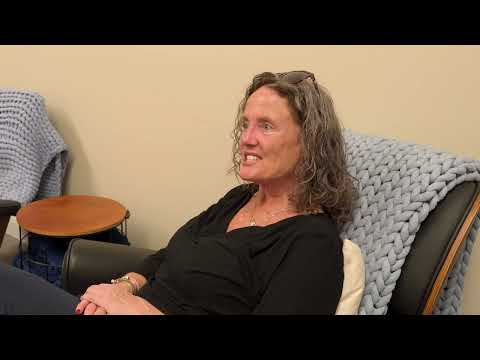
“I had PRP injections in my shoulder and that really helped. And guess what? I don't need surgery.”
Linda: PRP Saved Her From Surgery While Managing Lyme
Watch at 0:00 →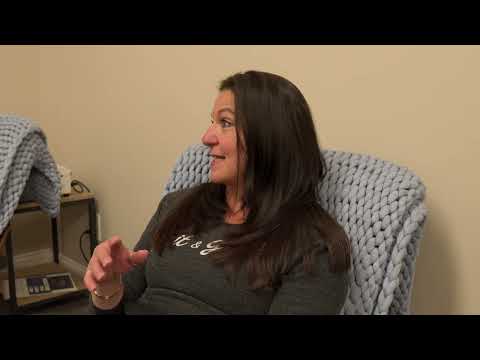
“I'm about 95% pain-free.”
Debbie: 95% Pain-Free After PRP for Hip Injury
Watch at 0:00 →Tools We Use for Longevity
Longevity isn't a single treatment. It's a system of tools layered together based on what your body actually needs.
- Bioidentical hormone replacement therapy (BHRT). Hormones that are chemically identical to what your body produces naturally, sourced from plants. For men: testosterone optimization. For women: estrogen, progesterone, and testosterone replacement customized to your lab results and symptoms. For both: thyroid optimization when needed. We use the DUTCH test (dried urine test for hormones) when deeper insight into hormone metabolism is required.
- Peptide therapy. Peptides are short chains of amino acids that signal your body to do specific things. Growth hormone peptides like CJC-1295 and Ipamorelin stimulate your body to produce its own growth hormone naturally (safer than exogenous HGH). BPC-157 supports gut healing and tissue repair. Thymosin Alpha-1 supports immune function. SS-31 and MOTS-c are exercise mimetics that support mitochondrial energy production. Each peptide has a specific job, and protocols are cycled on and off to prevent receptor burnout.
- GLP-1 medications for metabolic health. Tirzepatide and semaglutide aren't just weight loss drugs. They reduce inflammation, improve blood sugar regulation, and quiet compulsive eating patterns. For longevity patients, the anti-inflammatory and metabolic benefits extend beyond weight management. These medications are used as a tool within a larger protocol, not as a standalone fix. The goal is to fix the metabolic dysfunction and get off the medication, not stay on it indefinitely.
- IV nutrient therapy. Targeted infusions of vitamins, minerals, and antioxidants delivered directly into the bloodstream. For severely deficient patients, a vitamin D injection can produce noticeable improvement in energy and sleep within hours. IV glutathione supports detoxification. These are used strategically based on lab results, not generically.
- Body composition tracking. InBody 770 scans at every visit. We track fat mass, lean mass, visceral fat, hydration, and basal metabolic rate over time. This is how we know whether what you're doing is working, and it catches problems (like muscle loss during weight loss) before they become serious.
- Not sure which of these applies to you?Talk it through on a free call with a patient coordinator.
Resistance training and nutrition guidance. No longevity plan works without these. Lifting weights is how you keep muscle. Eating enough protein is how you build it. We counsel patients on protein targets, caloric minimums based on their basal metabolic rate, and resistance training frequency. Three to four sessions per week with weights is the minimum for most patients.
What Does a Longevity Doctor Do?
A longevity doctor focuses on extending your healthspan, not just your lifespan. The difference matters. Lifespan is the number of years you live. Healthspan is how many of those years you spend feeling strong, sharp, and independent. Most people spend their last decade or more in steady decline: losing muscle, losing cognitive function, managing chronic disease. Longevity medicine exists to push that decline as far into the future as possible.
Dr. Paul Laband, our medical director and board-certified internist, describes the approach as "backcasting." You start by asking: what do I want to be able to do at 70, 80, 90? Play with grandkids. Travel. Stay mentally sharp. Lift groceries without help. Then you work backward from that vision and ask what needs to be true today to protect that future. That's a fundamentally different question than "am I sick right now?"
In practice, a longevity visit at Med Matrix in South Portland covers five systems that determine how you age:
- Hormones (testosterone, estrogen, thyroid, DHEA, cortisol)
- Metabolic health (fasting insulin, HbA1c, lipid panel, visceral fat via InBody scan)
- Body composition (lean mass, fat mass, basal metabolic rate, hydration)
- Inflammation (hs-CRP)
- Nutrient status (vitamin D, B12, folate, ferritin, magnesium, copper)
We test 80+ biomarkers at our South Portland, Maine clinic and track them over time. The first visit establishes a baseline. Follow-up visits show trajectory. Are you building muscle or losing it? Is your inflammation improving? Are your hormones holding? This data-driven approach separates longevity medicine from generic wellness advice.
How Our Longevity Program Differs from a Typical Anti-Aging Clinic
Where we differ from typical anti-aging clinics is depth: we start with 80+ biomarkers and an InBody 770 scan before recommending anything.
Good longevity care looks at two layers at once. You want the measurable improvements (better body composition, more energy, sharper thinking, stronger libido) and the underlying system health that sustains them (optimal hormones, low inflammation, solid metabolic function, adequate nutrients).
Many anti-aging practices offer a narrow menu: testosterone for men, Botox and hormones for women, IV drips for energy. We start with data. 80+ biomarkers, an InBody 770 body composition scan, and a full health history before recommending anything. Then one of our providers spends a full hour going through results and building a plan. That plan might include bioidentical hormones, peptide therapy, metabolic support, or nutrient repletion, but it's built from your chemistry, not from a menu.
Gabriel Rocha, one of our providers who specializes in hormone optimization and peptide protocols for aging patients, often sees patients who've been to other clinics and received testosterone or a supplement stack without ever having their thyroid, insulin, cortisol, or gut health evaluated. Testosterone matters. But it's one lever among many, and pulling it without understanding the full picture limits how far you can go.
For what anti-aging medicine is and is not, read our guide to anti-aging medicine.
- Fasting InsulinCatches insulin resistance a decade before glucose goes abnormal. The single best metabolic test for predicting future disease risk.
- Free T3 + Reverse T3Active thyroid hormone and its blocker. Identifies subclinical thyroid dysfunction causing fatigue and metabolic slowdown.
What Lab Tests Are Used for Healthy Aging?
Standard annual blood work (CBC, metabolic panel, lipids) tells you almost nothing about how you're aging. It tells you whether something has already broken. Longevity medicine tests for the patterns that predict future decline, catching problems 5 to 15 years before they become diagnoses.
The most important tests your doctor isn't running:
- Fasting insulin. Your doctor checks fasting glucose. That only goes abnormal after years of metabolic dysfunction. Fasting insulin catches insulin resistance while it's still reversible, often a decade before a diabetes diagnosis. Insulin resistance drives weight gain, brain fog, inflammation, and cardiovascular risk.
- Full thyroid panel. TSH alone is not a thyroid test. Free T3 (active hormone), free T4, reverse T3, and thyroid antibodies give the complete picture. Subclinical thyroid dysfunction causes fatigue, weight gain, and cognitive decline that TSH misses entirely.
- ApoB and Lp(a). A standard lipid panel reports cholesterol totals. ApoB counts the particles that carry cholesterol into artery walls, and Lp(a) is a largely inherited risk marker. Both are part of our standard panel, and most routine draws stop before either one.
- DHEA-S. The precursor hormone to both testosterone and estrogen. DHEA declines steadily after 30. Low DHEA correlates with immune decline, bone loss, and reduced stress tolerance.
We also run hs-CRP, the standard cholesterol markers, vitamin D, B12, ferritin, magnesium, and sex hormones. The full panel is 80+ markers drawn in a single blood draw at your first visit. For an in-depth look at our testing philosophy, read our guide to advanced testing.
Are Longevity Clinics Worth It?
For people who want to stay strong, sharp, and independent as they age, a longevity clinic is worth it when the care is data-driven rather than a fixed menu of treatments. The value comes from catching measurable changes (declining hormones, rising insulin, lost muscle, chronic inflammation) years before they become diagnoses, then tracking whether the plan is actually working. At Med Matrix, that means 80+ biomarkers, an InBody 770 body composition scan at every visit, and a full hour with your provider to build and adjust the plan around your chemistry.
The alternative is often more expensive over time. Managing preventable conditions with ongoing prescriptions rarely fixes the underlying problem. A longevity program aims to reverse the drivers of decline so you need less medication, not more. If you are weighing what a baseline actually covers, our advanced testing page breaks down the full panel.
Common Symptoms We See
- Noticeably less energy than you had 5 or 10 years ago
- Slower recovery from exercise, injuries, or illness
- Gaining fat (especially around the midsection) despite similar habits
- Losing muscle mass or strength despite regular training
- Sleep that doesn't feel restorative anymore
- Mental sharpness declining: forgetting names, slower processing, less focus
- Lower motivation or drive than you're used to
- Joint stiffness or pain that appeared gradually over years
- Libido or sexual function declining
- Being told by your doctor that symptoms are 'just part of aging'
- Concern about your trajectory: wondering if decline is inevitable

Real Patients, Real Results
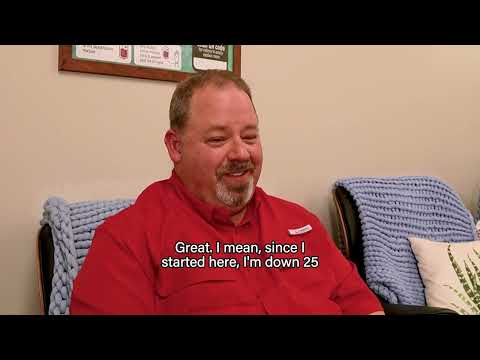
Gordon turned 65 and weighed 285 pounds. He'd been going to the same primary care doctor for 40 years. Monthly visits. The doctor never resolved his migraines, fatigue, high blood pressure, high cholesterol, or arthritis. Just kept covering up symptoms with prescriptions. Gordon described it plainly: "My doctor just covered up symptoms. Where here you're taking care of the issue."
Over about a year at Med Matrix, working with Dr. Rose, Gordon lost 50 pounds. He came off three prescription medications. His blood pressure normalized. His cholesterol normalized. His knee pain and arthritis went away. He's a carpenter, and he no longer needs a knee pad every time he kneels down. His coworkers ask him what happened because his energy is completely different.
Gordon's summary of the experience: "Life-changing. It's just incredible how seeing a doctor who cares and medicine that works." He also pointed out something that matters for anyone worried about the cost of functional medicine: "It's cheaper than going to your doctor every 3 months and not taking care of it."
His story illustrates the longevity principle perfectly. He didn't just lose weight. He reversed conditions that were shortening his life. He came off medications that were managing symptoms without fixing anything. And he did it through testing, dietary changes, and supplements. At 66, he has more energy and fewer health problems than he had at 60. That's longevity medicine in practice.
We've treated over 3,000 patients at Med Matrix with a 4.8-star rating across 190+ Google reviews. Our providers work together. If your doctor has been telling you that declining health is just part of getting older, we respectfully disagree.

“Life-changing. It's just incredible how seeing a doctor who cares and medicine that works.”
Gordon: Life-Changing Results at 65
Watch at 2:00 →“I had PRP injections in my shoulder and that really helped. And guess what? I don't need surgery.”
Linda: PRP Saved Her From Surgery While Managing Lyme
Patient Story
“I'm about 95% pain-free.”
Debbie: 95% Pain-Free After PRP for Hip Injury
Patient Story
“Life-changing. It's just incredible how seeing a doctor who cares and medicine that works.”
Gordon: Life-Changing Results at 65
Patient Story
What We Test for This Condition
Fasting Insulin
Catches insulin resistance a decade before glucose goes abnormal. The single best metabolic test for predicting future disease risk.
Testosterone (Total + Free)
Declines 1 to 2 percent per year after 30. Low testosterone drives muscle loss, fat gain, cognitive decline, and cardiovascular risk.
Free T3 + Reverse T3
Active thyroid hormone and its blocker. Identifies subclinical thyroid dysfunction causing fatigue and metabolic slowdown.
hs-CRP
Measures chronic low-grade inflammation, the silent accelerator behind cardiovascular disease, joint degeneration, and cognitive decline.
ApoB + Lp(a)
Cardiac markers in our standard panel. ApoB counts cholesterol-carrying particles, and Lp(a) is a largely inherited risk marker most routine panels skip.
Vitamin D (25-OH)
Deficiency impairs immune function, bone density, and muscle strength.
DHEA-S
Precursor to testosterone and estrogen. Declines after 30, and low levels correlate with immune decline and reduced stress tolerance.
HbA1c
Three-month average blood sugar. Combined with fasting insulin, it maps your full metabolic trajectory.
Ferritin
Iron storage. Both low ferritin (fatigue, poor oxygen delivery) and high ferritin (iron overload, organ damage) are longevity concerns.
From Our Podcast
Our providers answer common questions about this condition on the Med Matrix Method podcast.
Medicine 3.0 Explained: Healthspan vs Lifespan and How to Age Slower
- Q:What is the difference between healthspan and lifespan?
- Q:Why is exercise the most powerful lever for healthy aging?
What Is Peptide Therapy? A Safe Guide for Adults Over 40
- Q:Why do peptides become more relevant after 40?
- Q:How do growth hormone peptides support longevity?
Can Cognitive Decline Be Reversed? Early Signs and How to Protect Your Brain
- Q:How does cognitive decline start 20 to 30 years before symptoms appear?
- Q:What biomarkers predict brain aging?
Osteopenia vs Osteoporosis: What Your T-Score and DEXA Scan Really Mean
- Q:What is the difference between osteopenia and osteoporosis?
- Q:Why do women lose bone density faster after menopause?
Who Treats This Condition
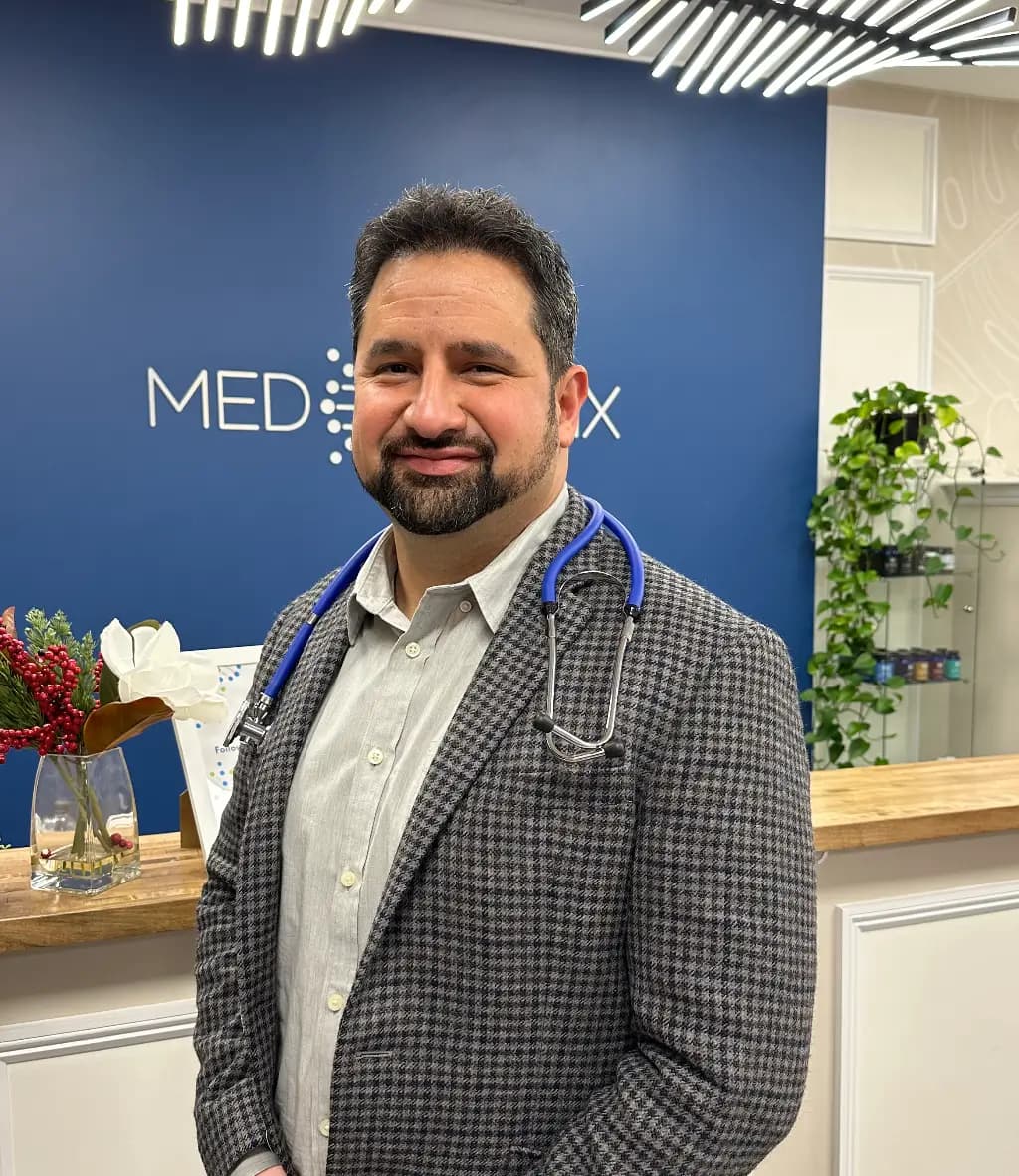
These providers specialize in this area and review every patient's case personally.

Free Resource
Get Your Free Practice Guide
Includes a $100 voucher toward your first visit
Everything you need to make an informed decision: pricing, testing catalog, process timeline, provider bios, and real patient stories. No commitment required.

Free Practice Guide + $100 Voucher
Everything you need before your first visit
STEP 1 OF 3
Enter your email to get instant access
We only accept a limited number of patients per week
EXPLORE
Related Content
Articles, patient stories, and podcast episodes about longevity & anti-aging.

FAQ
Longevity & Anti-Aging FAQ
No. In fact, your 40s are the ideal time to start. Hormone decline, metabolic changes, and muscle loss all begin in the 30s and accelerate through the 40s and 50s. By the time most people feel bad enough to seek help, they've been declining for a decade. Getting a baseline now and catching problems early means we can intervene before symptoms become serious. Prevention is always easier than reversal.
Most anti-aging clinics focus on aesthetics or offer a narrow set of treatments (testosterone for men, Botox for women). We look at the full picture. Hormones, thyroid, metabolic health, body composition, inflammation, nutrients, gut function, stress, and sleep. Your treatment plan is built from data, not from a menu. And we track results over time with lab work and body composition scans to make sure what we're doing is actually working.
Your first visit is a 30-minute testing appointment. We draw a panel of roughly 80 biomarkers and run an InBody 770 body composition scan. Your provider reviews everything before your one-hour visit, where you go through all your results together and build a personalized plan. Most patients tell us it's the most thorough health evaluation they've ever had.
Initial onboarding runs $1,500 all-in, covering your blood panel, body composition scan, provider prep, and your one-hour provider visit. Follow-up visits are $275. Hormone therapy typically costs $70 to $200 per month. Peptide costs vary by protocol. Supplements are $20 to $100 per month. We accept HSA, FSA, CareCredit, and all major cards. New patients get a $100 voucher toward their first visit.
For most patients pursuing longevity, hormone optimization is a long-term commitment. Your body's natural production declines with age, and that decline doesn't reverse on its own. Supplementing externally reduces your body's own production over time. That said, the goal is to feel and function at your best for as long as possible. Most patients find that once they experience the difference, the commitment is easy to maintain. Your provider will walk you through what to expect based on your specific labs and goals.
Muscle is your body's largest metabolic organ. It regulates blood sugar, protects your joints, supports bone density, and determines how well you recover from illness or injury. Research consistently shows that muscle mass and strength are among the strongest predictors of lifespan. People with more muscle live longer, stay independent longer, and have lower rates of metabolic disease, falls, and fractures. Losing muscle during weight loss or aging is one of the most dangerous things for long-term health. That's why resistance training and adequate protein are non-negotiable in any longevity plan.
It depends on how loud your symptoms are right now. If something is already wrong and you feel it every day, persistent fatigue, stubborn weight, brain fog, or hormone symptoms, start with the functional medicine side and get the root cause found and fixed first. If you feel mostly fine and your goal is to stay ahead of the curve and protect the decades ahead, the longevity program is your starting point. And if you are not sure which describes you, that is the most common situation of all. Either way you start with the same 80+ biomarker panel and body composition scan, so your provider can tell whether you are here to fix something or protect something (usually a bit of both). Our full breakdown of functional medicine vs longevity medicine on the blog walks through how to decide.
A longevity doctor may be called a longevity medicine physician, an age-management physician, or a functional or anti-aging medicine doctor. The titles differ, but the focus is the same: extending your healthspan by testing and optimizing hormones, metabolism, body composition, inflammation, and nutrients rather than only treating disease after it appears. At Med Matrix in South Portland, our providers approach longevity through 80+ biomarker testing and a full body composition scan, then build a plan from your own results.
Building and preserving muscle through regular resistance training is one of the most powerful things you can do for longevity. Muscle is your body's largest metabolic organ, and muscle mass and strength are among the strongest predictors of how long and how well you live. That is why we counsel patients on resistance training and adequate protein alongside hormone, metabolic, and nutrient optimization, and why we track lean mass on an InBody 770 scan at every visit.
Longevity and functional medicine care is typically not billed through insurance, because it focuses on prevention and optimization rather than treating an already-diagnosed disease. At Med Matrix, onboarding, provider visits, testing, and hormone or peptide therapy are paid out of pocket, but we accept HSA, FSA, CareCredit, and all major cards, and new patients receive a $100 voucher toward their first visit.
Related Services to Longevity & Anti-Aging

Your Health, Your Terms
Start Feeling Like Yourself Again
Get your free practice guide and a $100 voucher toward your first visit. No commitment, no pressure.