
Functional Medicine
Muscle Loss Treatment
Losing muscle isn't inevitable. It's a signal that something hormonal, metabolic, or nutritional is off. We test testosterone, growth hormone markers, thyroid function, and inflammatory markers to find why you're losing muscle and build a protocol to reverse it.

On This Page
- 01Why You're Losing Muscle Despite Working Out
- 02How We Reverse Muscle Loss
- 03What Are the Symptoms of Sarcopenia?
- 04Does Semaglutide Cause Muscle Loss?
- 05What Vitamin Stops Age-Related Muscle Loss?
- 06Muscle Loss, Sarcopenia, and Muscle Atrophy: What's the Difference?
- 07Common Symptoms We See
- 08What We Test for This Condition
- 09Frequently Asked Questions
On This Page
- 01Why You're Losing Muscle Despite Working Out
- 02How We Reverse Muscle Loss
- 03What Are the Symptoms of Sarcopenia?
- 04Does Semaglutide Cause Muscle Loss?
- 05What Vitamin Stops Age-Related Muscle Loss?
- 06Muscle Loss, Sarcopenia, and Muscle Atrophy: What's the Difference?
- 07Common Symptoms We See
- 08What We Test for This Condition
- 09Frequently Asked Questions
Why You're Losing Muscle Despite Working Out
You're training consistently. You're eating enough protein (or you think you are). But you're getting weaker, losing definition, and watching muscle disappear while fat accumulates. Your doctor says it's normal aging. It isn't.
Muscle loss (sarcopenia) accelerates when hormones decline. Testosterone is the primary anabolic hormone in both men and women. When it drops, muscle protein synthesis slows down regardless of how hard you train. Growth hormone declines. Thyroid function slows metabolism. Cortisol from chronic stress actively breaks down muscle tissue. Inflammation from gut dysfunction or poor metabolic health creates a catabolic environment where muscle can't be maintained.
The standard response from conventional medicine is "lift weights and eat more protein." That's good advice, but it doesn't work when the hormonal and metabolic environment won't support muscle growth. You can't out-train bad hormones.
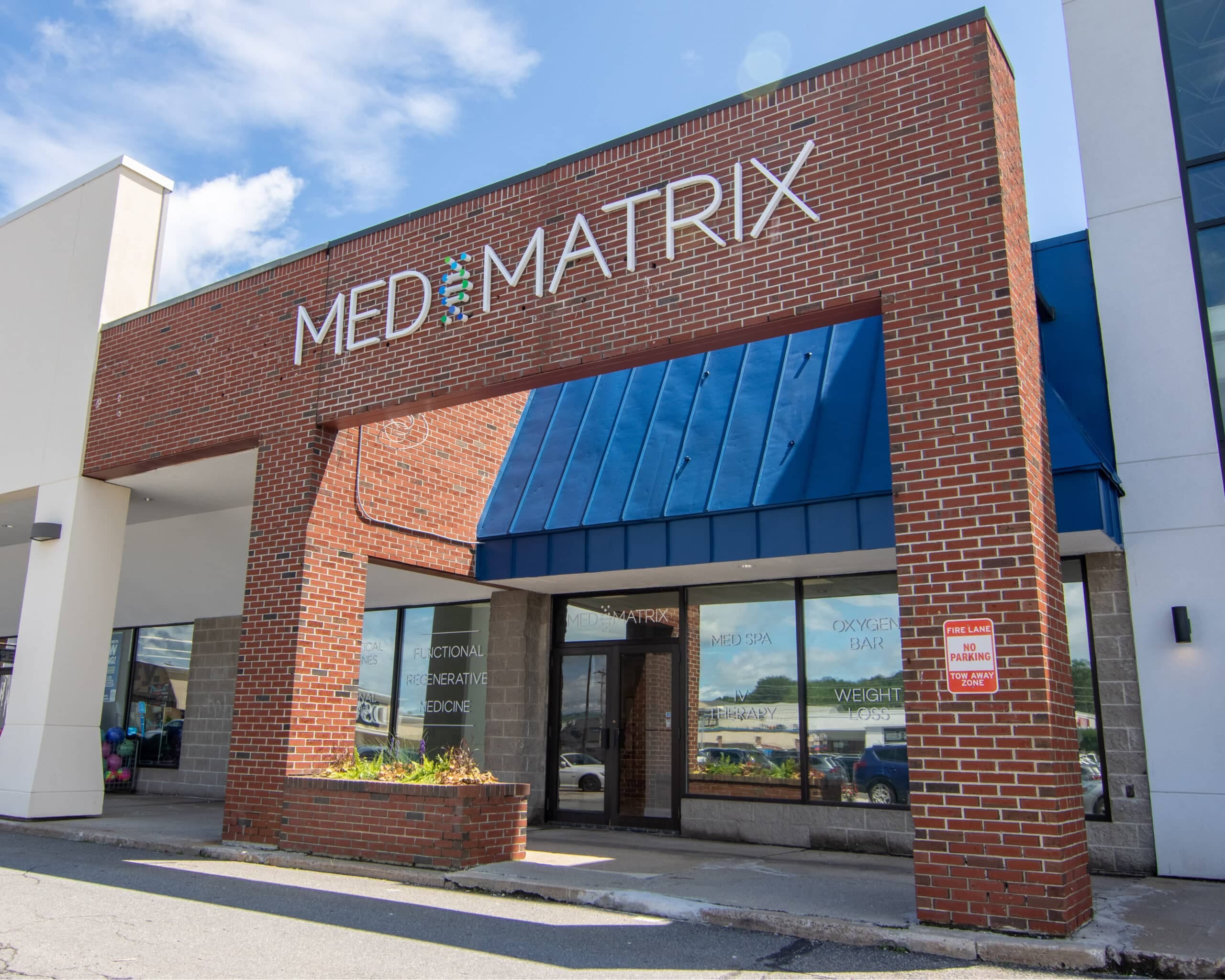
Inside Med Matrix
Everything Under One Roof
Advanced testing, personalized protocols, and real results from a team that treats the whole picture.
How We Reverse Muscle Loss
We start with the full picture: testosterone (total and free), estrogen, IGF-1 (growth hormone marker), thyroid panel, cortisol, inflammatory markers, insulin resistance markers, and nutrient status. Then we build a protocol based on what's actually deficient.
- Testosterone optimization. TRT when indicated, or alternatives like enclomiphene for younger men who want to preserve fertility. Testosterone is the foundation of muscle maintenance.
- Peptide therapy. Growth hormone secretagogues like CJC-1295/Ipamorelin to support lean mass and recovery. BPC-157 for tendon and tissue repair.
- Thyroid optimization. Subclinical hypothyroidism slows metabolism and impairs recovery. We optimize, not just normalize.
- Inflammation reduction. Chronic inflammation is catabolic. We identify the source (gut, metabolic, hormonal) and address it.
- Metabolic support. Insulin sensitivity, nutrient absorption, and protein utilization. Making sure your body can actually use what you're putting into it.
- Not sure which of these applies to you?Talk it through on a free call with a patient coordinator.
Patients typically see measurable changes in body composition within 8-12 weeks. We track progress with InBody 770 body composition scans at each visit.
What Are the Symptoms of Sarcopenia?
Sarcopenia (age-related muscle loss) doesn't announce itself with a single dramatic event. It creeps in over years, and most people attribute the changes to "getting older" rather than recognizing them as a treatable medical condition.
The pattern usually starts subtly. Getting up from a low chair or the floor becomes harder. Stairs feel heavier. Recovery from a gym session takes days instead of hours. Grip strength weakens. You notice less definition in your arms and legs even though your weight hasn't changed (or has gone up). Your balance feels less stable. You're sorer after physical work that used to feel routine.
By the time most doctors would diagnose sarcopenia, significant muscle mass has already been lost. The clinical threshold is typically a skeletal muscle index below a certain percentile for your age, but functional decline starts well before you cross that line. That's why we use InBody 770 body composition scans at every visit. The InBody measures segmental lean mass, body fat percentage, and visceral fat with medical-grade accuracy. It catches muscle loss trends early, when they're easiest to reverse.
The standard medical response to muscle loss is "exercise more." That's correct but incomplete. If your testosterone is at 250 when optimal is 600 to 800, if your thyroid is sluggish, if growth hormone output has declined, if you're in a chronic inflammatory state, then exercise alone won't rebuild muscle efficiently. You're fighting biology with willpower, and biology wins. Our approach in South Portland is to fix the biology first, then let the exercise do what it's supposed to.
- Testosterone (Total + Free)The primary anabolic hormone. Low testosterone is the most common hormonal cause of muscle loss in both men and women.
- IGF-1Insulin-like growth factor 1 reflects growth hormone output. Low IGF-1 means your body's muscle-building and repair signals are diminished.
- Free T3Active thyroid hormone that drives metabolic rate. Low free T3 slows recovery and impairs muscle protein synthesis.
- hs-CRPChronic inflammation is catabolic, meaning it actively breaks down muscle tissue. Reducing hs-CRP is essential for muscle preservation.
Does Semaglutide Cause Muscle Loss?
This is one of the most common questions we hear, and the honest answer is: it can, if it's not managed properly.
GLP-1 medications like semaglutide (Ozempic, Wegovy) and tirzepatide (Zepbound) cause significant weight loss. Some of that weight is fat. Some of it is muscle. Studies show that 20 to 40 percent of weight lost on GLP-1 medications can be lean mass (muscle) if the patient isn't actively protecting against it. That's a serious problem, because losing muscle tanks your metabolism, increases injury risk, worsens insulin sensitivity, and accelerates the very metabolic dysfunction the medication is treating.
Ryan, one of our patients on semaglutide, put it well: "A lot of people go on these GLP-1s and if it's not managed right, they lose muscle. They lose some weight but they lose muscle and then they're injury prone." His protocol at Med Matrix included resistance training guidance and regular InBody scans alongside his GLP-1 prescription. He put on muscle mass while losing fat.
The difference is management. At Med Matrix, every patient on semaglutide or tirzepatide gets:
- Baseline and ongoing InBody 770 scans tracking lean mass separately from fat mass
- Protein intake targets based on their body composition (typically 0.7 to 1.0 grams per pound of lean mass)
- Resistance training guidance (3 to 4 sessions per week minimum)
- Hormone evaluation, because low testosterone combined with a GLP-1 is a recipe for accelerated muscle loss
- Peptide therapy when indicated (growth hormone peptides like CJC-1295/Ipamorelin support lean mass preservation)
The same applies to tirzepatide and the common question of whether fasting causes muscle loss. Extended fasting without adequate protein and resistance training can accelerate muscle breakdown, especially in patients over 40 with declining hormones. We design protocols that protect muscle while achieving fat loss.
Muscle Loss, Sarcopenia, and Muscle Atrophy: What's the Difference?
These terms overlap but aren't identical. Muscle loss is the general term for losing muscle mass and strength. Sarcopenia is age-related muscle loss that progresses gradually from your 30s onward. Muscle atrophy is the shrinking of a specific muscle, which can come from disuse (a limb in a cast), poor nutrition, or a nerve problem.
The distinction matters because the fix depends on the cause. Disuse atrophy usually rebuilds with training and protein alone. Sarcopenia and diffuse, whole-body muscle loss are more often driven by declining hormones, sluggish thyroid, chronic inflammation, and insulin resistance, which is exactly why exercise alone stalls. We test 80+ biomarkers to identify which of these drivers apply to you, then build the protocol around what's actually deficient.

Common Symptoms We See
- Difficulty getting up from a chair or the floor without using your arms
- Feeling weaker during exercises you used to do easily
- Losing muscle definition despite consistent training
- Weight staying the same or increasing while clothes fit differently (fat replacing muscle)
- Slower recovery from workouts (days instead of hours)
- Decreased grip strength or trouble opening jars
- Balance feeling less stable than it used to
- More soreness after physical work that used to feel routine
- Muscle cramps or spasms, especially at night
- Losing weight on a GLP-1 medication and concerned about what you're losing
In Their Words
“My old level was really probably closer to my baseline. And if you take that and cut it in half, even though my half was still in what medical professionals say is an acceptable range, that's not necessarily what's acceptable for my body.”
Ryan: Why 'Normal Range' Wasn't Normal for Him
Patient Story
“I am less fatigued. I am more resilient. And I am not getting nearly as beaten up by the job as it often does.”
Jonathan: Nurse on TRT, More Energy and Lean Muscle
Patient Story
“I feel like my skin gets tighter every day. I'm leaning out a little bit. The lean muscle mass is up. Energy levels feel better. Sex drive feels better.”
Stephen: More Energy, Lean Muscle, Better Drive on TRT
Patient Story
“My old level was really probably closer to my baseline. And if you take that and cut it in half, even though my half was still in what medical professionals say is an acceptable range, that's not necessarily what's acceptable for my body.”
Ryan: Why 'Normal Range' Wasn't Normal for Him
Patient Story
“I wake up and not feel that, you're like, 'Wow.' My quality of life is completely different.”
Caleb: Quality of Life Completely Changed
Patient Story
“I ran over 6 miles, no pain at all.”
Eric: BPC-157 Resolved Chronic Knee Pain in One Month
Patient Story
“I had PRP injections in my shoulder and that really helped. And guess what? I don't need surgery.”
Linda: PRP Saved Her From Surgery While Managing Lyme
Patient Story
“I'm about 95% pain-free.”
Debbie: 95% Pain-Free After PRP for Hip Injury
Patient Story
“Life-changing. It's just incredible how seeing a doctor who cares and medicine that works.”
Gordon: Life-Changing Results at 65
Patient Story
What We Test for This Condition
Testosterone (Total + Free)
The primary anabolic hormone. Low testosterone is the most common hormonal cause of muscle loss in both men and women.
IGF-1
Insulin-like growth factor 1 reflects growth hormone output. Low IGF-1 means your body's muscle-building and repair signals are diminished.
Free T3
Active thyroid hormone that drives metabolic rate. Low free T3 slows recovery and impairs muscle protein synthesis.
Fasting Insulin
Insulin resistance shifts metabolism toward fat storage and muscle breakdown. Catching it early protects lean mass.
Vitamin D (25-OH)
Below 30 ng/mL is associated with muscle weakness and sarcopenia.
Magnesium (RBC)
Required for muscle contraction and protein synthesis. Serum magnesium misses deficiency. Red blood cell testing is accurate.
hs-CRP
Chronic inflammation is catabolic, meaning it actively breaks down muscle tissue. Reducing hs-CRP is essential for muscle preservation.
Cortisol
Chronically elevated cortisol from stress breaks down muscle for energy. Testing confirms whether stress hormones are sabotaging your training.
HbA1c
Long-term blood sugar marker. Poor glucose control impairs muscle recovery and drives the metabolic dysfunction behind sarcopenia.
From Our Podcast
Our providers answer common questions about this condition on the Med Matrix Method podcast.
Medicine 3.0 Explained: Healthspan vs Lifespan and How to Age Slower
- Q:Why is muscle the most important organ for longevity?
- Q:How does exercise release myokines that protect against muscle loss?
What Is Peptide Therapy? A Safe Guide for Adults Over 40
- Q:How do growth hormone peptides support lean mass after 40?
- Q:Can peptides help prevent muscle loss during weight loss treatment?
Stem Cell Therapy for Knees: What Actually Works in Regenerative Medicine
- Q:What is the vicious cycle of pain, inactivity, and muscle loss?
- Q:How does testosterone support recovery from physical activity?
Who Treats This Condition
These providers specialize in this area and review every patient's case personally.
Free Resource
Get Your Free Practice Guide
Includes a $100 voucher toward your first visit
Everything you need to make an informed decision: pricing, testing catalog, process timeline, provider bios, and real patient stories. No commitment required.
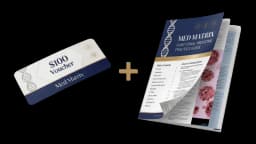
Free Practice Guide + $100 Voucher
Everything you need before your first visit
STEP 1 OF 3
Enter your email to get instant access
We only accept a limited number of patients per week
EXPLORE
Related Content
Articles, patient stories, and podcast episodes about muscle loss treatment.


FAQ
Muscle Loss Treatment FAQ
Not necessarily. We test first and only recommend TRT when labs confirm deficiency. Some patients respond to lifestyle optimization, peptides, or nutrient repletion alone. The protocol depends entirely on your results.
Absolutely. Women lose muscle at an accelerated rate after perimenopause as testosterone and growth hormone decline. Hormone optimization makes a significant difference in maintaining lean mass.
InBody 770 body composition scans measure skeletal muscle mass, body fat percentage, and segmental lean mass. We scan at baseline and at follow-up visits to objectively track changes.
For most people, yes. When muscle loss is driven by low hormones, sluggish thyroid, chronic inflammation, or poor nutrition rather than permanent nerve damage, correcting those drivers alongside resistance training lets the body rebuild. We confirm the cause with 80+ biomarker testing and track lean mass on InBody 770 scans, with measurable body composition changes typically within 8 to 12 weeks.
Yes. Age itself doesn't stop muscle growth. Declining testosterone, growth hormone, and thyroid output do, and those are treatable. Older adults build muscle when the hormonal and metabolic environment supports it and they train with resistance, which is why we optimize what's deficient first, then let training work.
It can when it isn't managed. GLP-1 medications like Ozempic, Wegovy, and Zepbound cause rapid weight loss, and studies show 20 to 40 percent of the weight lost can be muscle rather than fat if lean mass isn't actively protected. We protect muscle with protein targets, resistance training, hormone support, and InBody scans that track muscle separately from fat. See our weight loss treatment approach for how the two work together.
No single vitamin stops muscle loss, but vitamin D, magnesium, B12, and zinc are each essential for muscle function and protein synthesis, and a deficiency in any of them impairs your ability to hold muscle. We test nutrient levels rather than guessing. Keep in mind that hormones drive muscle maintenance while nutrients support it, so both need to be addressed together.
Most patients see measurable body composition changes within 8 to 12 weeks once the underlying drivers are corrected and resistance training is in place. We track progress objectively with InBody 770 scans at each visit, measuring skeletal muscle and body fat separately rather than relying on the scale.
Related Services to Muscle Loss Treatment
Your Health, Your Terms
Start Feeling Like Yourself Again
Get your free practice guide and a $100 voucher toward your first visit. No commitment, no pressure.