
Functional Medicine
Thyroid and Adrenal Fatigue Treatment
Your doctor checked your TSH and said your thyroid is fine. But you're still gaining weight, losing hair, freezing cold, and exhausted. TSH alone misses most thyroid dysfunction. We run a full panel: free T3, free T4, reverse T3, thyroid antibodies. And we test cortisol patterns because thyroid and adrenal function are inseparable.

On This Page
- 01Your Thyroid Isn't 'Fine'
- 02Full Thyroid and Adrenal Evaluation
- 03What Causes Thyroid Problems That Your Doctor Keeps Missing?
- 04Is Adrenal Fatigue Real, and How Is It Treated?
- 05What Is a Reverse T3 Test, and Why Does It Matter?
- 06How Long Does It Take to Recover From Adrenal Fatigue?
- 07Common Symptoms We See
- 08What We Test for This Condition
- 09Frequently Asked Questions
On This Page
- 01Your Thyroid Isn't 'Fine'
- 02Full Thyroid and Adrenal Evaluation
- 03What Causes Thyroid Problems That Your Doctor Keeps Missing?
- 04Is Adrenal Fatigue Real, and How Is It Treated?
- 05What Is a Reverse T3 Test, and Why Does It Matter?
- 06How Long Does It Take to Recover From Adrenal Fatigue?
- 07Common Symptoms We See
- 08What We Test for This Condition
- 09Frequently Asked Questions
Your Thyroid Isn't 'Fine'
Thyroid dysfunction is the most underdiagnosed condition in America. Hashimoto's thyroiditis alone affects an estimated 14 million Americans, most of whom don't know they have it. Why? Because the standard screening test (TSH) doesn't catch it until the gland is significantly damaged.
TSH can be "normal" while your free T3 (the active thyroid hormone) is low, your reverse T3 is high (blocking thyroid activity), or your antibodies are elevated (your immune system is attacking your thyroid). All of these produce symptoms: fatigue, weight gain, hair loss, cold intolerance, brain fog, constipation, depression. And all of them are invisible on a standard TSH test.
The adrenal glands compound the problem. When you're chronically stressed, cortisol stays elevated. High cortisol suppresses thyroid hormone conversion (T4 to T3) and increases reverse T3. So even if your thyroid gland is working, the hormone can't get into your cells. Treating the thyroid without addressing cortisol is like pushing the gas pedal with the parking brake on.
Inside Med Matrix
Everything Under One Roof
Advanced testing, personalized protocols, and real results from a team that treats the whole picture.

Full Thyroid and Adrenal Evaluation
Our thyroid panel includes TSH, free T3, free T4, reverse T3, TPO antibodies, and thyroglobulin antibodies. We also assess cortisol patterns, sex hormones (which interact directly with thyroid), and nutrient cofactors (iodine, selenium, zinc, iron, vitamin D).
- Hashimoto's identification. Thyroid antibodies tell us if your immune system is attacking your thyroid. This changes the entire treatment approach. Conventional medicine waits until the gland fails. We intervene early.
- T3 optimization. Many patients convert T4 poorly to active T3. We identify conversion issues and address them through nutrient support, stress management, and when needed, T3 supplementation.
- Reverse T3 patterns. Elevated reverse T3 blocks thyroid receptors even when other numbers look normal. This is a stress and inflammation pattern that requires a different approach than standard thyroid medication.
- Cortisol restoration. HPA axis dysfunction (adrenal fatigue) impairs thyroid function at every level. We assess cortisol patterns and restore healthy adrenal function.
- Autoimmune triggers. If Hashimoto's is present, we look for triggers: gut permeability, gluten cross-reactivity, infections, and toxin exposure that drive the immune attack.
- Not sure which of these applies to you?Talk it through on a free call with a patient coordinator.
Treatment is personalized. Some patients need thyroid medication. Others need gut repair and stress management. Most need a combination. We monitor and adjust until symptoms resolve and labs optimize.
What Causes Thyroid Problems That Your Doctor Keeps Missing?
The standard thyroid screening in conventional medicine is a single test: TSH. That's a signaling hormone from the pituitary gland. Checking TSH alone is like checking whether your thermostat sent a signal, without looking at whether the furnace actually turned on, whether the heat reached the rooms, or whether someone left the windows open.
A full thyroid evaluation requires six markers, not one:
- TSH. The signaling hormone. Useful but incomplete on its own.
- Free T3. The active thyroid hormone. This is what actually drives your metabolism, energy, temperature regulation, and mental clarity. It can be low while TSH sits in "normal" range.
- Free T4. The storage form that must be converted to T3 to work. Many patients make enough T4 but convert it poorly.
- Reverse T3. A blocking hormone. When your body is under chronic stress or inflammation, it converts T4 into reverse T3 instead of active T3. Your thyroid numbers look fine on paper, but the hormone can't get into your cells.
- TPO Antibodies. Detects Hashimoto's thyroiditis, where your immune system attacks your thyroid. Affects an estimated 14 million Americans, most undiagnosed.
- Thyroglobulin Antibodies. A second autoimmune marker that confirms or rules out immune-driven thyroid damage.
We run all six on every patient. In our experience treating over 3,000 patients, roughly half the people who were told their thyroid was "fine" have a pattern that shows up only on the expanded panel. Subclinical hypothyroidism, poor T4-to-T3 conversion, elevated reverse T3, or early Hashimoto's with antibodies climbing while TSH stays within range.
If you've been told your thyroid is normal but you're still gaining weight, losing hair, freezing cold, and exhausted, your doctor probably only ran one test. Read more about what a full thyroid panel reveals.
Is Adrenal Fatigue Real, and How Is It Treated?
The medical establishment says "adrenal fatigue" isn't a real diagnosis. They're half right. Your adrenal glands don't get tired. But HPA axis dysfunction (the technical term) is real, measurable, and well-documented in the research.
The HPA axis is the communication loop between your hypothalamus, pituitary gland, and adrenal glands. It controls your cortisol rhythm: high in the morning to wake you up, gradually dropping through the day, lowest at night so you can sleep. Chronic stress, poor sleep, inflammation, and gut dysfunction can break this rhythm.
Patients with HPA axis dysfunction describe the same pattern over and over. Dragging themselves out of bed. A brief window of feeling okay mid-morning. Crashing hard around 2 to 3pm. Then getting a second wind at 10pm when they should be winding down. Their doctor says their cortisol is "normal" because they ran a single morning blood draw, which misses the pattern entirely.
What makes this especially frustrating is that adrenal and thyroid function are inseparable. High cortisol suppresses the conversion of T4 to active T3. It increases reverse T3. It depletes the nutrients your thyroid needs to function (selenium, zinc, iodine). You can take thyroid medication and still feel terrible if the HPA axis is dysregulated. That's why we always evaluate both systems together.
Treatment depends on the pattern. Some patients need cortisol support with adaptogens like ashwagandha and rhodiola. Others need gut repair because chronic gut inflammation is driving the cortisol elevation. Nutrient repletion (vitamin C, B5, magnesium) supports adrenal recovery. And in cases where thyroid medication is needed, addressing the adrenal side first often makes the thyroid medication work better.
Dr. Sasha Rose manages most thyroid and adrenal cases at our Maine clinic. The evaluation is thorough, the treatment is personalized, and progress is tracked with follow-up labs, not guesswork.
- CortisolReveals HPA axis dysfunction. A single morning draw misses the pattern. Elevated or flattened cortisol directly impairs thyroid function.
- Free T3The active thyroid hormone. Low free T3 is the most common finding in patients with 'normal' TSH who still feel terrible.
- Reverse T3A blocking hormone that increases under stress and inflammation. Elevated reverse T3 explains why thyroid medication alone doesn't always work.
- SeleniumRequired for T4-to-T3 conversion. Deficiency is common and directly impairs thyroid hormone activation.
What Is a Reverse T3 Test, and Why Does It Matter?
Reverse T3 is an inactive form of thyroid hormone your body makes from T4 instead of the active T3 your cells actually use. Under chronic stress, inflammation, or illness, your body shunts more T4 into reverse T3, which can block thyroid receptors even when your TSH, free T4, and free T3 look normal on paper. A reverse T3 test measures this blocking hormone directly, which is exactly why a standard TSH-only screen misses it.
We run reverse T3 as part of the full six-marker thyroid panel every new patient receives, alongside free T3, free T4, and thyroid antibodies. When reverse T3 is elevated, the answer is rarely more thyroid medication. It usually means addressing the stress, inflammation, or nutrient gaps driving the conversion problem. Our advanced testing reads the whole pattern, not a single number.
How Long Does It Take to Recover From Adrenal Fatigue?
There is no fixed timeline, because HPA axis recovery depends on what broke the cortisol rhythm in the first place and how long it has been dysregulated. Patients whose main driver is poor sleep and chronic stress often notice steady improvement once those patterns change, while cases tied to gut inflammation or nutrient depletion take longer. We track progress with follow-up cortisol and thyroid labs rather than guessing.
Recovery tends to combine the same building blocks: restoring a consistent sleep and light routine, stabilizing blood sugar with balanced meals, repleting nutrients like magnesium and B vitamins, and using adaptogens when appropriate. Because adrenal and thyroid function are inseparable, we support both systems at once so the gains hold. See how we approach the wider picture on our hormone balance page.

Common Symptoms We See
- Fatigue that worsens despite adequate sleep
- Weight gain, especially around the midsection
- Hair loss or thinning (including eyebrow thinning)
- Feeling cold when others are comfortable
- Brain fog, poor memory, or difficulty concentrating
- Afternoon energy crash between 2pm and 4pm
- Constipation or sluggish digestion
- Dry skin and brittle nails
- Depression or anxiety that doesn't respond to medication
- Morning exhaustion with a second wind at night
- Puffy face or swollen hands, especially in the morning
In Their Words
“These glands have a complex relationship with each other. In conventional medicine there's this idea that the thyroid is off on an island, the adrenal glands are off by themselves, and the ovaries are separate. All of these hormones are in the blood together.”
Dr. Rose: The Hormonal Triangle
Provider Insight
“I was so anxious that I was really looking at getting on an anxiety medication, and then I know now that that was a function of my hormones. I don't feel like that anymore. I feel great.”
Cat: Anxiety Resolved Through Hormone Balance
Patient Story
“My old level was really probably closer to my baseline. And if you take that and cut it in half, even though my half was still in what medical professionals say is an acceptable range, that's not necessarily what's acceptable for my body.”
Ryan: Why 'Normal Range' Wasn't Normal for Him
Patient Story
“I wake up and not feel that, you're like, 'Wow.' My quality of life is completely different.”
Caleb: Quality of Life Completely Changed
Patient Story
“It was looking at more of the root cause, not just treating symptoms. That wasn't working for my symptoms with normal medical doctors.”
Victoria: Root Cause, Not Just Symptom Management
Patient Story
“It was looking at more of the root cause, not just treating symptoms. That wasn't working for my symptoms with normal medical doctors.”
Victoria: Root Cause, Not Just Symptom Management
Patient Story
“There were things on there that I hadn't known. For example, Hashimoto's disease. I had asked my physician to test me for that and they didn't. And that did come up on there.”
Laura: Hashimoto's Discovered After Years of Being Dismissed
Patient Story
What We Test for This Condition
TSH
The standard screening test. Useful as a starting point but misses most subclinical thyroid dysfunction when used alone.
Free T3
The active thyroid hormone. Low free T3 is the most common finding in patients with 'normal' TSH who still feel terrible.
Free T4
The storage hormone your body converts to active T3. Low T4 with normal TSH indicates central hypothyroidism.
Reverse T3
A blocking hormone that increases under stress and inflammation. Elevated reverse T3 explains why thyroid medication alone doesn't always work.
TPO Antibodies
The primary marker for Hashimoto's autoimmune thyroiditis. Elevated antibodies mean your immune system is attacking your thyroid gland.
Thyroglobulin Antibodies
A second autoimmune marker that catches Hashimoto's cases that TPO alone misses.
Cortisol
Reveals HPA axis dysfunction. A single morning draw misses the pattern. Elevated or flattened cortisol directly impairs thyroid function.
Selenium
Required for T4-to-T3 conversion. Deficiency is common and directly impairs thyroid hormone activation.
Zinc
Supports thyroid hormone production and immune regulation. Low zinc worsens both thyroid and adrenal function.
Iron/Ferritin
Iron is required for thyroid peroxidase, the enzyme that makes thyroid hormone. Low ferritin is a hidden contributor to thyroid dysfunction.
From Our Podcast
Our providers answer common questions about this condition on the Med Matrix Method podcast.
Full Thyroid Panel Explained: How to Optimize Your Thyroid and Get Your Energy Back
- Q:Why does checking TSH alone miss most thyroid problems?
- Q:What's the difference between T3, T4, and reverse T3?
Thyroid Supplements: The Nutrients Your Thyroid Actually Needs to Make Energy
- Q:Which nutrient deficiencies impair thyroid function?
- Q:How do selenium and zinc affect thyroid hormone conversion?
HPA Axis Dysfunction: How a Broken Cortisol Rhythm Drains Your Energy
- Q:How does chronic stress suppress thyroid function?
- Q:What is HPA axis dysfunction and how is it treated?
Who Treats This Condition
These providers specialize in this area and review every patient's case personally.

Free Resource
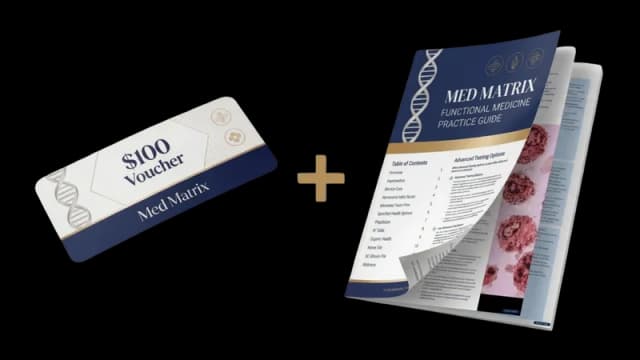
Get Your Free Practice Guide
Includes a $100 voucher toward your first visit
Everything you need to make an informed decision: pricing, testing catalog, process timeline, provider bios, and real patient stories. No commitment required.

Free Practice Guide + $100 Voucher
Everything you need before your first visit
STEP 1 OF 3
Enter your email to get instant access
We only accept a limited number of patients per week
EXPLORE
Related Content
Articles, patient stories, and podcast episodes about thyroid and adrenal fatigue treatment.

FAQ
Thyroid and Adrenal Fatigue Treatment FAQ
Yes. TSH can be normal while free T3 is low, reverse T3 is high, or antibodies are elevated. These patterns produce all the classic thyroid symptoms but are invisible on a TSH-only test. We test the full panel.
Hashimoto's is an autoimmune condition where your immune system attacks your thyroid gland. It's the most common cause of hypothyroidism and affects women 7x more than men. It's diagnosed by testing thyroid antibodies (TPO and thyroglobulin), which most doctors don't routinely check.
The medical term is HPA axis dysfunction. It means your stress response system is dysregulated, typically from chronic stress. Cortisol patterns become abnormal, causing fatigue, poor sleep, afternoon crashes, and impaired thyroid function. It's real, testable, and treatable.
When labs indicate it's needed, yes. We use both T4-only and combination T4/T3 medications depending on your conversion ability. Many patients also benefit from addressing nutrient deficiencies and stress patterns alongside medication.
TSH is the default screening test in most primary care offices. It's quick, inexpensive, and built to catch a gland in outright failure, so insurance-driven lab orders usually stop there. The patterns that cause symptoms while TSH stays in range (poor T4-to-T3 conversion, elevated reverse T3, early Hashimoto's antibodies) never show up on that one test, which is why we run all six thyroid markers on every patient.
Six markers: TSH, free T3, free T4, reverse T3, TPO antibodies, and thyroglobulin antibodies. Asking for each one by name matters, because a general request to 'check my thyroid' usually gets translated into TSH alone. All six are included in the 80+ biomarker panel every new Med Matrix patient receives.
Yes. An overactive thyroid can produce a racing heart, sweating, a fine tremor, and restless sleep, symptoms that are hard to tell apart from a panic attack. An underactive thyroid tends to bring a heavier, low-mood anxiety on top of fatigue. A standard checkup often screens the thyroid with TSH alone, which can read normal while the active thyroid hormone your cells use is off. We check TSH along with free T3, free T4, reverse T3, and thyroid antibodies, so a thyroid pattern feeding anxiety does not get missed. This is about the physical picture, and it works alongside, not instead of, mental health care.
The earliest signs are usually a broken energy rhythm rather than one dramatic symptom: dragging yourself out of bed, a brief window of feeling okay mid-morning, a hard crash around 2 to 3pm, then a second wind late at night when you should be winding down. Salt or sugar cravings, poor stress tolerance, and unrefreshing sleep often come with it. These map to HPA axis dysfunction, which we confirm by testing cortisol patterns rather than a single morning blood draw.
Your adrenal glands do not actually get tired, so recovery is about resetting the HPA axis rhythm that controls cortisol. That means restoring consistent sleep, stabilizing blood sugar with balanced meals, repleting nutrients like magnesium and B vitamins, and lowering the stress or gut inflammation driving the pattern, with adaptogens when appropriate. Because high cortisol also suppresses thyroid function, we address both systems together and confirm progress with follow-up labs.
Reverse T3 is an inactive thyroid hormone your body makes from T4 under stress or inflammation, and it can block thyroid receptors even when your TSH and T3 look normal. A reverse T3 test measures that blocking hormone directly, which a standard TSH-only screen never does. We include reverse T3 in the full six-marker thyroid panel every new patient receives.
Yes, and they usually should be. High cortisol from a dysregulated stress response suppresses the conversion of T4 into active T3 and raises reverse T3, so treating the thyroid alone often stalls. We evaluate cortisol patterns and the full thyroid panel together, then build one plan that supports both systems.
Related Services to Thyroid and Adrenal Fatigue Treatment
Your Health, Your Terms
Start Feeling Like Yourself Again
Get your free practice guide and a $100 voucher toward your first visit. No commitment, no pressure.