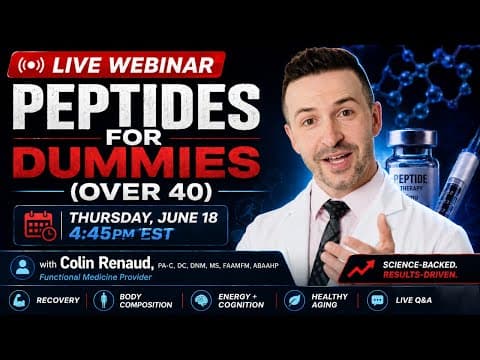
Peptides for Men: BPC-157, Sermorelin, and Where to Get Them Safely

Forbes Health Advisory Board · Naturopathic Doctor · Updated August 24, 2026

You did the testosterone work. Your levels are back in range, your energy is steadier, and the workouts feel like yours again. Then a buddy at the gym mentions peptides, your feed fills up with sermorelin and BPC-157, and you start wondering what you might be missing. Recovery that drags. A nagging shoulder that will not quit. Sleep that still runs shallow even with good labs.
Peptides get talked about everywhere and explained almost nowhere. Most men hear the names before they ever hear a straight answer about what these compounds do, who they are for, or where a legitimate one even comes from. This guide walks through what peptides actually are, how they get used alongside testosterone therapy, where men can get peptides without gambling on a random website, and what the July 2026 FDA advisory vote changed for sourcing.
What Peptides Actually Are
A peptide is a short chain of amino acids, the same building blocks that make up the proteins in your body. Your body already runs on peptides. They act like messengers, telling cells to repair, release a hormone, or quiet down inflammation. Therapeutic peptides borrow that same language. They are designed to signal a specific process, not to flood your system the way a blunt drug might.
That precision is the appeal. Instead of a single lever that moves everything, a peptide can nudge one pathway and leave the rest mostly alone. The catch is that precision only helps when the right peptide is matched to the right goal, dosed correctly, and watched over time. A messenger sending the wrong signal is still the wrong signal.
This is exactly why we fold peptide therapy into a broader plan rather than handing it out on its own. Peptides are supportive tools. They work best when the foundation underneath them, your hormones, your sleep, your training, your bloodwork, is already being managed.
Why Men Pair Peptides With Testosterone Therapy
Most men who ask us about peptides are already thinking about hormones, or already on a protocol. That is not a coincidence. Testosterone replacement therapy handles the hormone side of how you feel: drive, mood, muscle, libido. Peptides sit in a different lane. They support recovery, growth hormone signaling, and tissue repair, the parts of feeling good that testosterone alone does not always cover.
Getting your testosterone right comes first, and we cover the dosing details in our TRT dosage guide. Peptides are the support crew. They do not replace good hormone management, and they cannot fix a protocol that was never set up correctly in the first place.
If you are still trying to figure out whether your symptoms point to hormones at all, start there. Our breakdowns of the signs of low testosterone and the broader picture of men's health are a better first stop than chasing a peptide for a problem that is really a hormone problem.
What Are the Best Peptides for Men?
The two peptides men ask about most are sermorelin and BPC-157. Sermorelin signals your pituitary gland to release more of your own growth hormone, and men use it as supportive care for recovery, deeper sleep, and lean mass as they age. BPC-157 is studied for tissue repair and inflammation signaling, which is why men reach for it when a tendon, shoulder, or gut will not heal. There is no single best peptide for every man, since the right one depends on your goal, your labs, and whether a peptide fits the problem at all, which is what peptide therapy under provider oversight sorts out.
Sermorelin and Growth Hormone Support
Sermorelin is one of the peptides men ask about most, usually because they read it can help with sleep, recovery, and body composition. Here is the honest version of how it works.
Sermorelin signals your pituitary gland to release more of your own growth hormone. It does not pump synthetic growth hormone into your body. It encourages the gland to do its own job, which is a gentler approach and keeps your body's natural rhythm in the loop. Many men use it at night, since growth hormone release tends to follow your deepest sleep.
What men tend to be after with sermorelin is better recovery between training sessions, deeper sleep, and support for lean mass as they get older, the same goals that bring men to our healthy aging program. We will not promise you any of those outcomes, because peptides do not come with guarantees and anyone who tells you otherwise is selling, not treating. What we can say is that sermorelin is used as supportive care, with lab monitoring, and with realistic expectations set up front.
If your real complaint is dragging energy or restless nights, it is worth ruling out the common drivers first. Issues with thyroid and adrenal function show up as fatigue and poor sleep all the time, and no peptide will outrun an unaddressed root cause.
Do Peptides Build Muscle?
Peptides are not a shortcut to muscle. Testosterone handles the hormone side of muscle, drive, and mood, while peptides sit in a different lane, supporting recovery and tissue repair. Sermorelin is used as supportive care for lean mass as men get older, but it carries no guarantees, and no peptide replaces good hormone management or fixes a protocol that was never set up correctly. If building muscle is the goal, or if you are losing muscle you used to carry easily, start with the hormone side through testosterone replacement therapy and a real look at what is driving the muscle loss. Peptides are the support crew.
BPC-157 and Tissue Repair
BPC-157 is the peptide men reach for when something will not heal. A stubborn tendon, a cranky shoulder, a gut that has been off for months. It is studied for its role in tissue repair and inflammation signaling, and it has a loyal following among men who train hard and break down faster than they bounce back.
Men often look at BPC-157 for nagging joint pain and soft tissue recovery, sometimes after they have tried rest and rehab and still feel stuck. That interest is reasonable. The science is genuinely promising. But promising is not the same as proven, and the regulatory picture around BPC-157 is still being decided, which we cover below.
The bigger risk with BPC-157 is not the peptide. It is skipping the question of why the joint hurts in the first place. Pedro Gonzalez, MD, our Medical Director, put it this way on our podcast: "Any biohacker can do that. You can say, oh, I have a joint pain, let me give you BPC-157. So what if the root cause of your joint pain is an autoimmune disease, rheumatoid arthritis? Or you have a mold exposure that is having manifestations in your joints? That's the difference: I look for root causes of the problems while I'm using these as tools."
Searching "Peptides for Sale Near Me"? Read This First
Type "peptides for sale near me" or "where can I get BPC-157 near me" into Google and most of what comes back falls into two buckets: research chemical websites and clinics that will sell you a vial without ever drawing your blood. Neither is where you want to end up.
Therapeutic peptides are not supplements. You cannot pick them up at a health food store, and the legitimate path does not run through a website with a shopping cart. It runs through a licensed provider who writes a prescription, and a licensed compounding pharmacy that prepares the compound under federal pharmacy rules. Research chemical sites print "not for human consumption" on the label for a reason. No purity testing you can verify. No dosing guidance. No one accountable for what is actually in the vial.
A compounding pharmacy is the real answer to the "near me" search, but you do not buy from one directly. A provider evaluates you, prescribes if a peptide fits, and the pharmacy fills it. That structure is not red tape. It is the only version of this where someone with a license is responsible for what goes into your body.
Our clinic is in South Portland, Maine, and we care for patients we can see in person in Maine or New Hampshire. If that is you, our peptide therapy program is that legitimate path: a provider evaluation, bloodwork before anything is prescribed, sourcing we trust, and follow-up labs to watch how you respond.
The 2026 FDA Vote: What Actually Changed
If you have shopped for peptides online, you have seen BPC-157 and TB-500 sold like supplements, no questions asked. That open marketplace is exactly what regulators spent 2026 looking at.
In July 2026, the FDA's Pharmacy Compounding Advisory Committee met to weigh whether several popular peptides belong on the list of substances compounding pharmacies can legally prepare, the 503A bulk list. On July 23, the committee voted to recommend adding four of them, including BPC-157 and TB-500, going against FDA scientists who had recommended keeping them off. We wrote a full plain-language breakdown of the meeting in our FDA peptide review update.
The part men miss: an advisory committee vote is not FDA approval, and it is not a final rule. The committee recommends. The agency decides separately, and as of now it has not issued that decision. A favorable vote makes it more likely these peptides end up on firmer legal footing for compounding, but nothing about their status has actually changed yet. The legal and supply picture is still unsettled.
That uncertainty is why sourcing matters so much. Peptides bought from an unregulated website are a gamble on purity, dosing, and what is actually in the vial. There is no oversight, no lab behind it, and no one watching how your body responds. We would rather you walk away from a sketchy source than risk it.
Why Provider Oversight Is the Whole Point
Strip away the hype and peptides come down to the same principle that governs every good hormone plan: the right compound, dosed correctly, monitored with real labs, used for a real reason. None of that happens when you order a vial off the internet and guess.
When peptides are part of a plan we manage, a few things are true. We confirm the goal is appropriate for a peptide in the first place, instead of a hormone or lifestyle fix you actually need. We use sourcing we trust rather than whatever is cheapest online. We pull bloodwork through our advanced testing, an 80+ biomarker panel paired with a full body composition scan, so decisions follow data, not feel. And we adjust as your body responds across follow-up visits.
This is the same standard we hold for testosterone and every other tool in the clinic. We are a functional medicine practice in South Portland, Maine, with more than 3,000 patients served, rated 4.8 stars across 190+ Google reviews. None of that means a peptide will do for you what it did for someone else. It means that if peptides belong in your plan, someone qualified will be watching the whole time. That is the difference between supportive care and a roll of the dice.
Frequently Asked Questions
Can I take peptides while I am on testosterone therapy?
Many men do, because peptides and testosterone do different jobs. Testosterone manages the hormone side of how you feel, while peptides support recovery and tissue repair. The key is that both are managed together, with bloodwork, by the same care team. We map out how the pieces fit during a 60-minute provider consultation rather than stacking compounds blindly.
Where can I get BPC-157 near me?
Not over the counter, and not legitimately from a website with a checkout page. BPC-157 is prepared by licensed compounding pharmacies against a provider's prescription, and its compounding status is still being decided after the July 2026 advisory vote. If you are in Maine or New Hampshire, the answer to the "near me" search is a provider visit: we run labs, figure out whether BPC-157 or any peptide actually fits your case, and handle sourcing through channels we trust. A vial from a research chemical site is not the same product and carries none of the same accountability.
Are peptides like BPC-157 FDA approved?
No. In July 2026, an FDA advisory committee voted to recommend adding BPC-157 and TB-500 to the list of substances compounding pharmacies can prepare, but the FDA makes the final call and has not issued it. Even if it does, being compoundable is not the same as full drug approval. The status is genuinely in flux, which is why provider oversight and trustworthy sourcing matter more here than with most therapies.
Will sermorelin guarantee better sleep and recovery?
No peptide comes with a guarantee, and we will never frame one that way. Sermorelin signals your body to release more of its own growth hormone, and men use it as supportive care for recovery and sleep. Whether it helps you depends on your body, your labs, and what is actually driving your symptoms in the first place.
Is it safe to buy peptides online?
We strongly advise against it. Peptides sold through unregulated websites carry no guarantee of purity, dose, or contents, and no one is monitoring how you respond. With the compounding rules still unsettled after the 2026 advisory vote, sourcing through a provider who can vouch for the supply and watch your bloodwork is the safer path by a wide margin.
How do I know if peptides are even right for me?
That starts with figuring out what is actually wrong. Plenty of the symptoms men chase peptides for, low energy, poor recovery, slow healing, trace back to hormones, thyroid, or sleep instead. A proper workup tells us whether a peptide fits your goals or whether your time and money are better spent elsewhere. That honest answer is the point of the visit.
If you are tired of guessing, of piecing together advice from forums and feeling no better, let us put a real plan in front of you. We will run the labs, look at the whole picture, and tell you straight whether peptides belong in your protocol or not. New patients get a $100 voucher to start. Start Feeling Like Yourself Again with a team that actually watches the data.