
Does TRT Work Without Lifestyle Changes? What 2026 Data Shows

Forbes Health Advisory Board · Naturopathic Doctor · Updated September 3, 2026
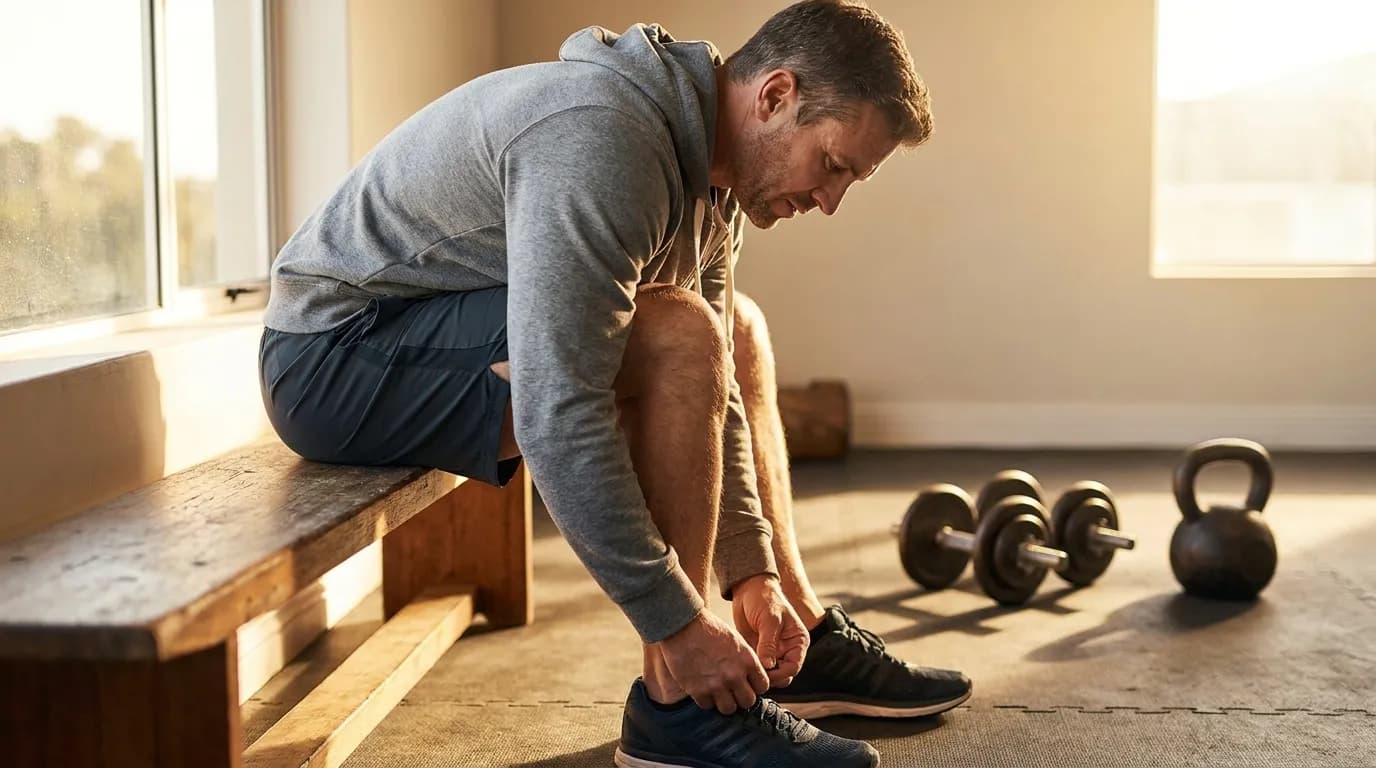
Plenty of men start TRT, or testosterone replacement therapy, expecting a switch to flip. More energy in the afternoon, muscle that finally responds to the gym, a clearer head, a libido that shows back up. Some of that does happen. But the men who get the most out of it tend to share one thing that has nothing to do with the dose in the syringe. They changed how they train, sleep, and eat at the same time they started treatment.
That is not a pep talk. It is what the research keeps showing, and it is the honest version of the conversation we have with men before they ever start therapy.
What a Recent Study Found About TRT on Its Own
At ENDO 2026, the Endocrine Society's annual meeting, researchers presented a study on older men at high risk of type 2 diabetes. Testosterone treatment improved their body composition, their glucose metabolism, and their sexual desire. The catch was in the fine print: those gains showed up when testosterone was paired with an active lifestyle program, not from the hormone by itself.
Read that again, because it is easy to skim past. For this group of men, testosterone alone did not carry the results. The daily habits did a large share of the work, and the hormone made those habits pay off faster.
Colin Renaud, PA-C, MS, FAAMFM, ABAAHP, who leads a lot of our men's health care, frames it simply. Testosterone raises the ceiling on what your training and recovery can reach. Your habits decide how close you actually get to it. A man who sleeps five hours, eats out of a drive-through, and never lifts will feel better on TRT than he did before, but he is leaving most of the benefit on the table.
New in 2026: A Lifestyle Program Alone Moved Testosterone 77 to 90 ng/dL
The ENDO finding above was directional. A paper published in July 2026 put a number on it.
Researchers went back to the INTERAPNEA randomized trial and looked specifically at testosterone. Eighty-nine men with obesity and obstructive sleep apnea were split between usual care and an eight week interdisciplinary weight loss and lifestyle program. The men in the program measured higher by 77.6 ng/dL at eight weeks, and by 90.4 ng/dL six months later. The gain did not fade when the program ended.
Read the population carefully, because it decides who this applies to. These were men carrying excess weight who also had sleep apnea. That is a specific profile, not men in general, and the eight week confidence interval runs from 4.2 ng/dL at the low end, so the average is not a promise. This was also a secondary analysis of a trial built to study something else.
A separate 2026 analysis pointed the same way from a completely different angle, identifying a weight loss threshold at which obesity related low testosterone went into biochemical remission after bariatric surgery. Two research groups, two interventions with nothing in common, one direction: when low testosterone travels with excess weight, losing the weight moves the hormone.
The practical consequence is the sleep apnea conversation. Undiagnosed sleep apnea is common in exactly the man who walks in asking about low testosterone, and it is treatable. Screening for it is not a delay tactic before therapy. It is looking for a cause.
Why Testosterone and Training Pull in the Same Direction
Testosterone is one of the main signals your body uses to build and hold muscle. Resistance training is the other. Give your body the signal without the stimulus, and you get a fraction of the result. Add the stimulus, and the same dose of testosterone builds more lean mass and burns through more stored fat.
This matters more than it sounds, because muscle is not just about how you look. It is where a lot of your blood sugar gets used up, it protects your joints, and it is one of the clearest markers we track over time. Men who show up with real muscle loss and low energy often assume they need a bigger dose. Frequently they need a barbell and a plan. If you have not trained in years, our providers will map out where to start so you are not guessing. Walking through why movement changes the whole equation is worth a read on its own in our post on the power of movement.
Sleep Is Where a Lot of Your Testosterone Gets Made
Most of a man's daily testosterone is produced during deep sleep. Cut your sleep short, break it up, or wreck its quality with alcohol and late screens, and you cut your body's own production at the source. We see men who start TRT while running on six broken hours a night, and their numbers on paper look fine while they still feel flat.
That is not a coincidence. Poor sleep drives up cortisol, blunts recovery, and works against the testosterone you are now paying for. Fixing sleep is one of the highest-return changes a man can make alongside therapy, and it costs nothing. If you have been treating exhaustion as normal, our page on sleep issues covers what actually gets in the way, and the deeper dive on how rest shapes your health is in our article on whether lack of sleep is sabotaging your health. Chronic tiredness that testosterone alone does not fix is also worth investigating as its own problem on our fatigue page.
Nutrition and Body Fat Change the Math
Body fat is not neutral tissue for a man on testosterone. Fat cells contain an enzyme called aromatase that converts a portion of your testosterone into estradiol. Carry a lot of extra fat, and more of the testosterone you are taking gets converted, which is one reason two men on the identical dose can feel completely different. This is also why we monitor estradiol in men on therapy rather than only watching testosterone.
Food does more than manage weight here. Protein gives your muscle the raw material to respond to training. Zinc, vitamin D, and healthy fats all feed the machinery that makes and uses testosterone. You do not need a perfect diet, but you do need a real one. We break down which foods actually pull their weight in our guide to foods that boost testosterone naturally. For men whose weight has climbed to the point where it is working against everything else, addressing that directly through weight loss treatment often does more for hormones than any single injection.
What We Actually Monitor While You Are on TRT
Here is where the gap between a real TRT program and a mail-order prescription gets wide. A 2026 chart review presented at the Endocrine Society meeting looked at 200 men who had been prescribed testosterone and found that only 12 percent of those first prescriptions met full clinical testing guidelines before the pen ever touched the paper. That was a single medical center, so it is one snapshot rather than the whole country. But it lines up with what we hear from men who come to us after a telehealth service prescribed testosterone off one lab draw and a questionnaire.
Proper monitoring is not paperwork for its own sake. It is how therapy stays both effective and safe. On our TRT program, the labs we track over time include:
- Total and free testosterone, so we see the hormone that is actually available to your body, not just the total
- SHBG, the protein that binds testosterone and can leave a man symptomatic even with a normal total number
- Estradiol, because a portion of your testosterone converts to estrogen and that balance matters
- Hematocrit, since testosterone can thicken the blood over time and this is the number that keeps therapy safe
- LH and FSH, the brain signals that tell us how your own production is behaving
- PSA and metabolic markers, tracked as part of the bigger picture rather than in isolation
The real-world safety data makes the case for monitoring better than we could. In a retrospective study of 9,537 men on testosterone therapy published in the World Journal of Men's Health in April 2026, mean hematocrit barely moved over twelve months, rising just 0.03 L/L. That is the number a marketing page would quote. In the same cohort, 24.15 percent of men, close to one in four, crossed the 0.54 L/L threshold that warrants clinical attention within the first year. Both facts are true at once, because an average hides the tail. The man whose blood is thickening does not show up in a group mean, he shows up in his own follow-up draw, and only if someone orders one. We keep an eye on the heart side of the conversation too, and if that is on your mind, our post on whether TRT is safe for your heart walks through what the large TRAVERSE trial found.
A review published in September 2026 sharpened why the target is a range rather than a ceiling. Looking across the conflicting evidence on testosterone and atrial fibrillation in men, the authors describe a U-shaped relationship: both low and high testosterone appear to raise the risk, and the individual studies disagree enough that no single number settles it. That is an argument for keeping levels in a monitored range instead of chasing the highest number a man can tolerate, which is the opposite of how testosterone gets marketed. The full lab foundation all of this rests on lives on our advanced testing page, and how the therapy itself is structured is laid out on our testosterone replacement therapy page.
Realistic Expectations, Month by Month
One of the first questions almost every man asks is some version of when will I actually feel different. That same 9,537-man study gives an honest, sourced answer. Meaningful improvement across all eight quality-of-life areas measured, including energy, strength, libido, and erection quality, showed up by around two months. Results were stable by four months.
So the near-term picture looks roughly like this. The first few weeks are quiet, and some men feel a little worse before better as levels settle. By the six-to-eight-week mark, energy and mood usually start to turn. By month three or four, the changes hold steady rather than swinging around. This was a retrospective study, not a guarantee, and your own starting hormone levels, your dose, and your overall health all move the timeline. A man who is also lifting and sleeping will usually feel it sooner and stronger than the study average. A man who changes nothing else will usually land at the slower, smaller end.
If you are still deciding whether your symptoms even point to low testosterone, our post on the signs of low testosterone most men miss is a good gut check, and our overview of how testosterone therapy works covers what a first visit looks like.
It Is Not Only About Testosterone
Low testosterone rarely travels alone. Thyroid problems, high cortisol from chronic stress, poor blood sugar control, and low vitamin D all produce the same tired, foggy, unmotivated feeling men blame entirely on their testosterone. This is part of why our approach starts with a wide panel instead of a single number. Sorting out the full hormone balance picture often reveals that testosterone is one lever among several.
This shows up clearly in younger men. Average testosterone in men aged 15 to 39 declined steadily from 1999 to 2016, and U.S. testosterone prescriptions climbed from roughly 7.3 million in 2019 to over 11 million by 2024. Younger men with low testosterone tend to show up with fatigue, brain fog, and low drive rather than the classic sexual symptoms, so it gets missed. For men who need support beyond testosterone alone, peptide therapy is sometimes part of the plan, and how the two fit together is covered in our post on TRT and peptides together. The broader view of how we handle all of this lives on our men's health page.
How Med Matrix Approaches TRT
The reason our program is built the way it is comes straight from the research above. Testosterone works best as one part of a monitored plan, not a standalone prescription, so the process is designed around that.
It starts with a free discovery call, where a patient coordinator hears what you are actually dealing with and helps you understand your options before anything gets scheduled. From there you get the 80+ biomarker panel and a full body composition scan, so we can see your testosterone, your thyroid, your metabolic markers, and your lean mass rather than guessing from a single draw. Our medical team then reviews everything together, cross-referencing your symptoms against what the labs show, before you sit down for a full hour with a provider to go through every result and build a plan that fits your body and your goals. That plan includes the training, sleep, and nutrition side, not just a dose.
Then comes the part most telehealth services skip: ongoing support. We track your labs and how you feel over time and adjust as your body responds, which is exactly how hematocrit stays in a safe range and how the plan keeps working past the first few months. The therapy is the easy part. The monitoring and the habits are what turn it into a real result.
Frequently Asked Questions
Can I raise my testosterone without going on TRT?
Sometimes, and it depends heavily on why it is low. In a 2026 analysis of the INTERAPNEA trial, men with obesity and sleep apnea who completed an eight week weight loss and lifestyle program measured 77.6 ng/dL higher at eight weeks and 90.4 ng/dL higher at six months than men receiving usual care. If your low testosterone travels with excess weight or untreated sleep apnea, treating those is a real lever. If it does not, lifestyle alone is unlikely to close the gap. A full panel and a conversation about your sleep is how you find out which situation you are in.
Will TRT work if I don't change my diet or exercise?
You will likely feel some improvement, but you will get a fraction of the benefit. The ENDO 2026 study on older men found testosterone improved body composition and glucose metabolism only when it was paired with an active lifestyle program. Training, sleep, and nutrition are what let the therapy do its full job.
How long until I feel results from testosterone therapy?
In a study of 9,537 men, meaningful improvement in energy, strength, and libido showed up by around two months and held steady by four. Your own timeline depends on your starting levels, your dose, and whether you are also sleeping and training well. Men who address those habits usually feel it sooner.
Why do I need regular bloodwork on TRT?
Because the risk is real and it is not visible without a draw. In a cohort of 9,537 men on testosterone therapy, about one in four had a hematocrit reading above 0.54 L/L within the first year, even though the average change across the whole group was small. A portion of your testosterone also converts to estrogen, which is why we track estradiol. Regular labs are what let a provider adjust your dose based on how your body is actually responding.
Can lifting weights raise my testosterone on its own?
Resistance training supports healthy testosterone and improves how your body uses it, though for a man with genuinely low levels it usually is not enough by itself. The strongest results come from combining proper therapy with real training, which is why we build both into the same plan.
I'm in my 30s. Can I really have low testosterone this young?
Yes. Average testosterone in younger men has been declining for over two decades, and younger men often show up with fatigue, brain fog, and low motivation instead of the classic symptoms, so it gets overlooked. A full panel is the only way to know where you actually stand.
How much of TRT's results come from lifestyle versus the medication?
Both matter, and they multiply each other. Restoring testosterone does real work on energy, mood, and body composition on its own, but training, sleep, and nutrition are what let the therapy reach its full effect and hold it. Men who treat a prescription as the entire plan tend to see less than men who pair it with the basics. The therapy is monitored either way, so you can see what is actually moving.
If you have been treating testosterone as the whole answer, or wondering why a prescription alone did not deliver what you hoped, the fix is usually the full picture: real testing, real monitoring, and the habits that let the therapy work. Start Feeling Like Yourself Again with a complete workup and a provider who will build the plan around you, not just hand you a dose.