Is Tirzepatide a Peptide? Yes, and What It Means for Your Weight Loss

Forbes Health Advisory Board · Naturopathic Doctor · Updated August 3, 2026
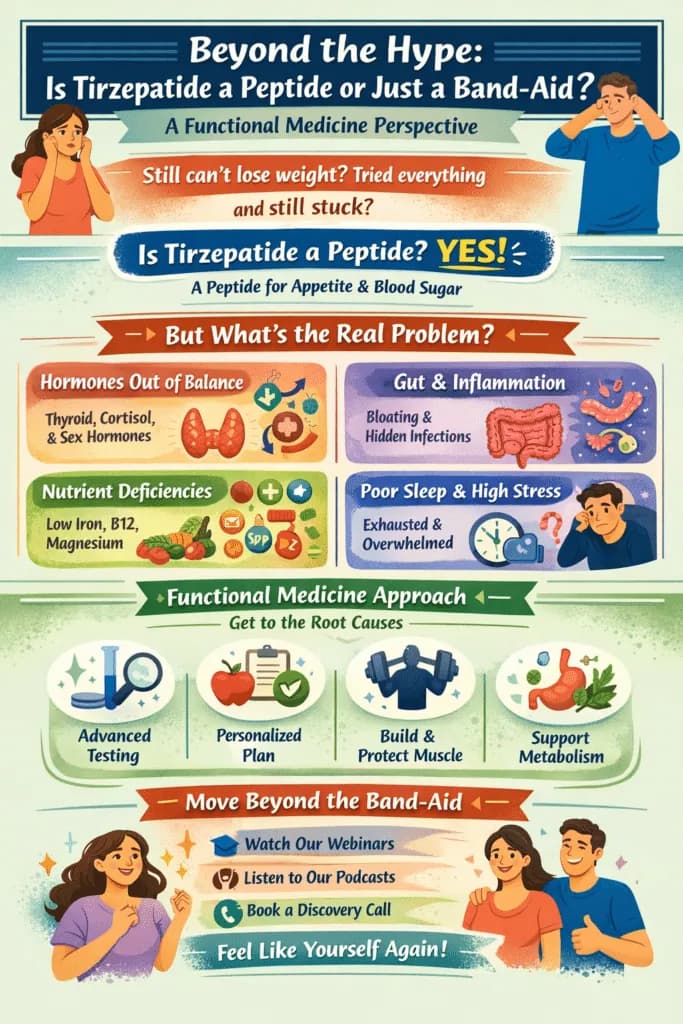
Short answer: Yes, tirzepatide is a peptide. It is a synthetic chain of 39 amino acids that acts as a dual receptor agonist, activating both GIP (glucose-dependent insulinotropic polypeptide) and GLP-1 (glucagon-like peptide-1) to curb appetite and steady blood sugar. It is sold as Mounjaro for type 2 diabetes and Zepbound for weight management, and it is given as a once-weekly injection under the skin. A peptide is a tool, not a full plan, so the results tend to last only when the root causes behind the weight get addressed too. If you're choosing between the two most common options, see how it stacks up in our semaglutide vs tirzepatide comparison.
You eat clean. You walk, maybe lift. You drink your water. And the scale won't move.
Your doctor glances at your labs and says everything looks normal. Meanwhile, you're puffy, exhausted, foggy, and wondering where you went.
If you've been Googling "is tirzepatide a peptide" at midnight, you're probably looking for something that actually works. So let's talk about what tirzepatide is, what it can do, and why it's not the whole answer.
Yes, Tirzepatide Is a Peptide
Tirzepatide is a synthetic chain of 39 amino acids designed to mimic two natural gut hormones. It targets both GLP-1 and GIP receptors, which help regulate hunger, fullness, and blood sugar. Semaglutide, for comparison, is a 31 amino acid peptide that targets GLP-1 only. That second receptor is the whole difference between the two drugs.
A few structural details explain how it behaves:
- 39 amino acids. Long enough to be called a peptide rather than a small-molecule drug, and short enough that it has to be injected rather than swallowed. Stomach acid would break it down.
- Dual receptor agonist. It activates GIP and GLP-1 receptors at the same time, which is why it is described as first-in-class.
- A fatty acid chain is attached. That modification is what lets one injection stay active for a full week instead of clearing in hours.
- Two brand names, one molecule. Mounjaro is approved for type 2 diabetes, Zepbound for chronic weight management. Same peptide.
Most people on tirzepatide feel less hungry and may lose weight. That part is real.
But a peptide is a tool, not a plan. And tools without plans tend to stop working.
Where Tirzepatide Helps (and Where It Falls Short)
What it can do
- Quiet the constant food noise so you're not thinking about eating all day
- Smooth out blood sugar swings that tank your energy after meals
- Slow stomach emptying so smaller portions feel satisfying
Where people get stuck
- Nausea, constipation, and feeling wiped out
- Weight loss stalls after a few months
- Regain after stopping because nothing underneath changed
- Muscle loss when protein intake and strength training aren't part of the picture
If you've said "I've tried everything," there are probably root causes that a prescription alone can't touch.
How Fast Does Tirzepatide Peptide Work?
How fast tirzepatide peptide works varies from person to person. Most people feel less hungry and may start to lose weight, though the dose usually starts low and steps up about every four weeks so your body adjusts and side effects stay manageable. Weight loss often builds over the first months and can stall after a while, which is a sign that root causes may need attention too. Pairing the medication with protein, strength training, and a full lab panel helps the weight loss results hold.
The Root Causes We Actually See in Clinic
Hormones that look "fine" but aren't
A basic thyroid test might come back normal. But free T3, thyroid antibodies, and T4-to-T3 conversion tell a different story. Cortisol running high at night and crashing in the morning will slow fat loss and steal your energy. Sex hormones shift with stress, aging, and perimenopause. Checking TSH alone and calling it a hormone panel is like checking the oil light and saying the car runs great.
Gut inflammation
Bloating, food reactions, or low-grade infections keep your immune system on alert. That chronic inflammation drives insulin resistance, which means more fat storage and stronger cravings. You can white-knuckle a calorie deficit, but your body fights back when inflammation is running the show.
Nutrient gaps
Low iron. Low magnesium. Low B12. Low vitamin D. Your body can't build muscle or run your metabolism without the raw materials. Eating less on a GLP-1 medication makes these gaps worse if nobody's tracking them.
Sleep and stress
Poor sleep, late-night screens, and constant rushing push cortisol up. High cortisol tells your body to store fat and hold water. No medication overrides a broken sleep cycle.
Liver and toxin burden
Alcohol, plastics, environmental chemicals. When your detox pathways are overloaded, your body holds onto fat as a storage strategy. It's not laziness. It's chemistry.
Conventional Care vs. Functional Medicine
The conventional path
- 10-minute visit
- "Your labs are normal"
- Try a calorie deficit, or here's a prescription
- Little support for side effects, no plan for what happens when you stop
The functional medicine path
- We listen to what's actually going on, not just what the lab reference range says
- Advanced testing when standard labs miss the picture
- A plan that addresses metabolism, gut health, hormones, sleep, and stress together
- If you use tirzepatide or semaglutide, we make the experience safer and more effective
- If you'd rather skip medication, we build a non-drug protocol that targets the same root causes
Using Tirzepatide the Right Way
If you're going to take a GLP-1 medication, build the support structure around it. Otherwise you're borrowing results you'll have to give back later.
Protect your muscle
Aim for 25 to 40 grams of protein per meal. Most people on these medications eat less overall, which makes hitting protein targets harder. Hydrolyzed collagen or a clean protein powder can help fill the gap.
Strength train
Two to three days per week. Walk daily for blood sugar control. Muscle is what keeps your metabolism running when the medication stops.
Fix your gut
Colorful plants, fiber, fermented foods if you tolerate them. Targeted probiotics based on actual testing, not a random bottle from the supplement aisle.
Check the full panel
Thyroid (the real panel, not just TSH). Cortisol rhythm. Iron, vitamin D, magnesium, B12, omega-3s. Replace what's low. Retest. Adjust.
Plan the exit
A taper strategy matters. We build one from the start so you're not scrambling when it's time to come off the medication. If you're mapping out where to begin, our tirzepatide dosage chart walks through the typical titration schedule.
Where Can I Buy Tirzepatide Peptide?
Tirzepatide peptide is a prescription medication, so it should come through a licensed provider with proper medical supervision and a full treatment plan, not sourced on your own. Side effects are common when peptides are used without monitoring or nutritional support, which is why lab work, protein, and a taper strategy matter. If you use tirzepatide or semaglutide, our team builds the support structure around it to make the experience safer and more effective.
Semaglutide vs. Tirzepatide
Semaglutide acts on GLP-1. Tirzepatide acts on both GLP-1 and GIP. Some people respond better to one than the other. Side effects, appetite changes, and body composition results vary. The right choice depends on your health history, lab work, and goals.
Neither one replaces the work of finding out why your body is holding onto weight in the first place.
What Are the Drawbacks of Tirzepatide?
The main drawbacks of tirzepatide are side effects like nausea, constipation, and feeling wiped out, along with weight loss that can stall after a few months. Many people also regain weight after stopping because nothing underneath changed, and muscle loss is common when protein intake and strength training aren't part of the plan. A peptide is a tool, not a full plan, so these drawbacks are easier to manage when peptide therapy is paired with an approach that addresses the root causes behind the weight.
Common Questions
Is tirzepatide a peptide?
Yes. Tirzepatide is a synthetic peptide built from 39 amino acids, and it mimics two natural gut hormones at once to influence appetite and blood sugar regulation. Being a peptide is why it has to be injected: taken by mouth, stomach acid would break the chain apart before it reached the bloodstream.
Is tirzepatide a peptide or a GLP-1?
Both, and the question sets up a false choice. Peptide describes what the molecule is: a chain of amino acids. GLP-1 agonist describes what it does: activate the GLP-1 receptor. Tirzepatide is a peptide that acts on GLP-1 receptors and GIP receptors together, which is what separates it from semaglutide.
What peptides are similar to tirzepatide?
Semaglutide is the closest widely available comparison, targeting GLP-1 alone. Retatrutide is an experimental triple agonist still in clinical trials and is not FDA approved. Peptides such as BPC-157, sermorelin, and CJC-1295 are also peptides but do nothing similar; they act on repair, growth hormone, and recovery pathways rather than appetite or blood sugar.
Is tirzepatide FDA approved?
Yes. Tirzepatide is FDA approved as Mounjaro for type 2 diabetes and as Zepbound for chronic weight management. That puts it in a different regulatory category from compounded peptides, which are prescribed through licensed 503A and 503B pharmacies rather than sold as approved drugs.
What is the tirzepatide dosage schedule?
Tirzepatide usually starts at a low dose and steps up about every four weeks so your body adjusts and side effects stay manageable. Our tirzepatide dosage chart breaks down what to expect at each level.
Are peptides safe?
They can be, with proper medical supervision and a full treatment plan. Side effects are common when peptides are used without monitoring or nutritional support.
Can I lose weight without medication?
Yes. When we identify and correct root causes (hormones, gut, nutrients, sleep), fat loss becomes easier and more sustainable.
Do collagen peptides help with weight loss?
Hydrolyzed collagen peptides aren't a fat-loss drug. They help you hit protein goals and support joints and skin, which matters when you're eating less and losing weight.
What Comes Next
If you're asking whether tirzepatide is a peptide because you feel stuck, the real question is bigger. Something is driving the weight, the fatigue, and the fog. A peptide can quiet the symptoms for a while, but finding the root cause is what makes results last.
Tirzepatide's classification is one question. The regulatory status of compounded peptides is another, and it's moving fast: the FDA's 2026 peptide review breaks down which peptides could get harder to access and which are not affected.
Our team offers a free discovery call where we listen to what's going on, talk through your options, and figure out whether our approach fits. No pressure, no sales pitch. Just a conversation about what might actually help.
- Watch our short webinars to see how advanced testing works
- Listen to our podcast for patient stories and provider insights
- When you're ready, schedule a free discovery call to map out your next steps