
Bioidentical Hormones: What They Are, How They Work, and Who Benefits

Forbes Health Advisory Board · Naturopathic Doctor · Updated October 15, 2026
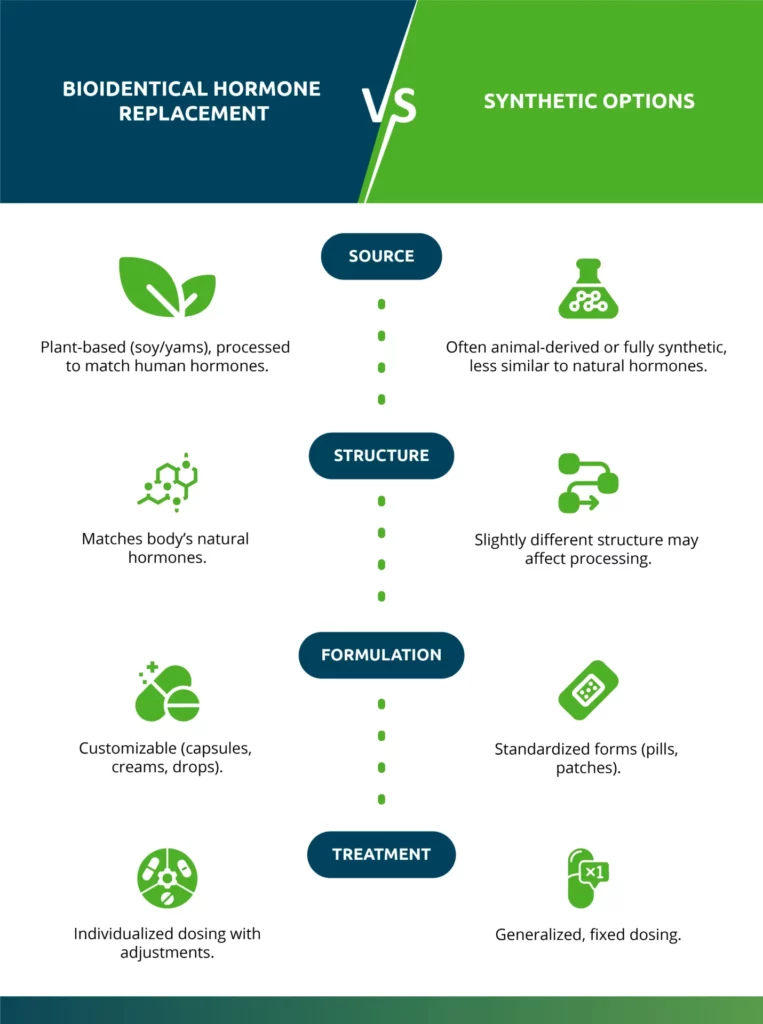
Bioidentical hormone replacement therapy (BHRT) uses estradiol, progesterone, and testosterone that have the same molecular structure as the hormones a woman's body makes. Some bioidentical products are FDA-approved, such as estradiol patches and gels and micronized progesterone capsules. Others are compounded by a pharmacy to a prescriber's order and are not FDA-approved as finished products.
Med Matrix is an HRT clinic offering hormone replacement therapy for South Portland women, and BHRT is one of the questions we hear most.
If your doctor mentioned HRT, you probably started searching and quickly hit a wall of confusing terms: bioidentical, synthetic, compounded, FDA-approved, plant-derived. Everyone seems to have a strong opinion. Few of them agree.
This guide breaks down how bioidentical hormones differ from synthetic ones, FDA-approved vs. compounded options, and how we approach BHRT at Med Matrix in South Portland.
What Are Bioidentical Hormones?
Bioidentical hormones are hormones that are structurally identical to the ones your body produces naturally. At the molecular level, bioidentical estradiol is the same as the estradiol your ovaries make. Bioidentical testosterone matches what your body produces in the ovaries and adrenal glands. Your body cannot tell the difference because there is no difference.
The raw materials typically come from plant sources, most commonly soy and wild yam. These plant compounds (diosgenin, specifically) are processed in a lab to create hormones with the exact same molecular structure as human hormones. The "plant-derived" label sometimes confuses people into thinking these are herbal supplements. They are not. They are pharmaceutical-grade hormones that happen to start with plant precursors.
Bioidentical hormones are available in two forms:
- FDA-approved commercial preparations. These include brand-name products like Estrace (estradiol), Prometrium (progesterone), and estradiol patches and gels. They are manufactured to standardized doses, tested in clinical trials, and regulated by the FDA.
- Compounded preparations. These are custom-mixed by compounding pharmacies to a specific dose and delivery method (cream, capsule, pellet, troche) prescribed by your provider. Compounded hormones are not FDA-approved as individual formulations, though the hormones themselves are the same molecules.
BHRT vs. HRT: What Is the Difference?
HRT is the umbrella term for any hormone replacement therapy. BHRT is the subset that uses hormones molecularly identical to your own. The two overlap more than most people expect: many standard, FDA-approved HRT prescriptions, including estradiol patches, gels, and pills, and oral micronized progesterone, are already bioidentical. The real dividing line is usually not bioidentical vs. conventional HRT. It is FDA-approved vs. compounded, covered further down.
How Bioidentical Hormones Differ from Synthetic
Synthetic hormones have a different molecular structure than what your body makes. The most well-known examples are conjugated equine estrogens (Premarin, derived from pregnant mare urine) and medroxyprogesterone acetate (Provera). These molecules are close enough to human hormones to activate hormone receptors, but their altered structure means they interact with the body differently.
This difference matters clinically. The Women's Health Initiative (WHI), the large-scale study that raised concerns about hormone replacement therapy in 2002, used Premarin and Provera. The FDA has since moved to remove the boxed warning that came out of those early readings. The increased risks of breast cancer and cardiovascular events that made headlines were associated with these specific synthetic formulations.
Research since then has drawn a clearer distinction. A 2009 review in the journal Postgraduate Medicine found that bioidentical progesterone did not carry the same breast cancer risk as synthetic progestins. Studies on transdermal estradiol (bioidentical, delivered through the skin) have shown a more favorable cardiovascular safety profile compared to oral conjugated estrogens.
None of this means bioidentical hormones are risk-free. All hormone therapy requires monitoring and individualized dosing. But the blanket fear that surrounded HRT after the WHI was largely driven by data on synthetic formulations that does not directly apply to bioidentical options.
Who Benefits from BHRT
Bioidentical hormone replacement therapy is most commonly used for women experiencing perimenopause and menopause symptoms. When estrogen, progesterone, and testosterone decline during this transition, the effects ripple across nearly every system in the body.
Symptoms that frequently respond well to BHRT include:
- Hot flashes and night sweats
- Sleep disruption, both difficulty falling asleep and waking at 3am
- Mood changes, irritability, and anxiety that do not respond to antidepressants
- Brain fog and memory problems
- Low libido
- Vaginal dryness and painful intercourse
- Weight gain that does not respond to diet and exercise
- Joint pain and stiffness
- Loss of muscle tone and bone density
- Fatigue that sleep does not fix
BHRT is not limited to menopause. Younger women with premature ovarian insufficiency, surgical menopause (after hysterectomy or oophorectomy), or significant hormonal imbalances identified through lab testing may also be candidates.
Should You Choose Compounded or FDA-Approved Bioidentical Hormones?
This is where the conversation gets politically charged. Some providers insist that only FDA-approved bioidentical formulations should be used. Others rely heavily on compounded preparations. The reality is more practical than either extreme suggests.
FDA-approved bioidentical hormones are a good starting point for many patients. They come in standardized doses, have been studied in clinical trials, and are covered by most insurance plans. If your needs can be met with a standard dose of estradiol or progesterone, an FDA-approved option is straightforward.
Compounding becomes valuable when standard doses do not fit. Some patients need a specific ratio of hormones. Others need a delivery method (like a topical cream at a precise concentration) that is not commercially available. Compounding allows providers to customize the prescription to the individual, which is the entire point of personalized medicine.
The legitimate concern with compounding is quality control. Not all compounding pharmacies operate at the same standard. We work with pharmacies that follow strict quality testing and use USP-grade ingredients. The hormones themselves are the same molecules whether they come from a commercial manufacturer or a compounding pharmacy. The difference is in the oversight of the preparation process.
How We Approach BHRT at Med Matrix
Prescribing bioidentical hormones without thorough testing is guesswork. We see patients who were started on hormone therapy by another provider based on symptoms alone, without baseline labs. Some were given the wrong hormones. Others were on doses that were too high or too low. A few were on hormones they did not need at all.
Our approach starts with data.
Testing First
Before prescribing anything, we run an 80+ biomarker panel that includes a full hormone workup: estradiol, progesterone, total and free testosterone, DHEA-S, SHBG (sex hormone-binding globulin), and a complete thyroid panel (not just TSH). We also check metabolic markers, inflammatory markers, and nutrient levels because hormones do not exist in a vacuum.
Cortisol matters too. If the HPA axis is dysregulated, hormone replacement alone will not resolve symptoms. The adrenal stress response affects how sex hormones are produced, metabolized, and utilized. Skipping cortisol testing before starting BHRT is a common reason hormone therapy "does not work" for some patients.
Individualized Protocols
There is no standard BHRT protocol at Med Matrix. Dosing is based on lab values, symptoms, medical history, and treatment goals. A 42-year-old woman in early perimenopause with declining progesterone and normal estrogen needs a completely different approach than a 56-year-old woman five years post-menopause with low estradiol, low testosterone, and elevated inflammatory markers.
Delivery methods vary as well. Transdermal estradiol (patches or creams) bypasses the liver and carries a lower clot risk than oral estrogen. Oral micronized progesterone (Prometrium) has the added benefit of supporting sleep. Testosterone can be delivered via cream, injection, or pellet depending on the patient's preference and response. We match the method to the person.
Monitoring and Adjustment
Hormones are not a "set it and forget it" treatment. We recheck labs typically at 8 to 12 weeks after starting or adjusting a protocol, then at regular intervals. Symptoms guide the dosing as much as lab values do. The goal is not to hit a specific number on a lab report. The goal is for you to feel and function well, with lab values confirming that the approach is safe and effective.
With over 3,000 patients treated, our team at Med Matrix has built protocols across a wide range of hormonal profiles. That clinical volume matters because hormone optimization is as much pattern recognition as it is textbook knowledge.
What BHRT Does Not Fix (and What Else Needs Attention)
Hormone replacement addresses hormone deficiency. It does not fix everything that went wrong while hormones were declining. Patients who come in expecting BHRT to solve fatigue, weight gain, and brain fog in one step are often surprised when we also recommend addressing their gut health, blood sugar regulation, nutrient deficiencies, or stress load.
For example:
- If your thyroid is underperforming, estrogen replacement alone will not resolve fatigue or weight gain.
- If you have significant gut inflammation, it can impair hormone metabolism and reduce the effectiveness of oral hormones.
- If cortisol is chronically elevated, it will continue to suppress sex hormone production even while you are replacing them externally.
- If you are deficient in magnesium, zinc, or B vitamins, your body cannot properly use the hormones you are taking.
This is why functional medicine and BHRT are a natural fit. The testing identifies all the systems that need support, not just the hormones. The treatment plan addresses the full picture.
What Are the Most Common Concerns About Bioidentical Hormones?
Does BHRT increase cancer risk? The WHI data on breast cancer risk was specific to conjugated equine estrogen plus medroxyprogesterone acetate (synthetic progestin). Bioidentical progesterone has shown a different risk profile in subsequent studies. Estrogen therapy without a progestin (for women who have had a hysterectomy) was actually associated with a decreased breast cancer risk in the WHI. Individual risk depends on personal and family history, and every patient should discuss this with their provider.
Are bioidentical hormones "natural"? They are naturally structured, meaning they match human hormones exactly. The manufacturing process is synthetic, the same way insulin for diabetics is produced. "Natural" and "synthetic" are marketing terms more than medical ones. What matters is whether the molecule matches what your body expects to see.
How long can you stay on BHRT? This depends on the individual. Some women use BHRT through the menopausal transition and taper off. Others continue long-term for bone protection, cardiovascular support, and quality of life. The decision is made collaboratively between patient and provider, with regular reassessment.
Will I gain weight on hormone therapy? Properly dosed BHRT is more likely to help with metabolic function than to cause weight gain. Declining estrogen, progesterone, and testosterone all contribute to the metabolic slowdown and body composition changes that happen during perimenopause and menopause. Restoring them to optimal levels often supports weight management, not the opposite.
Frequently Asked Questions
What is the difference between bioidentical hormones and synthetic hormones?
Bioidentical hormones have the exact same molecular structure as the hormones your body produces. Synthetic hormones have a modified structure. This difference affects how they interact with hormone receptors and how the body metabolizes them. The most studied synthetic hormones (Premarin and Provera) have a different risk profile than bioidentical estradiol and progesterone. Both categories are manufactured in laboratories. The distinction is molecular, not philosophical.
How do I know if I need bioidentical hormone replacement therapy?
Symptoms alone are not enough to determine whether you need BHRT. Lab testing is the foundation. If testing confirms that your estrogen, progesterone, testosterone, or thyroid hormones are below optimal levels, and your symptoms match the deficiency pattern, BHRT may be appropriate. If your symptoms are driven by cortisol dysregulation, nutrient deficiency, or thyroid dysfunction without a sex hormone deficit, other treatments may be more effective. Testing clarifies which path makes sense.
Is BHRT covered by insurance?
FDA-approved bioidentical hormones (Estrace, Prometrium, estradiol patches) are frequently covered by insurance. Compounded formulations are typically not covered. At Med Matrix, we accept HSA, FSA, CareCredit, and all major cards. The initial onboarding, which includes testing and a 60-minute provider consultation, runs $1,500. Ongoing hormone therapy costs range from $70 to $200 per month depending on the protocol.
How soon will I feel a difference on BHRT?
Some patients notice improvements in sleep and hot flashes within the first two weeks. Energy, mood, and mental clarity typically improve over four to eight weeks. Full benefits, including improvements in body composition, libido, and bone density, develop over three to six months. Hormone optimization is not instant, but it is progressive. We track your response with follow-up labs and adjust dosing as needed.
If you have been told your hormones are "normal for your age" but you do not feel normal, testing that goes beyond the basics is the place to start. Get your free guide and $100 voucher to begin with a full hormone workup and a provider who will actually go through every result with you.