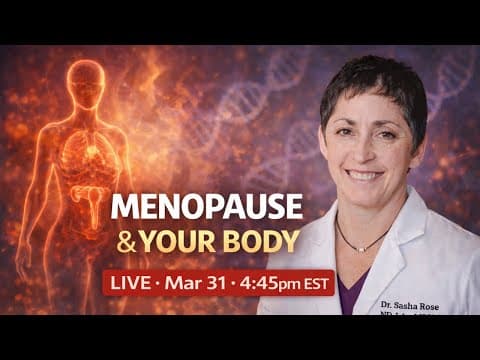
Perimenopause Symptoms Women Miss: What Your Body Is Telling You in Your 30s and 40s

Forbes Health Advisory Board · Naturopathic Doctor · Updated July 18, 2026

You are 38, maybe 44, and you do not feel like yourself. Your sleep is broken. Your brain stalls mid-sentence. Your jeans fit differently even though nothing about your eating changed. You snapped at someone you love over nothing, then cried in the car.
So you went to your doctor, and you were told your labs look normal, that you are stressed, that maybe you should try an antidepressant or cut out carbs.
Here is what almost nobody says out loud to women in their 30s and 40s. This could be perimenopause, and it can start a decade before your last period, long before anyone thinks to look.
Perimenopause is the transition leading up to menopause, when your ovarian hormones start fluctuating instead of running on a predictable monthly rhythm. The early signs rarely show up as the hot flashes everyone associates with this stage. They show up as a scattered collection of problems that look unrelated, from broken sleep to brain fog to migraines that suddenly intensify, so each one gets treated (or dismissed) on its own.
Why Perimenopause Gets Missed for Years
These symptoms get overlooked because they do not arrive together with a label on them. They trickle in. One year it is sleep. The next it is mood. Then your cycle gets weird. Each symptom lands in a different lane of the medical system, and nobody steps back to ask whether one shift is driving all of it.
Testing is the second problem. Perimenopause hormones swing wildly from week to week, even day to day. A single estrogen reading on a random morning can look completely normal and still miss a pattern that is clearly off. So women get told their numbers are fine when the real problem is the volatility, not one snapshot.
The third reason is age bias. Many providers still think of this transition as a problem for women in their early 50s. A woman in her late 30s describing brain fog and irritability often gets routed straight to anxiety, no hormone questions asked.
None of this means you are imagining things. The system is built to look at one symptom at a time, and your body does not work that way.
What Are the Signs of Perimenopause?
These are the early signs we see again and again in women deep into the perimenopause transition. Read them as a group, not a checklist.
Brain Fog and Word-Finding Trouble
You walk into a room and forget why. You blank on a coworker's name you have known for years. You reread the same paragraph three times. Estrogen plays a direct role in memory and focus, so when it fluctuates, your thinking can get foggy in ways that feel scary at this age.
This symptom is easy to dismiss because it is invisible and hard to measure in a quick visit. It is real, and it often travels alongside unexplained fatigue and burnout.
Sleep That Falls Apart
Maybe you fall asleep fine but wake at 3 a.m. and lie there for an hour. Maybe you wake four times a night for no reason. Progesterone, which calms the nervous system, is usually one of the first hormones to drop in perimenopause. When it falls, sleep often goes with it.
Broken sleep then makes everything else worse. If this is your main symptom, our approach to chronic sleep problems treats hormones as a primary suspect.
Weight Gain That Will Not Budge
The same diet that worked at 32 stops working at 42. You are eating the same, moving the same, and the scale climbs anyway, especially around your midsection. As estrogen shifts, your body changes how it stores fat and handles insulin. This is not a willpower problem.
Women get told to eat less and move more, advice that fails because it ignores the hormonal driver underneath. When weight is the loudest symptom, we look at the full metabolic picture before talking about medical weight loss options.
Mood Swings, Irritability, and New Anxiety
You feel rage over small things. You cry easily. You feel a low hum of anxiety that was never there before. Estrogen and progesterone both influence the brain chemicals that regulate mood, so when they swing, your emotional baseline swings too.
This is the symptom most often misread as a standalone mental health condition. Anxiety and depression are real and treatable, but for many women here the mood shift is driven, at least in part, by hormones nobody tested.
Cycle Changes
Your period comes early, then late. It gets heavier, then lighter. You skip a month, then have two close together. These changes are one of the clearest early signals of perimenopause, and yet they often get waved off as stress or aging. A shifting cycle is your body telling you the hormonal rhythm is changing. It deserves attention, not a shrug.
Low Libido
Your interest in sex fades, and you cannot pin down why. Hormonal shifts during this transition, including drops in estrogen and in the small amount of testosterone women naturally produce, can flatten desire. So can the exhaustion and mood changes stacked on top. It is not in your head. It is biology that can be evaluated and addressed.
Why These Get Misread as Separate Issues
Picture how this usually plays out. You bring up sleep, and you leave with a sleep aid. Months later you mention your mood to a different provider, and you leave with an antidepressant. You bring up weight at your annual, and you get a printout about calories. The brain fog never comes up because you assume it is just stress. Four visits, four separate explanations, zero conversation about the one transition behind all of it.
The "it is just anxiety" label is especially common. Anxiety can absolutely be part of perimenopause, but treating it alone while ignoring the hormonal shift behind it leaves the root cause untouched, a trap we dig into in how functional medicine approaches anxiety. That is exactly the gap functional medicine is built to close, by looking at the whole system instead of one symptom at a time.
There is also real overlap with the thyroid and adrenal glands. Thyroid issues can mimic perimenopause almost perfectly, fatigue, weight gain, brain fog, mood changes. Chronic stress drives cortisol patterns that tangle with your sex hormones. Sorting out what is hormonal, thyroid, or adrenal is the work our thyroid and adrenal evaluation exists to do. This transition can also stir up autoimmune conditions, which we cover in how perimenopause can wake up an autoimmune condition.
How Do I Know If I Am in Perimenopause?
You usually cannot tell from a single symptom, because the early signs of perimenopause tend to arrive one at a time and get treated as separate problems. The clearer signal is a cluster: several of the signs above showing up together and lasting more than a few months, often alongside a cycle that has changed in length, flow, or predictability. If you are in your late 30s or 40s and have been told your labs are normal but still feel off, that pattern is worth a real look at your hormones with advanced hormone and biomarker testing.
When It Is Time to Test Your Hormones
You do not need to wait until your symptoms are unbearable. If several of the signs above are showing up together and lasting more than a few months, it is time to get a real look at your hormones. A few clear prompts to test:
- Multiple symptoms from the list above are clustering at once, not just one in isolation
- Your cycle has changed noticeably in length, flow, or predictability
- You have already been told your labs are normal but you still feel off
- You are weighing an antidepressant before hormones have been ruled out
- You are in your late 30s or 40s and want a clear baseline of where you stand
The testing itself matters as much as the timing. A single estrogen draw on a random day is close to meaningless here because the numbers move so much. What helps is a fuller picture that reads your sex hormones next to your thyroid, stress hormones, blood sugar, and nutrient levels, all together.
That is why our advanced hormone and biomarker testing uses an 80+ biomarker blood panel paired with a full body composition scan. We are not chasing one number. We are mapping the pattern to see whether perimenopause, thyroid, stress, metabolism, or some combination is driving how you feel.
How Med Matrix Approaches Perimenopause
At Med Matrix in South Portland, Maine, we start with the full picture instead of a single symptom. Your 80+ biomarker panel and body composition scan map your sex hormones alongside thyroid, metabolic, and nutrient markers, so we see the whole system at once.
Then you sit down for a 60-minute provider consultation, not a rushed fifteen minutes, to go through every result and connect it to what you are actually feeling. For some women the plan means supporting the foundations and rechecking labs. For others it means a conversation about hormone replacement therapy once the data supports it, or a broader plan to restore hormone balance. Our women's health program is built for this stage of life.
We have served 3,000+ patients and hold a 4.8-star rating across 190+ Google reviews. New patients can meet our providers before deciding anything.
What You Can Do Right Now
While you sort out testing, a few foundations genuinely help during this transition, and none require a prescription.
- Protect your sleep first. Poor sleep makes every perimenopause symptom worse, so a consistent bedtime and a dark cool room is the place to start.
- Lift heavy things. Strength training protects the muscle and bone you start losing in this stage and helps your body handle blood sugar.
- Steady your blood sugar. Build meals around protein and fiber and ease off sugar and refined carbs to smooth out the energy crashes and cravings.
- Take stress seriously as medicine. Chronic stress pushes cortisol up, and cortisol competes with your other hormones. Whatever genuinely lowers your stress counts as treatment here.
These steps build a stronger base, but they do not replace getting your hormones evaluated when symptoms persist.
Frequently Asked Questions
Can perimenopause really start in my 30s?
Yes. While the average age that periods stop is around 51, the hormonal fluctuations of perimenopause can begin in your late 30s or early 40s, sometimes earlier. Starting young is part of why the symptoms get missed, since providers often are not looking for this transition in a woman that age.
Why did my doctor say my hormones are normal when I still feel terrible?
Perimenopause hormones swing dramatically from day to day, so a single blood draw can land on a normal-looking moment and miss the pattern entirely. A fuller panel that reads your sex hormones alongside thyroid, stress, and metabolic markers gives a far more honest picture than one isolated estrogen number.
How do I know if this is perimenopause or just my thyroid?
You often cannot tell from symptoms alone, because thyroid problems and perimenopause overlap almost completely, fatigue, weight gain, brain fog, and mood changes show up in both. The only reliable way to separate them is to test both at the same time, which is why our thyroid and adrenal workup runs alongside hormone testing.
Do I have to start hormone therapy if I get tested?
No. Testing simply gives you and your provider a clear picture of what is happening. For some women the plan is lifestyle support and rechecking labs. For others, hormone therapy becomes the right next step. The decision is made together, with no pressure.
What does it cost to get started?
New-patient onboarding runs $1,500 all-in, covering the full 80+ biomarker panel, body composition scan, and your 60-minute consultation. Follow-up visits are $275, and new patients also receive a $100 voucher.
You have spent long enough being told your symptoms are separate problems, or no problem at all. If brain fog, broken sleep, mood swings, weight changes, and a shifting cycle are stacking up, they may be telling one story your body has been trying to get someone to hear. We will help you read it, with real testing and a provider who listens. Start Feeling Like Yourself Again with a free discovery call.