Why Won't My Doctor Test My Hormones?

Forbes Health Advisory Board · Naturopathic Doctor · Updated July 18, 2026

Why won't your doctor test your hormones? Usually for three reasons: short, insurance-driven visits default to a TSH-only draw; guidelines treat perimenopause and menopause as symptom-based diagnoses that do not require labs; and single-draw hormone levels fluctuate, so many doctors consider them unreliable. None of that means a full panel has no value. It means you usually have to ask for it.
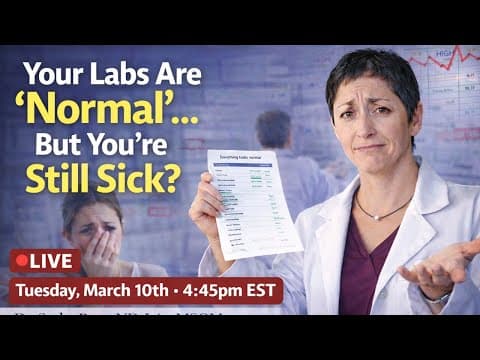
You sit across from your doctor and list it all out: the fatigue that three cups of coffee can't touch, the mood swings that show up out of nowhere, the ten pounds that won't budge no matter what you eat, the brain fog that makes you reread the same email three times, the libido that quietly checked out months ago, the cycle that used to be predictable and now isn't. Your doctor nods, orders a basic blood panel, and calls a few weeks later with the same four words: everything looks normal.
You don't feel normal. You feel like a stranger in your own body. And you leave that appointment with a refill for an antidepressant, a pamphlet about stress management, or a shrug and "this is just part of getting older." The thing you actually asked about, your hormones, was never fully tested.
If this has happened to you, you're not being dramatic, and you're not alone. It's one of the most common, and most quietly infuriating, patterns in women's health care.
You're Not Imagining This
A recent survey of women's health care experiences found that 93 percent of women felt dismissed at some point while seeking medical help. Among women age 25 to 34, the number was even higher: 94.4 percent said their concerns were ignored or written off as stress. Nearly half, 47.2 percent, had to see multiple doctors before anyone took them seriously. About a third lived with symptoms for over a year before getting an actual diagnosis.
Those aren't small numbers. That's most women, most of the time, being told to wait it out, manage their stress, or accept that this is just what getting older feels like.
Why Your Doctor Skips the Hormone Panel
Most primary care visits are short, and that clock isn't negotiable. Fatigue, mood, weight, libido, cycle changes, and brain fog all take real time to unpack. A full hormone panel isn't built into that visit by default, so it gets shortened to whatever is fastest to order and fastest to explain. Usually that's a TSH, maybe a basic metabolic panel, and out the door.
TSH alone tells you almost nothing about how your hormones are actually functioning. It's a signal from the brain to the thyroid, not a measure of free T3 or free T4, the hormones that actually run your metabolism and energy. It says nothing about thyroid antibodies, which flag autoimmune thyroid disease. And it says nothing at all about estrogen, progesterone, testosterone, DHEA-S, or cortisol, the hormones most tied to mood, weight, and libido. Checking TSH and calling it a hormone panel is a bit like checking one gauge and declaring the whole dashboard fine.
Then there's the age assumption. Fatigue in your 30s and 40s. Mood swings. Weight gain. Low libido. All of it gets filed under "that's just aging" or "that's just stress" before a single hormone is measured. Sometimes it really is stress. But nobody can know that until someone actually checks.
Why Do Doctors Say It's Just Stress Instead of Testing Hormones?
Often it comes down to assumption rather than evidence. In one survey of women's health experiences, 94.4 percent of women age 25 to 34 said their concerns were ignored or written off as stress, and symptoms like fatigue, mood swings, weight gain, and low libido routinely get filed under "just stress" or "just aging" before a single hormone is measured.
Sometimes stress really is the cause. But no one can know that until someone actually checks your hormone levels instead of assuming.
"Normal" on a Lab Report Doesn't Mean Optimal for You
Reference ranges on a lab report are built from a wide population, not from you specifically. A hormone level can sit inside that range and still be far from where your body actually feels and functions well. A 25 year old and a 45 year old can land on the "same" normal TSH and be having two completely different experiences of their thyroid.
This is the gap that leaves so many women stuck. The labs technically clear you, so the symptoms get reassigned to something else: stress, diet, sleep, aging, your mental health. An antidepressant might genuinely help if depression is part of the picture. It isn't a substitute for finding out whether your progesterone crashed, your free T3 is low, or your DHEA-S has dropped off a cliff.
What Does Hormone Testing for Women Include?
A real workup doesn't stop at one number. Your thyroid, adrenal glands, and reproductive hormones influence each other constantly, so a full panel looks at how they interact rather than checking one in isolation. That typically includes:
- A complete thyroid panel: TSH, free T3, free T4, reverse T3, and thyroid antibodies
- Estradiol and progesterone, especially relevant for irregular cycles and perimenopause symptoms
- Total and free testosterone and DHEA-S, which drive energy, mood, and libido far more than most women are told
- Cortisol, to see how stress is shaping the rest of the picture
- Fasting insulin and glucose, because blood sugar and hormone balance are tightly linked
This is the same kind of workup we run for every new patient. An 80+ biomarker panel through our advanced testing covers thyroid, sex hormones, adrenal function, and metabolic markers in one draw, not one test at a time across multiple visits and multiple months.
How to Ask for the Testing You Actually Need
You don't need a medical degree to ask better questions. A few things make a real difference in a short visit.
Write your symptoms down before the appointment, with dates if you can. "Fatigue" is easy to wave off. "Waking up exhausted every day since March, missed two periods, gained 12 pounds without changing anything" is much harder to dismiss in a short visit.
Ask for tests by name instead of asking to "check your hormones." Request free T3, free T4, reverse T3, and thyroid antibodies, not just TSH. Ask for estradiol, progesterone, testosterone, and DHEA-S if you're dealing with cycle changes, mood shifts, or low libido. A specific request is harder to brush past than a general one.
Ask for a copy of your results every time, not just the summary that says normal. Reference ranges are printed right on the page. You can see for yourself where you actually fall, not just which side of the line you landed on.
And if a doctor tells you there's no point in testing your hormones, that's your answer that you need a different doctor, not a signal that you should stop asking.
How Med Matrix Approaches Hormone Testing Differently
It starts with a free discovery call, so a patient coordinator can hear what you're actually dealing with before anything gets scheduled. From there, you get the 80+ biomarker panel and a full body composition scan, alongside detailed health questionnaires. Not a single tube of blood and a rushed conversation.
Our medical team reviews everything together: your labs, your history, your questionnaires, cross-referenced against the symptoms you actually described. Then you get a full hour with a provider to go through every result and build a plan around what your body is showing, not just what fits in a short visit. That plan comes with ongoing support, so it adjusts as your body responds instead of ending the day you walk out. It's the foundation of how we handle hormone balance and the broader women's health program, and if hormone therapy ends up being part of your plan, you can read how we structure it on our hormone replacement therapy page.
We're not the first people you've talked to about this. We may be the first ones who actually ran the full panel.
Frequently Asked Questions
My doctor said there's no point in testing my hormones. Why would they say that?
It usually comes down to time and training, not a judgment about you specifically. Standard visits are short, insurance-driven testing tends to default to the cheapest single marker like TSH, and many providers are trained to treat hormone testing as a last resort instead of a first step. That doesn't mean testing wouldn't help. It means you may need a provider whose model is actually built around full testing rather than quick visits.
What's the difference between a basic hormone test and a full panel?
A basic test usually checks one marker, most often TSH. A full panel looks at several related hormones together: free T3, free T4, reverse T3, thyroid antibodies, estradiol, progesterone, testosterone, DHEA-S, and cortisol, so a provider can see the whole hormonal picture instead of one data point.
Can my hormones be off even if my labs came back normal?
Yes. A result inside the reference range isn't the same as a result that's optimal for you. Reference ranges are built from a broad population, and where you personally feel and function best can sit in a narrower part of that range, or involve a hormone that was never actually tested in the first place.
I'm in my 30s. Isn't it too early for hormone testing?
No. Hormone shifts, including early perimenopause changes, thyroid issues, and adrenal patterns from chronic stress, can start well before your 40s. Fatigue, mood changes, weight changes, and irregular cycles are worth investigating at any age, not filed away as "just stress" until you're older.
What if I've already been told to try an antidepressant first?
An antidepressant may genuinely help if depression is part of what you're dealing with, and it's fine to keep taking one if it's helping. It isn't, on its own, a substitute for finding out whether a hormone imbalance is driving the mood changes in the first place. Both can be part of the picture. Only testing tells you which one you're actually looking at.
If you've been told your labs are normal but you still don't feel like yourself, you deserve a workup that actually looks for the answer instead of ruling it out. Start Feeling Like Yourself Again with a full hormone panel and a provider who has the time to go through every result with you.