What Ultra-Processed Foods Do to Your Body (and Your Labs)

Forbes Health Advisory Board · Naturopathic Doctor
You cleaned up your diet. Fewer drive-through runs, less soda, more meals you actually cooked. Then you stepped on the scale and it barely moved, so you started to wonder whether any of it mattered. It did. The problem is that the scale is one of the slowest, bluntest ways to measure what food is doing to you. Your blood is faster, and it keeps a far more detailed record.
A large 2026 study put numbers to that idea. Researchers found that ultra-processed food leaves a measurable fingerprint in the bloodstream, a specific pattern of markers tied to how the body handles fat and makes energy. Here is what they found, what those markers mean in plain terms, and why we look at more than your weight when we want to know how your diet is actually treating you.
The Study That Measured It in 15,200 People
The research came out of the International Agency for Research on Cancer, which is part of the World Health Organization, and was published in 2026 in the journal Critical Reviews in Food Science and Nutrition. The team, led by Dr. Jessica Blanco-Lopez, used data from 15,200 people enrolled in a long-running European nutrition study.
They compared how much ultra-processed food each person ate against the small molecules floating in their blood. The result: higher intake of ultra-processed food lined up with a distinct signature of 22 circulating metabolites and 8 plasma fatty acids. In other words, the more heavily processed a person's diet was, the more their blood chemistry shifted in a consistent, trackable direction.
One honest caveat up front. This was a snapshot in time, a single blood draw compared to diet, so it shows a strong association rather than proof that ultra-processed food caused the changes. That distinction matters, and we will come back to it. But a pattern this clear, across 15,200 people, is worth paying attention to.
What Counts as Ultra-Processed Anyway
This is where a lot of people get tripped up, because "processed" covers a wide range. Chopping, freezing, canning, and fermenting are all forms of processing, and most of them are fine. Plain frozen vegetables are processed. So is bagged, pre-washed spinach.
Ultra-processed is a narrower category. These are foods built mostly from industrial ingredients you would not find in a home kitchen: protein isolates, modified starches, hydrogenated oils, emulsifiers, and long lists of additives designed to hit a flavor and texture that keeps you eating. Think packaged snack cakes, most breakfast cereals, sodas, instant noodles, reconstituted meats, and a lot of products marketed as diet or protein foods.
The reason this category is worth naming is that it is not really about any single nutrient. It is about the whole formulation, and that formulation appears to leave its own mark in the blood, separate from calories alone.
What the Blood Markers Actually Showed
The signature the researchers found is not random. It clusters around two things your body does every hour of every day: burning fat for fuel, and building healthy cells.
Higher ultra-processed intake was tied to markers of impaired fatty acid oxidation. Fatty acid oxidation is simply how your body turns fat into usable energy. When those markers drift, it is a sign the process is running less smoothly. The pattern also pointed to mitochondrial stress. Mitochondria are the tiny engines inside your cells that produce energy, and when they are strained, the downstream feeling is often exactly what people describe as tired, foggy, and flat, even when nothing shows up as clearly broken.
On top of that, the heavier-processed diets came with lower levels of certain protective lipids, the fats your body uses to build strong, flexible cell membranes, and higher levels of stearic acid, one of the saturated fats. Put together, the picture is a body handling fat less efficiently and running its energy machinery under more strain.
Here is the useful part. Those are the same kinds of signals a full workup looks for when someone comes in saying they feel exhausted or stuck, even though their basic labs got called normal. Diet is often part of that story, and it shows up long before it shows up on the scale.
Why the Scale Is the Wrong Scoreboard
Most people treat ultra-processed food as a calorie problem. This study reframes it as a chemistry problem. Two people can weigh the same and eat the same number of calories, and still have very different blood chemistry depending on where those calories came from.
That is the whole case for measuring more than weight. The scale tells you about one variable, and a slow-moving one at that. Our full case for tracking body composition instead of scale weight goes further on why the number alone misleads. It cannot tell you how your body is processing fat, how hard your energy systems are working, or whether inflammation is climbing in the background. Blood can. That is why a real evaluation at our clinic starts with an 80+ biomarker panel and a full body composition scan instead of a single number on a scale.
When you can see the markers, two things change. You get an explanation for symptoms that were getting dismissed, and you get a baseline you can actually move. Change your diet for a few months, re-draw the labs, and the shift is right there in the numbers rather than in how you hope you feel.
The Honest Caveat, Because It Matters
We said we would come back to this. The study measured people at one moment, so it proves a link, not a cause. It is possible that people whose bodies already handle fat poorly are more drawn to ultra-processed food, rather than the food driving the whole change. Real life is usually some of both.
That is not a reason to shrug it off. It is a reason to measure your own numbers instead of guessing from a population study. Your labs are about you, not about 15,200 strangers, and they respond to what you change. The clean message is the one we build our whole model around: measure it, then work on it, then measure again.
What You Can Actually Do About It
None of this calls for a fear-driven overhaul or a list of forbidden foods. The most durable changes are small and repeatable.
- Anchor your meals around foods with short ingredient lists. If you would not recognize half the label, treat it as an occasional food, not a staple.
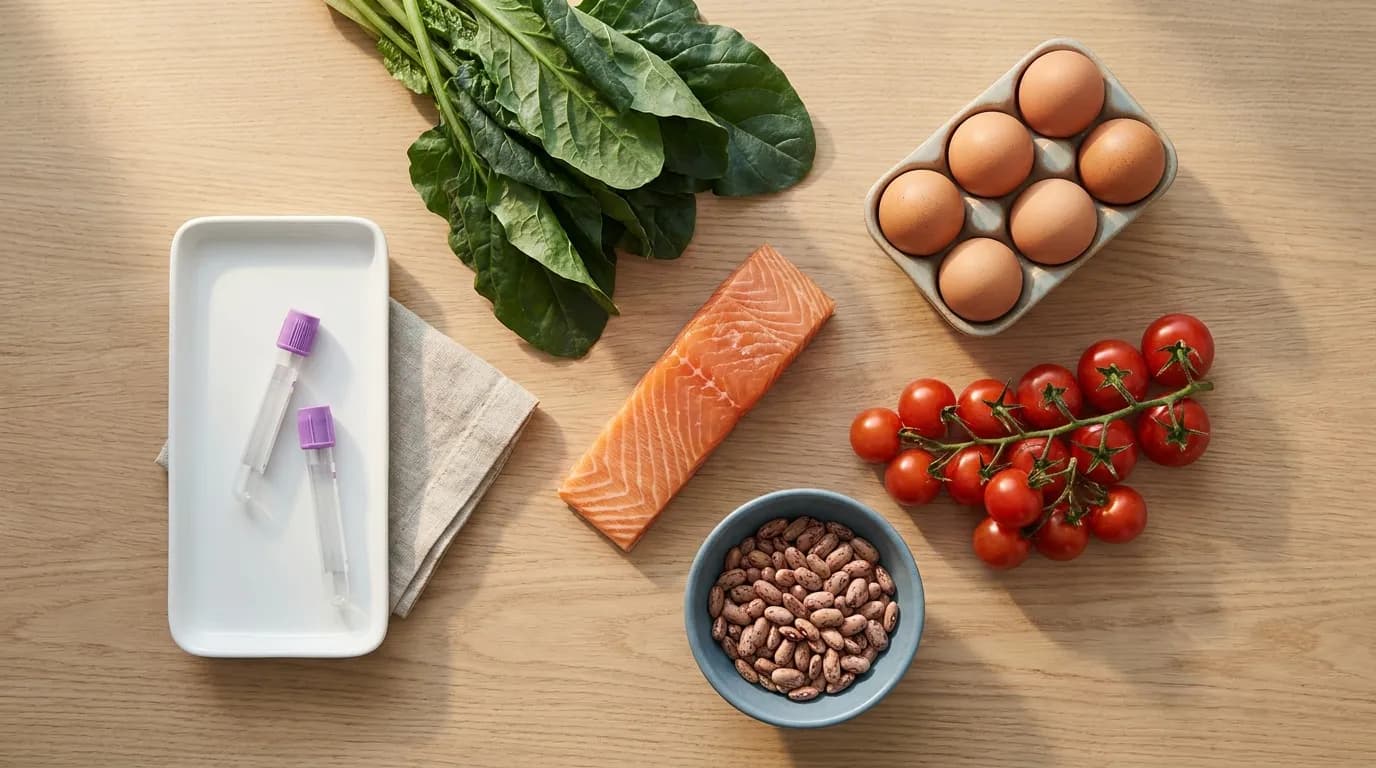
- Prioritize protein and fiber you can point to on the plate: eggs, fish, beans, vegetables, plain dairy. These crowd out the ultra-processed options without much willpower.
- Watch the products dressed up as health foods. A lot of protein bars, flavored yogurts, and diet snacks are ultra-processed by any honest definition.
- Do not aim for perfect. Aim for a majority of meals coming from real ingredients, and let the rest be what it is.
Food is one lever, and it works better alongside the others. Our approach to functional medicine looks at diet next to sleep, stress, movement, and hormones, because those systems all feed into the same energy and fat-handling markers this study measured. If weight is part of your goal, our medical weight loss program uses the same lab-first logic, so the plan is built on your chemistry rather than a generic meal template.
How We Look at This at Med Matrix
The reason we test 80+ biomarkers instead of the handful most physicals cover is exactly the pattern this study describes. Diet leaves a trace in fat handling, inflammation, and energy markers, and a small panel walks right past most of it. A fuller panel catches it while it is still a pattern you can reverse rather than a diagnosis you have to manage.
The process is built around that idea. It starts with a free discovery call to understand what you are dealing with. Then comes the 80+ biomarker panel and a full body composition scan, so there is a real baseline underneath everything. Our medical team reviews all of it together, cross-referencing your symptoms against the lab patterns, and then you get a full hour with your provider to walk through every result and build a plan. From there, follow-up labs track whether the changes you make are actually moving the markers. Some of those same fat and inflammation signals overlap with the ones we watch in heart health, which is why the panel earns its length.
More than 3,000 patients across Maine have been through some version of that process with us. The common thread is not a magic protocol. It is finally seeing the numbers, understanding what they mean, and having someone check them again as things change.
Frequently Asked Questions
Can a blood test really show how my diet is affecting me?
To a meaningful degree, yes. This 2026 study of 15,200 people found that ultra-processed food intake matched a specific pattern in the blood, including markers of how the body burns fat and handles inflammation. A full biomarker panel is designed to pick up those kinds of patterns, which is why it tells you more than the scale does.
Are all processed foods bad for me?
No. Processing covers everything from freezing vegetables to fermenting yogurt, and most of it is fine or even helpful. The concern is ultra-processed food specifically, meaning products built largely from industrial ingredients and additives. The goal is to make those the exception, not to fear the entire grocery store.
Which blood markers change with a heavily processed diet?
The study identified 22 circulating metabolites and 8 plasma fatty acids linked to ultra-processed intake. The pattern pointed to impaired fat burning, stressed mitochondria (your cells' energy engines), lower levels of protective lipids, and higher stearic acid. In plain terms, the body handling fat less efficiently and running its energy systems under more strain.
How fast do these markers improve if I change my diet?
It varies from person to person, which is the honest answer and the reason to measure rather than guess. Many diet-sensitive markers shift over a span of weeks to a few months. That is why we draw a baseline, make changes, and re-test, so the improvement shows up as data instead of a hunch.
Do I need special testing, or does a regular physical cover this?
A standard physical usually checks a short list of basics, which can miss the fat-handling and inflammation markers this research highlighted. Our advanced testing runs a much wider panel on purpose, so patterns like these show up while they are still easy to act on.
See What Your Diet Has Actually Been Doing
If you have been eating better and cannot tell whether it is working, your blood already knows. A baseline panel turns the guesswork into something you can see and track. Start Feeling Like Yourself Again with a full biomarker workup, a body composition scan, and an hour with a provider who reads the results with you.