Why Sleep Hygiene Is Not Fixing Your Sleep (and What to Test Instead)

Forbes Health Advisory Board · Naturopathic Doctor · Updated June 10, 2026

You bought the blackout curtains. You keep your phone on the charger in the kitchen. You stopped drinking coffee after noon. You even got one of those weighted blankets.
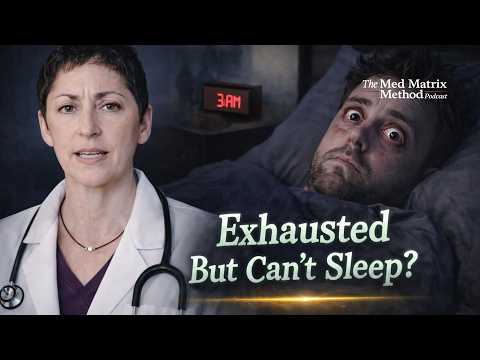
And you still wake up at 3 AM, staring at the ceiling, wired and exhausted at the same time.
If you've done everything the sleep hygiene articles tell you to do and you're still not sleeping, the problem probably isn't your bedtime routine. It's what's happening inside your body that nobody has bothered to check.
Sleep Hygiene Is Real, But It Has Limits
Let's be clear: sleep hygiene matters. Going to bed at the same time, keeping your room dark and cool, avoiding screens before bed. These habits create the conditions for good sleep. They're the foundation.
But they're not a treatment plan.
When patients come to our clinic in South Portland telling us they've tried every sleep hack on the internet and nothing works, that's actually useful information. It tells us the problem is likely biochemical, not behavioral. Something in your body is actively disrupting sleep, and no amount of lavender spray is going to override it.
What Actually Wakes You Up at 3 AM
The 3 AM wake-up is one of the most common complaints we hear. Patients describe it the same way almost every time: they fall asleep fine, then snap awake in the middle of the night with a racing heart or a surge of anxiety. Sometimes they can fall back asleep. Often they can't.
That pattern usually points to one of a few things:
Cortisol rhythm problems. Your cortisol should be lowest around midnight and peak in the early morning to wake you up. When chronic stress flips that curve, or when your adrenals are pumping cortisol at the wrong times, you get that wired-at-2 AM feeling. A standard blood test won't catch this. You need a 4-point cortisol curve (saliva or urine, taken at specific times throughout the day) to see the pattern.
Blood sugar crashes. If your blood sugar drops too low overnight, your body releases cortisol and adrenaline to bring it back up. That hormonal spike wakes you. Patients who eat a high-carb dinner or skip eating after 5 PM are especially prone to this. Fasting insulin and glucose on a standard panel can hint at the issue, but a continuous glucose monitor reveals the overnight picture more clearly.
Thyroid imbalance. Both overactive and underactive thyroid function mess with sleep. Hypothyroidism causes daytime fatigue but restless, unrefreshing sleep at night. Hyperthyroidism causes insomnia, night sweats, and a heart rate that won't settle. And here's the frustrating part: most primary care doctors only check TSH. That's one number. A full thyroid panel includes Free T3, Free T4, Reverse T3, and thyroid antibodies. We've seen patients with a "normal" TSH whose Free T3 was tanked. Their doctors said they were fine. They were not fine.
Sex hormone shifts. For women in perimenopause or menopause, declining progesterone is a major sleep disruptor. Progesterone has a calming effect on the brain, and when levels drop, sleep falls apart. For men, low testosterone can reduce sleep quality and increase nighttime waking. Both are testable. Both are treatable.
Magnesium deficiency. Magnesium calms the nervous system and supports GABA production (the neurotransmitter that helps your brain wind down). An estimated 50% of Americans don't get enough. Serum magnesium on a standard blood test is nearly useless because your body pulls from bones and tissues to keep blood levels stable. Red blood cell magnesium is a better marker.
Why Your Doctor Said "Everything Looks Normal"
Standard bloodwork checks a narrow set of markers using wide reference ranges. A TSH of 4.2 is technically "normal" on most lab reports. But it's not optimal, and for many patients, that number correlates with fatigue, weight gain, and poor sleep.
Same with fasting glucose. A reading of 99 is "normal." But pair it with high fasting insulin, and you're looking at early insulin resistance that's absolutely affecting your energy and sleep.
Checking one or two numbers in isolation doesn't tell the story. Our providers run an 80+ biomarker panel that includes a full thyroid panel, sex hormones, cortisol patterns, inflammatory markers, nutrient levels, metabolic markers, and more. That panel, combined with a 60-minute consultation where your provider actually has time to connect the dots, is how we find what's driving the sleep problem.
Sleep Habits That Actually Help (Once You've Ruled Out the Medical Stuff)
Once the biochemical issues are addressed, sleep hygiene becomes much more effective. These are the habits our providers and health coaches recommend most often:
- Get 10 minutes of morning sunlight (outside, not through a window) to anchor your circadian rhythm
- Keep a consistent wake time, even on weekends, within 30 minutes
- Stop eating 2 to 3 hours before bed, but make sure dinner includes protein and healthy fat to stabilize blood sugar overnight
- Dim lights after sunset. Swap overhead lights for warm-toned lamps. Some patients find amber or red bulbs in the bedroom make a noticeable difference
- Drop the room temperature to 65 to 68 degrees
- Cut alcohol entirely if sleep is a priority. Alcohol may help you fall asleep, but research consistently shows it fragments sleep architecture and reduces REM
- If your mind races at bedtime, try 4-7-8 breathing: inhale for 4 counts, hold for 7, exhale for 8. Four rounds. It activates the parasympathetic nervous system faster than most techniques
These habits compound over time. But they work best when your cortisol, hormones, blood sugar, and nutrients are in the right range. That's the part most people skip.
The Pattern We See Over and Over
A patient comes in exhausted. They've tried melatonin, magnesium gummies from the grocery store, sleep apps, white noise machines, CBD. Nothing sticks. Their doctor prescribed trazodone or told them to "manage stress better."
We run labs. We find a cortisol curve that's inverted, or progesterone that's barely detectable, or a thyroid that's limping along at the bottom of the reference range. We address the root cause. And sleep improves, not because of a better pillow, but because the thing that was actually breaking sleep got fixed.
We've worked with over 3,000 patients at our clinic. Sleep complaints are in the top three reasons people walk through our door. And in the vast majority of cases, the answer was in the labs.
If you've been doing all the right things and still can't sleep, it might be time to look deeper. Schedule a free discovery call and talk with our patient coordinator about what testing could reveal.