
Why Optimal Lab Ranges Matter More Than 'Normal'

Forbes Health Advisory Board · Naturopathic Doctor · Updated June 10, 2026
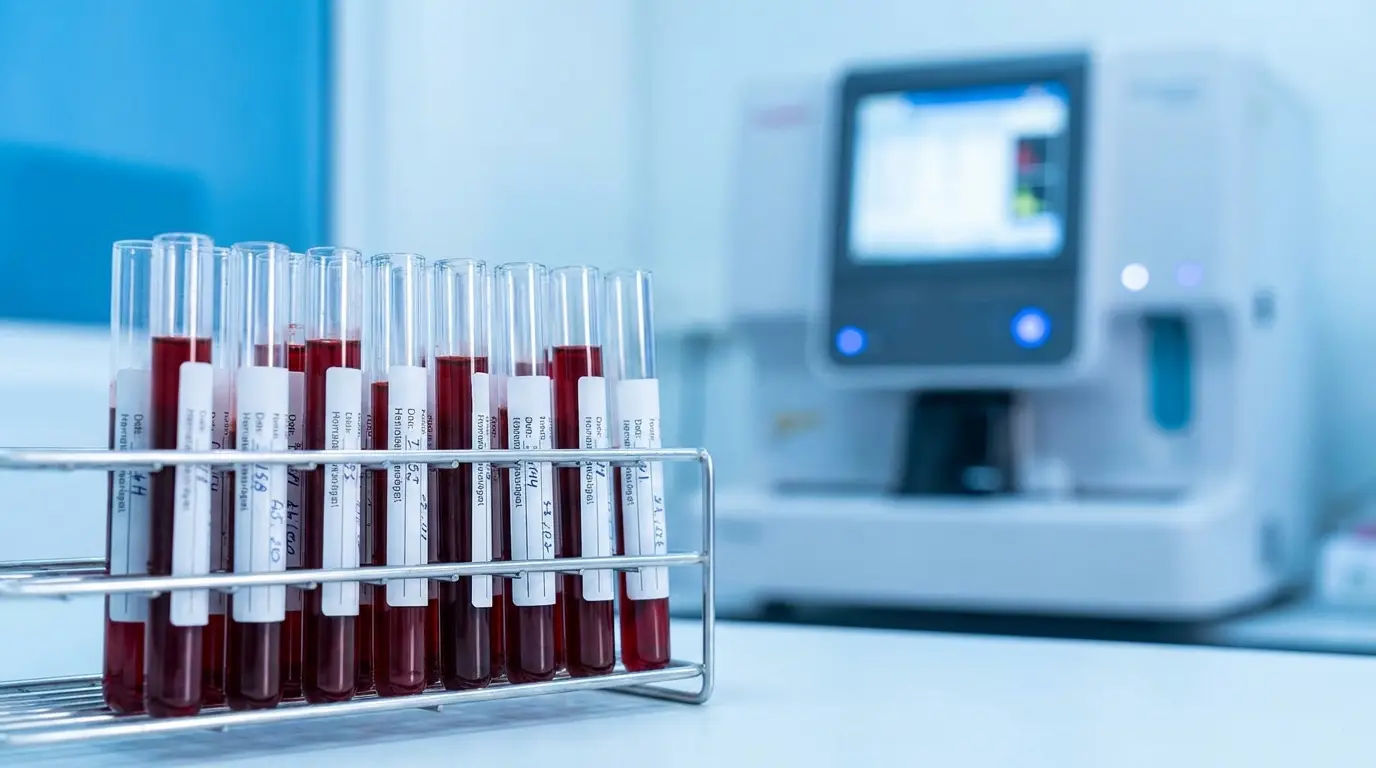
Your labs came back normal. Your doctor said you're fine. But you don't feel fine.
You're tired by 2pm. Your sleep is garbage. You've gained weight you can't explain. Your brain feels like it's running through mud. And every time you bring it up, you hear the same thing: "Your numbers are within range."
That phrase, "within range," might be the most misleading thing in modern medicine.
"Normal" Just Means You're Not Dying Yet
Standard lab ranges are built from population averages. They include data from sick people, sedentary people, people on six medications. The range is wide on purpose. It's designed to flag disease, not to tell you whether you're actually healthy.
A TSH of 4.2? Technically normal. But you might feel awful at that level. A fasting insulin of 18? Within range. But it's a flashing warning sign for metabolic dysfunction that won't show up as diabetes for another decade.
"Normal" means you haven't crossed the threshold into diagnosable disease. It says nothing about how well your body is actually functioning.
What "Optimal" Actually Means
Optimal ranges are tighter. They represent where your body performs best, not just where it avoids a diagnosis. The difference matters more than most people realize.
Take vitamin D. The standard range starts around 30 ng/mL. Anything above that and your doctor checks the box. A patient at 32 is "normal" on paper.
Same story with ferritin, B12, free testosterone, thyroid markers, fasting glucose. In every case, the gap between "not sick" and "feeling good" is enormous.
The Thyroid Example (Because It's the Most Common Miss)
This one comes up constantly. A patient goes to their PCP with fatigue, weight gain, hair thinning, cold hands, brain fog. Classic thyroid picture. The doctor orders a TSH test. It comes back at 3.8. "Normal." Case closed.
But TSH is just a signaling hormone from the brain. It doesn't tell you what the thyroid is actually producing. It doesn't tell you whether your body is converting T4 into the active T3 form. It doesn't check for thyroid antibodies that would indicate Hashimoto's, an autoimmune condition affecting millions of people who have no idea they have it.
A full thyroid panel includes TSH, free T3, free T4, reverse T3, and TPO antibodies at minimum. Running TSH alone is like checking if your car has gas without looking at the engine, the transmission, or the tires.
We run the full panel. Every time.
What We Test (and Why It's Different)
Our standard workup includes 80+ biomarkers. Not because more tests are automatically better, but because the body is interconnected. You can't understand fatigue by looking at one number. You need the full picture.
Here's a sample of what that includes:
- Full thyroid panel (TSH, free T3, free T4, reverse T3, TPO and TG antibodies)
- Fasting insulin and hemoglobin A1C (metabolic health, not just blood sugar)
- hs-CRP and homocysteine (inflammation and cardiovascular risk)
- Complete hormone panel (testosterone, estradiol, DHEA-S, cortisol, progesterone)
- Full lipid breakdown, not just total cholesterol
- Nutrient levels: vitamin D, B12, folate, ferritin, magnesium
- CBC with differential, CMP, liver and kidney function
Each marker gets evaluated against optimal ranges, not just standard reference ranges. Your provider spends a full 60 minutes walking through every result with you. Not a 15-minute visit where they glance at a printout and say "looks good."
Why Your Doctor Isn't Doing This
It's not that your doctor doesn't care. Most PCPs are good at what they do. But the system they work in is designed around insurance reimbursement, and insurance doesn't pay for optimization. It pays for disease management.
That means your doctor is limited in what they can order, how much time they get with you, and what they're trained to look for. Fifteen minutes per visit. A handful of standard labs. If nothing is flagged, you're out the door.
Functional medicine operates outside that system. We don't accept insurance (though HSA and FSA are accepted). That means no one is dictating what we can test or how long we spend with you. The tradeoff is cost. The benefit is thoroughness.
Real Patterns We See Over and Over
A 45-year-old woman comes in exhausted, gaining weight, losing hair. Her PCP said her thyroid is fine. We run a full panel and find her free T3 is tanked, her TPO antibodies are through the roof, and her vitamin D is at 22. Hashimoto's. Treatable. Missed for years.
A 38-year-old man is foggy, irritable, losing muscle mass. His "total testosterone" was 420, which his doctor called normal. We check free testosterone, SHBG, and estradiol. His free T is in the basement and his estradiol is high. That's why he feels terrible. The number that "looked fine" was hiding the real story.
A 52-year-old woman has anxiety her PCP treats with SSRIs. We find her progesterone is nearly undetectable and her cortisol pattern is inverted. Her anxiety has a hormonal root cause. Addressing the hormones changes everything.
These aren't rare cases. We see patterns like this in our clinic in South Portland every single week.
The 60-Minute Difference
The consultation matters as much as the testing. Having 80+ biomarkers means nothing if no one sits down and explains what they mean together, how they interact, and what to do about it.
Every new patient gets a full 60-minute provider consultation. Your provider goes through every result, explains what's optimal versus just "normal," identifies patterns across systems, and builds a treatment plan with you. Not for you. With you.
That's the part patients tell us matters most. Being heard. Having someone actually explain what's going on in plain language. Having enough time to ask questions.
Getting Started
If you've been told your labs are normal but you still feel off, you're not imagining it. You've just been measured against a bar that was never designed to tell you whether you're well.
We offer a free discovery call where you can talk through your symptoms and history with our patient coordinator. No commitment, no hard sell. Just a conversation about whether deeper testing makes sense for what you're experiencing. Our clinic is in South Portland, and we work with patients throughout Maine and New Hampshire.