
Lyme Disease Natural Treatment

Forbes Health Advisory Board · Naturopathic Doctor · Updated July 18, 2026
When Antibiotics Aren't Enough
You finished the round of doxycycline. Your doctor said you should be fine. But weeks later, the fatigue is still there. The joint pain hasn't budged. Your brain feels like it's wrapped in cotton.
This is one of the most frustrating parts of Lyme disease, especially here in Maine, where tick exposure is practically a given during the warmer months. The standard treatment works for a lot of people. But for a significant number, it doesn't finish the job.
If you've been told your Lyme is "treated" but you still feel terrible, you're not imagining things. And you're not the only one dealing with this.
Can Lyme Disease Be Treated Naturally?
Natural therapies can support recovery alongside conventional antibiotic treatment, not replace it. Antibiotics remain the first-line treatment for Lyme disease, and for early infections they often clear it completely. Where natural and integrative approaches earn their place is in the persistent cases, the patients whose symptoms drag on after the antibiotics are finished. Certain botanical medicines have shown activity against the Lyme bacterium in laboratory studies, and supportive therapies can help the immune system, gut, and hormones do the recovery work that antibiotics alone cannot.
It helps to be clear about what the evidence does and does not show. Most of the promising results for herbs come from lab studies (test-tube research), not large clinical trials in people. That makes these tools reasonable additions to a supervised plan, not proven cures. The right approach is individualized, built from testing, and coordinated with your medical team rather than pieced together from the internet.
Why Lyme Disease Is So Hard to Pin Down
Lyme is sometimes called the "Great Imitator" because it mimics so many other conditions. Fibromyalgia. Chronic fatigue syndrome. MS. Depression. Patients bounce between specialists for months (sometimes years) before someone connects the dots.
Early symptoms can include:
- The classic bull's-eye rash (though not everyone gets one)
- Flu-like body aches and fever
- Fatigue that rest doesn't fix
- Headaches and neck stiffness
When Lyme goes untreated or undertreated, it gets worse. Joint inflammation that won't quit. Memory problems. Numbness and tingling. Heart palpitations. The bacteria (Borrelia burgdorferi) can burrow into tissues and evade the immune system in ways that make it genuinely difficult to clear.
Standard blood tests miss it more often than most patients realize. The two-tier testing system (ELISA followed by Western Blot) has well-documented sensitivity gaps, especially in early infection and in patients who've had symptoms for a long time.
What a Functional Medicine Approach Looks Like
Conventional treatment for Lyme is pretty straightforward: antibiotics, then wait and see. If symptoms persist, you might get another round. After that, options tend to dry up.
Functional medicine starts from a different place. Instead of asking "Did the antibiotic kill the bacteria?" it asks "Why isn't this person recovering?"
That question opens up a much wider investigation. We look at:
- Immune function and why the body can't clear the infection on its own
- Gut health, since 70-80% of immune activity lives in the gut
- Nutrient deficiencies that weaken the body's defenses
- Co-infections like Babesia, Bartonella, and Ehrlichia that often travel alongside Lyme
- Toxic burden from mold, heavy metals, or environmental exposures that compound the problem
- Hormonal imbalances that Lyme often triggers or worsens
Checking just the Lyme antibody and calling it a day is like checking one tire on a car that's pulling hard to the left. You have to look at the whole system.
How Is Lyme Disease Treated When Antibiotics Don't Work?
When antibiotics don't fully clear Lyme, functional medicine looks at why the body isn't recovering instead of simply repeating another round. That means examining immune function, gut health, co-infections like Babesia and Bartonella, nutrient deficiencies, toxic burden, and hormonal imbalances. Treatment then targets the specific problems your lab results reveal, rather than treating everyone the same way.
Advanced Testing That Actually Finds Answers
Our providers run an 80+ biomarker panel that goes far beyond standard Lyme screening. We're looking at inflammatory markers, hormones, thyroid function, nutrient levels, immune markers, and metabolic indicators all at once.
For Lyme specifically, we use testing that looks at the infection from multiple angles, not just antibody levels. This matters because patients with chronic or persistent Lyme often have suppressed immune responses that make antibody-based tests unreliable.
We also screen for those co-infections that conventional testing rarely checks for. Babesia and Bartonella, in particular, can cause symptoms that overlap with Lyme but require different treatment strategies.
The goal is a complete picture. When you sit down for your 60-minute provider consultation, we go over every result in detail. No rushed 15-minute appointments. No "everything looks normal."
Natural Lyme Disease Treatments That Support Recovery
Once we understand what's actually going on in your body, treatment gets specific. Every plan is different, but here are some of the tools our team uses for Lyme patients.
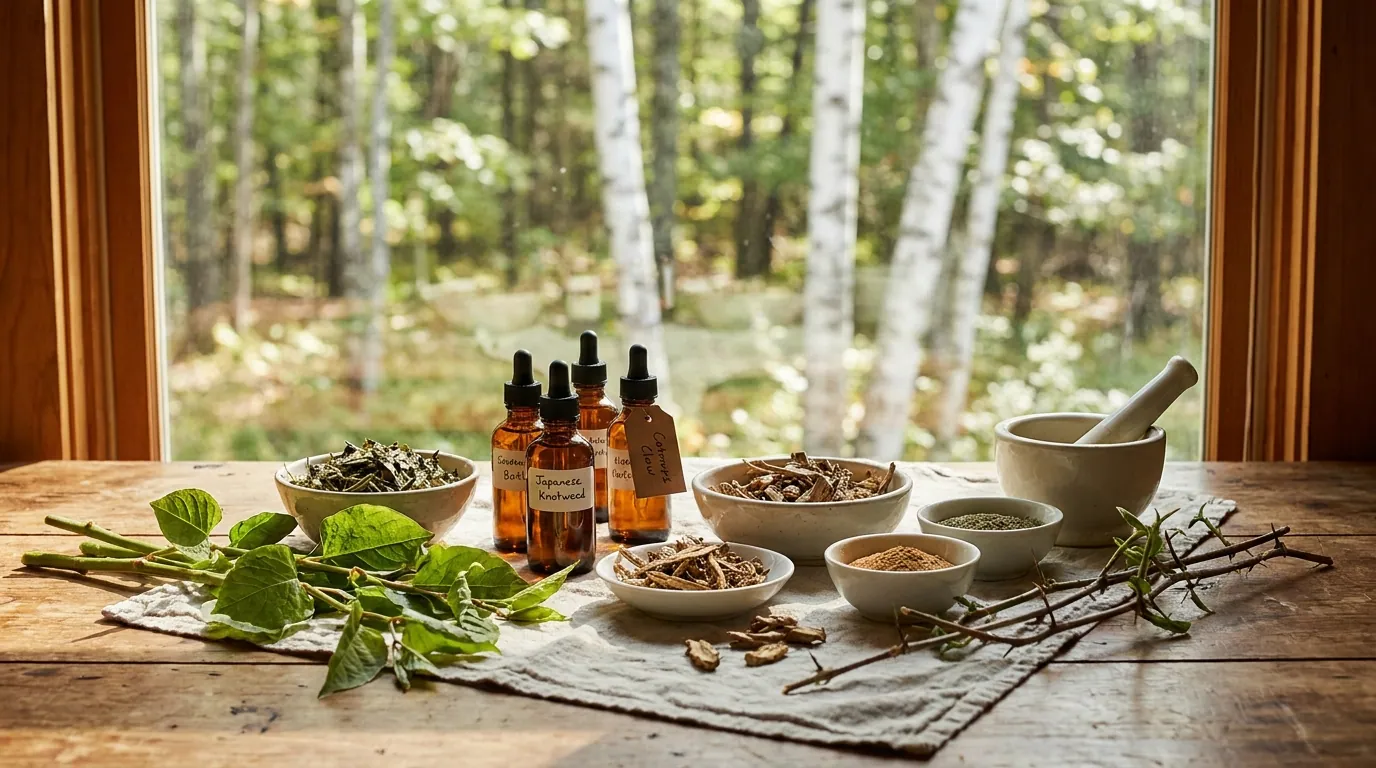
The most talked-about natural options are botanical (herbal) antimicrobials, and the interest is not just anecdotal. In a 2020 laboratory study from Johns Hopkins researchers with the Bay Area Lyme Foundation, seven botanical medicines were found active against Borrelia burgdorferi persisters in vitro, the stubborn dormant forms of the bacterium that standard antibiotics struggle to reach. In vitro means in the lab, not yet proven in clinical trials, so we treat these as supportive tools inside a supervised plan, never as a replacement for antibiotics when antibiotics are called for.
Japanese Knotweed
Japanese knotweed (a source of resveratrol) was among the botanicals flagged for activity against Borrelia in the Johns Hopkins lab work. Herbalists who work with Lyme often reach for it first, both for its antimicrobial activity in research settings and for its role in calming the widespread inflammation that drives so many Lyme symptoms.
Cryptolepis
Cryptolepis sanguinolenta, a West African herb, stood out in the 2020 lab study as one of the strongest performers against Borrelia persisters. It is typically used as an alcohol-based extract (tincture) and is a common backbone of herbal Lyme protocols, often paired with other botanicals rather than used alone.
Cat's Claw
Cat's claw (Uncaria tomentosa) is a South American vine with a long traditional use for joint and immune complaints, and it appears in many integrative Lyme protocols for its immune-modulating and anti-inflammatory properties. Laboratory research into its activity against Borrelia is part of the same body of botanical work that put these herbs on the map.
Andrographis
Andrographis paniculata is a bitter herb used in traditional systems for infection and inflammation. It shows up frequently in herbal Lyme protocols and, like the others here, is studied for antimicrobial activity in the lab. Some people are sensitive to it, which is one more reason these herbs belong in a monitored plan rather than a self-directed one.
Garlic Essential Oil
Garlic is the most kitchen-familiar name on this list, but the relevant research is specific: a 2018 Johns Hopkins lab study found garlic essential oil active against Borrelia persisters. The concentrated essential oil is very different from a garlic supplement or a raw clove, which is why dosing and form matter and should be guided by a provider.
IV Nutrient Therapy
When the gut is compromised (and in Lyme patients, it often is), oral supplements don't absorb well. IV therapy delivers vitamins, minerals, and amino acids directly into the bloodstream. High-dose vitamin C, glutathione, and B vitamins are commonly used to support immune function and reduce oxidative stress.
Hormone Optimization
Lyme wreaks havoc on the endocrine system. We frequently see suppressed thyroid function, tanked cortisol, and disrupted sex hormones in Lyme patients. Addressing these imbalances, whether through TRT, HRT, or thyroid support, can make a dramatic difference in energy, sleep, and pain levels.
Peptide Therapy
Peptide therapy uses short chains of amino acids to modulate immune function and reduce inflammation at the cellular level. For Lyme patients, specific peptides can help regulate an immune system that's either overreacting or underperforming.
Nutritional Rehab
Lyme patients are almost always depleted. Magnesium, zinc, vitamin D, omega-3 fatty acids. We build targeted nutrition protocols based on your lab results, not guesswork. Anti-inflammatory dietary patterns also help calm the systemic inflammation that Lyme drives.
Why Maine Patients Need This Approach
Maine consistently ranks among the highest states in the country for Lyme disease incidence. If you've spent time outdoors here, you've been exposed to ticks. Period.
The problem is that many Maine patients get the standard treatment, feel somewhat better, and then slowly decline again over months or years. They get labeled with fibromyalgia, chronic fatigue, or depression. They're told the Lyme is gone and their symptoms must be something else.
We've seen this pattern in our clinic over and over. And when we actually run the right tests and look at the whole picture, the answers are usually there. They just weren't being looked for.
Do Peptides Help With Lyme Disease?
Yes, peptide therapy can support Lyme recovery by helping to regulate the immune system. Peptide therapy uses short chains of amino acids to modulate immune function and reduce inflammation at the cellular level. For Lyme patients, specific peptides can help regulate an immune system that is either overreacting or underperforming.
Recovery Takes a Team
Lyme disease, especially chronic or persistent Lyme, isn't something that gets fixed in one visit. It takes ongoing support, monitoring, and plan adjustments as the body responds to treatment.
Our team works together on complex cases like these. You're not seeing one doctor who has 12 minutes before the next patient. You're getting a full hour with a provider who has already reviewed your labs, your history, and your questionnaires before you walk in the door.
And between visits, you have direct access to your care team. Questions don't have to wait until your next appointment.
Taking the First Step
If you're dealing with Lyme symptoms that won't resolve, or if you suspect Lyme but haven't gotten a clear diagnosis, a free discovery call is a good starting point. You'll talk with our patient coordinator about what you're experiencing, what you've already tried, and whether our approach makes sense for your situation.
No pressure. No commitment. Just a conversation about what's possible when someone actually looks at the full picture.
Schedule your free discovery call to get started.
Frequently Asked Questions
Can Lyme disease be treated naturally?
Natural and integrative therapies can support Lyme recovery, especially when antibiotics alone don't finish the job. Our providers use herbal antimicrobials like garlic extract, artemisinin, and Japanese knotweed, plus IV nutrient therapy, hormone optimization, peptide therapy, and targeted nutrition. Each plan is built from your lab results rather than guesswork.
Why do Lyme symptoms persist after antibiotics?
For a significant number of people, one round of antibiotics doesn't finish the job. The Borrelia bacteria can burrow into tissues and evade the immune system, and co-infections, gut problems, nutrient deficiencies, and hormonal imbalances can keep symptoms going. Functional medicine focuses on why the body isn't recovering, not just whether the bacteria were killed.
Are standard Lyme disease blood tests accurate?
Standard Lyme blood tests miss the infection more often than most patients realize. The two-tier system of ELISA followed by Western Blot has well-documented sensitivity gaps, especially in early infection and in patients who have had symptoms for a long time. Our providers use testing that looks at Lyme from multiple angles, not just antibody levels.
What co-infections come with Lyme disease?
Lyme often travels with co-infections that conventional testing rarely checks for. Babesia, Bartonella, and Ehrlichia are the most common. Babesia and Bartonella in particular can cause symptoms that overlap with Lyme but require different treatment strategies, which is why our providers screen for them during advanced testing.
Why is Lyme disease so common in Maine?
Maine consistently ranks among the highest states in the country for Lyme disease incidence. If you have spent time outdoors here, you have been exposed to ticks. Many Maine patients get standard treatment, feel somewhat better, then slowly decline again over months or years and get labeled with fibromyalgia, chronic fatigue, or depression instead.
What vitamins and supplements help with Lyme disease?
There is no vitamin that cures Lyme, but correcting the deficiencies Lyme patients commonly develop can support the immune system and energy. Our providers frequently address magnesium, zinc, vitamin D, and omega-3 fatty acids, and use vitamin C, glutathione, and B vitamins to support immune function and reduce oxidative stress. Botanical antimicrobials like Japanese knotweed, cryptolepis, cat's claw, andrographis, and garlic essential oil have shown activity against the Lyme bacterium in laboratory studies. Because dosing and interactions matter, these are best chosen from your lab results and taken under provider supervision, not self-prescribed.
Can your body fight off Lyme disease on its own?
In some early cases the immune system does keep the infection in check, but that cannot be counted on, and untreated Lyme can progress to serious joint, neurological, and cardiac problems. This is why prompt medical treatment matters and why persistent symptoms should be evaluated rather than waited out. Natural and integrative therapies are meant to support the body's own defenses alongside conventional care, not to serve as a reason to skip treatment.