
5 Powerful Ways Sermorelin Boosts Energy, Sleep, and Recovery

Forbes Health Advisory Board · Naturopathic Doctor · Updated June 10, 2026
"Your labs look normal."
You've heard it. Maybe more than once. But you wake up tired. Coffee barely gets you moving. By 2 p.m., you're ready for a nap. Your joints ache more than they did five years ago. The weight around your middle won't budge no matter what you try.
You start wondering if this is just what getting older feels like.
It doesn't have to be.
What Sermorelin Actually Is
Deep in your brain sits a small gland called the pituitary. One of its main jobs is producing growth hormone, which helps your tissues repair, your muscles recover, and your metabolism stay active.
Your brain sends a signal called growth hormone-releasing hormone (GHRH) to tell the pituitary when to produce growth hormone. That signal gets weaker as you age. Growth hormone levels drop. Recovery slows. Energy fades. Fat accumulates where it didn't used to.
Sermorelin is a synthetic version of that GHRH signal. Instead of injecting growth hormone from the outside (that's HGH therapy), sermorelin nudges your pituitary gland to release more of its own. Your body stays in control of the process.
That distinction matters.
Sermorelin vs. HGH: Why the Difference Matters
HGH injections deliver growth hormone directly into your system. That can push levels higher than your body would produce on its own, which is why it's tightly regulated and typically reserved for specific diagnoses like confirmed growth hormone deficiency.
Sermorelin works differently. It sends the signal, and your pituitary responds within its own limits. If growth hormone gets too high, your body's feedback loop dials it back down. That built-in safety net is a big reason functional medicine providers tend to prefer sermorelin over straight HGH for age-related decline.
You're working with your biology, not overriding it.
How Sermorelin Is Used
Sermorelin is given as a small subcutaneous injection, similar to a B12 shot. Most protocols call for evening dosing to align with your body's natural nighttime growth hormone pulses.
Don't expect overnight results. Most people notice meaningful changes over 3 to 6 months as sleep improves, energy stabilizes, recovery speeds up, and body composition gradually shifts. Mild injection-site reactions (small bruise, redness) are the most common side effects.
A quick note on the regulatory history: sermorelin acetate was once FDA-approved for pediatric growth hormone testing and treatment. That branded product was later pulled from the market for business reasons (the manufacturer's decision), not because of safety concerns. Today, sermorelin is available through licensed compounding pharmacies by prescription. Never buy it online from a non-medical source.
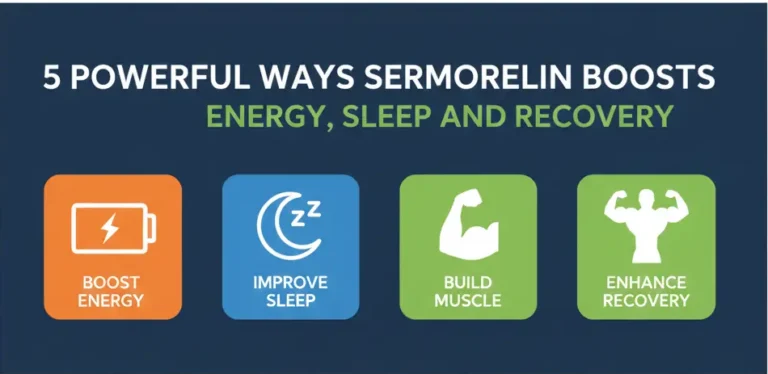
5 Ways Sermorelin Supports Your Body
1. Steadier energy without the crash cycle
Low growth hormone means your repair systems run on low power. Your body never fully recharges. Patients describe it perfectly: "My battery never fully charges."
When sermorelin helps your pituitary release more growth hormone, daytime stamina improves. That 2 p.m. wall gets lower. The reliance on caffeine eases up. It's not a stimulant. Your body is simply doing a better job maintaining itself.
2. Sleep that actually restores you
Your biggest growth hormone pulses happen during deep sleep. If that natural rhythm is weak, you can sleep 7 or 8 hours and still wake up feeling like you got 4.
Sermorelin supports the nighttime growth hormone pattern. Patients report falling asleep faster, waking less often at 2 or 3 a.m., and feeling genuinely rested in the morning. When sleep improves, everything downstream improves: mood, focus, appetite regulation, recovery.
3. Faster recovery from workouts and daily stress
Growth hormone is directly involved in tissue repair. When levels decline, you feel it. A workout that used to leave you mildly sore now takes three days to recover from. A stressful week at work wipes you out for the next one.
With supported growth hormone levels, tissues bounce back faster. Less lingering soreness after exercise. Better tolerance for strength training. Quicker recovery from minor injuries. This isn't about athletic performance. It's about your body handling normal life without falling behind.
4. Body composition changes (not just weight loss)
People hear "sermorelin" and think weight loss shot. The reality is more nuanced and more useful.
Healthy growth hormone support helps preserve lean muscle, supports fat metabolism (especially around the midsection), and improves overall body composition. The scale might not change dramatically, but your clothes fit differently. You feel firmer. Strength training actually produces visible results again.
Losing fat while preserving muscle is a fundamentally different outcome than just losing weight. It's what keeps results sustainable.
5. Clearer thinking and more stable mood
Brain fog, low motivation, and feeling "older than your age" are common when growth hormone declines. GH affects blood flow, tissue repair, and brain function. Supporting those levels can sharpen mental clarity and stabilize mood.
Nothing stops time. But supporting your growth hormone system can change how you experience it.
Who Tends to Benefit Most
The typical sermorelin candidate is 35 to 65, dealing with some combination of:
- Chronic fatigue despite "normal" labs
- Sleep that doesn't feel restorative
- Slow recovery from exercise or illness
- Stubborn midsection weight
- Brain fog and low drive
- The persistent feeling of being older than your actual age
A good provider won't look at growth hormone in isolation. Thyroid, sex hormones, blood sugar, insulin, inflammation, and gut health all matter. Sermorelin might be one piece of the plan, not the entire plan.
Why Functional Medicine Handles This Differently
Conventional medicine usually waits until your hormone levels are way outside the reference range before acting. You can feel terrible for years while your numbers are technically "normal."
Functional medicine asks different questions. How do you actually feel day to day? Are your hormone levels optimal for you, or just barely in range? What's driving the decline, and what can we do about it?
Our team sees over 3,000 patients and runs an 80+ biomarker panel to get the full picture before recommending anything. If sermorelin makes sense, it's built into a plan that also addresses nutrition, movement, sleep, stress, and any other hormonal gaps. If it doesn't make sense, we say so.
Taking the First Step
If you've been dismissed with "your labs are fine" while your body tells you otherwise, that frustration is valid. Growth hormone decline is real, and it's addressable.
Sermorelin isn't a magic fix. It's one tool in a larger approach that respects how your body actually works. When combined with root-cause care (nutrition, hormone balance, sleep support, stress management), the results can be significant.
We offer a free discovery call where you can talk through your symptoms with our patient coordination team and find out if this approach fits your situation. No commitment, no pressure. Schedule your call here.