
Vitamin C IV Therapy for Immune Support: What It Does and Doesn't Do

Forbes Health Advisory Board · Naturopathic Doctor · Updated October 26, 2026
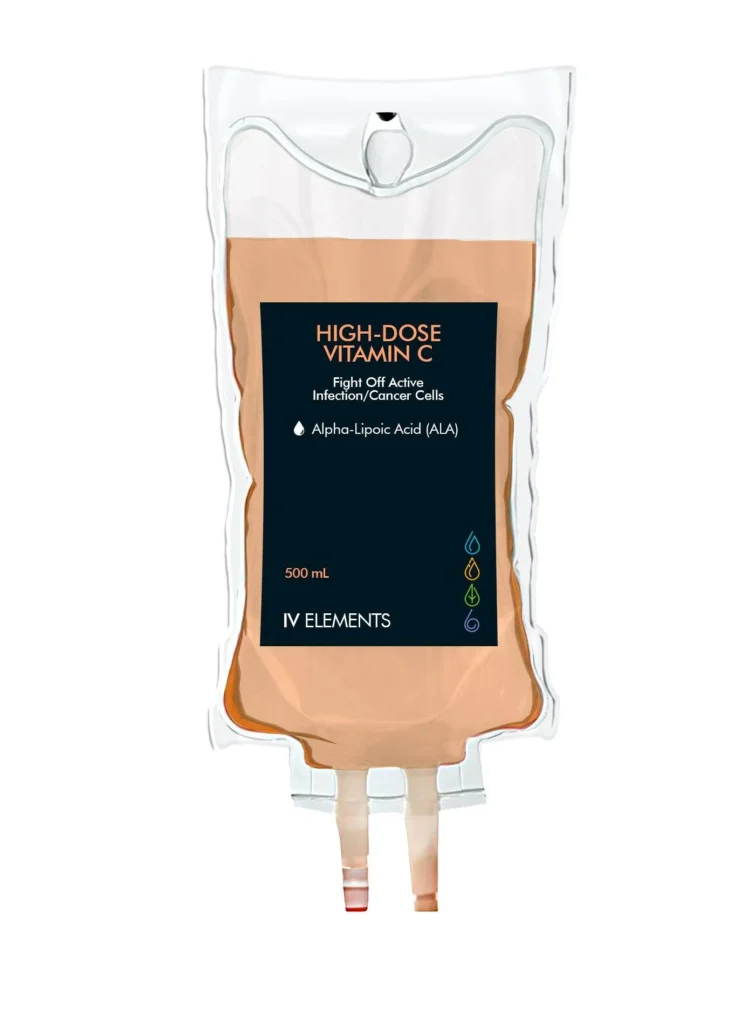
Vitamin C IV therapy delivers vitamin C straight into a vein, so blood levels climb far higher than any pill can push them. That part is well established. Whether those higher levels keep a healthy person from getting sick is a different question, and the research on it is thinner than most drip menus suggest. An immune IV makes the most sense when bloodwork shows you're actually low in something, or when your gut can't absorb nutrients well. That's why we test before we infuse.
This guide covers what a high dose vitamin C IV does in the body, what the cold and flu research actually found, who shouldn't have one, and how an immune IV works at our clinic in South Portland, Maine.
What Does a Vitamin C IV Actually Do?
Your gut limits how much vitamin C gets into your blood. Take more by mouth and a smaller share is absorbed, so blood levels level off no matter how many tablets you swallow. An IV skips that step.
A National Institutes of Health study measured this directly in healthy volunteers. The same 1.25 gram dose produced a peak blood level about six and a half times higher by IV than by mouth, and the gap grew as the dose went up (Padayatty et al., Annals of Internal Medicine, 2004). The National Cancer Institute's summary says the same thing in plain terms: given by IV, vitamin C "can reach much higher levels in the blood than when it is taken by mouth" (NCI PDQ, Intravenous Vitamin C).
So the mechanical argument for an IV is real. Higher blood levels, reached faster, without depending on your digestion.
What that argument doesn't tell you is whether higher-than-normal levels do anything extra for a person whose levels were already fine. Your kidneys clear vitamin C the body isn't holding onto. If you weren't low to begin with, a lot of an infusion leaves in your urine.
Does IV Vitamin C Boost Your Immune System?
The best evidence on vitamin C and colds comes from a Cochrane review that pooled placebo-controlled trials of regular vitamin C supplements, taken by mouth every day (Hemilä and Chalker, Cochrane, 2013). It found:
- In the general population, daily vitamin C did not reduce how often people caught colds.
- It did shorten them a little. Colds in adults were 8% shorter on average.
- People under heavy physical stress were different. Marathon runners, skiers and soldiers training in subarctic conditions caught about half as many colds.
- Taking vitamin C only after symptoms started showed no consistent benefit.
Every one of those trials used oral vitamin C. None of them answers what an IV does, and you should be skeptical of any clinic that quotes the cold research as proof that its drip works. The honest summary: vitamin C matters for immune function, a true shortfall is worth correcting, and a big IV dose in someone who isn't short has not been shown to prevent illness.
Immune IVs still have a place. Know your numbers first.
When an immune IV makes more sense
- Bloodwork shows a deficiency that hasn't moved on oral supplements.
- Your gut doesn't absorb well: inflammatory bowel disease, celiac, past gut surgery, or long stretches of diarrhea.
- You're coming off an illness that wrecked your appetite and your fluid intake.
- Low energy that a basic panel never explained. Read more on how we approach fatigue, because an IV is rarely the whole answer there.
What Goes Into an Immune IV?
There's no single "immune drip." Clinics name bags after the result they hope you'll buy. These are the ingredients that come up most, and what each one is:
High dose vitamin C. Given at doses well past what the gut can absorb, which is the specific reason it goes in by vein.
Glutathione. An antioxidant your liver makes and uses in its detoxification pathways. Often given on its own or added to a nutrient bag. Our detoxification program explains where it fits.
Myers' cocktail. Magnesium, calcium, B vitamins and vitamin C together. It was developed by Dr. John Myers, a Baltimore physician, and has been used in integrative medicine for decades. It's a fixed recipe, though. We treat it as one option, not the default.
B vitamins and B12. Involved in energy metabolism and nerve function. Often low in people on metformin or long-term acid blockers.
Fluids and electrolytes. The base of nearly every bag, and usually the part people feel first.
Zinc and vitamin D get mentioned on a lot of immune menus too. Both are worth checking on a blood panel.
For the full list of infusions we offer, see our IV therapy page. If you're comparing vitamin drips more broadly, our guide to vitamin IV drips covers the rest of the menu.
Who Should Not Get High Dose Vitamin C by IV?
This is the section most drip menus leave out. The National Cancer Institute lists three groups for whom IV vitamin C can cause serious harm (NCI PDQ):
- G6PD deficiency. An inherited enzyme problem. High doses of vitamin C can break down red blood cells (hemolysis). A blood test finds it.
- Kidney disease, or a history of kidney stones. Kidney failure has been reported after IV vitamin C in people with existing kidney disease, and people prone to stones should not receive it.
- Hemochromatosis. Vitamin C helps the body absorb and use iron, which is the last thing you want when you already store too much.
IV fluids also carry risk for anyone with heart failure or a condition where fluid volume is managed carefully. And some infusions interact with medications.
None of that is screened at a walk-in drip bar, because there's no bloodwork. You pick a bag by its name and someone runs it.
One more distinction. High dose IV vitamin C is also studied in cancer care, and much of the research you'll find online comes from that setting. The FDA has not approved IV vitamin C as a cancer treatment. Anything to do with cancer belongs with your oncology team, and this guide isn't about it.
How We Do Immune IV Therapy in South Portland
Med Matrix is a functional medicine clinic, and IV therapy sits inside that care, ordered off your labs.
New patients start with an 80+ biomarker blood panel and an InBody 770 body composition scan, then sit down with a provider for a full 60 minutes to go through every result. For IV therapy, the markers that matter most are B12 and folate, vitamin D, ferritin and iron studies, magnesium, kidney function, and a complete blood count. Our post on advanced blood testing explains what a panel like that checks.
Two things come out of that visit. First, we know which nutrients you're actually low in, so the infusion is built around your results. Second, we often find why you were low in the first place. An IV corrects a number. Finding the cause is what keeps it from sliding back, and that's the core of functional medicine.
Sometimes the panel says you don't need an infusion at all. We'll tell you that.
Kirsten, one of our patients, came in feeling run down at the end of winter and now gets IV therapy as part of her monthly routine. "Immediately I feel better, I sleep better, I exercise better. I notice a huge difference," she said in her patient story. That's one person's experience, not a promise, and it's the reason we check labs before deciding whether an IV fits you.
What it costs
Infusion pricing depends on what goes in the bag and whether it's a single session or a series, so we quote it directly. The starting point is fixed: onboarding is $1,500 and covers the 80+ biomarker panel, the InBody scan and the 60-minute provider consultation. Follow-up visits are $275. We're cash-pay and accept HSA, FSA and CareCredit.
We have one clinic, at 198 Maine Mall Road in South Portland, and see patients from Portland, Scarborough, Westbrook, Falmouth and across southern Maine and New Hampshire. If you're local and comparing options, our page on IV therapy in South Portland covers what to look for.
Get your free guide and a $100 voucher toward your first visit, and we'll start with your labs.