Is Compounded Semaglutide Safe? What the FDA Warnings Mean

Forbes Health Advisory Board · Naturopathic Doctor · Updated October 12, 2026
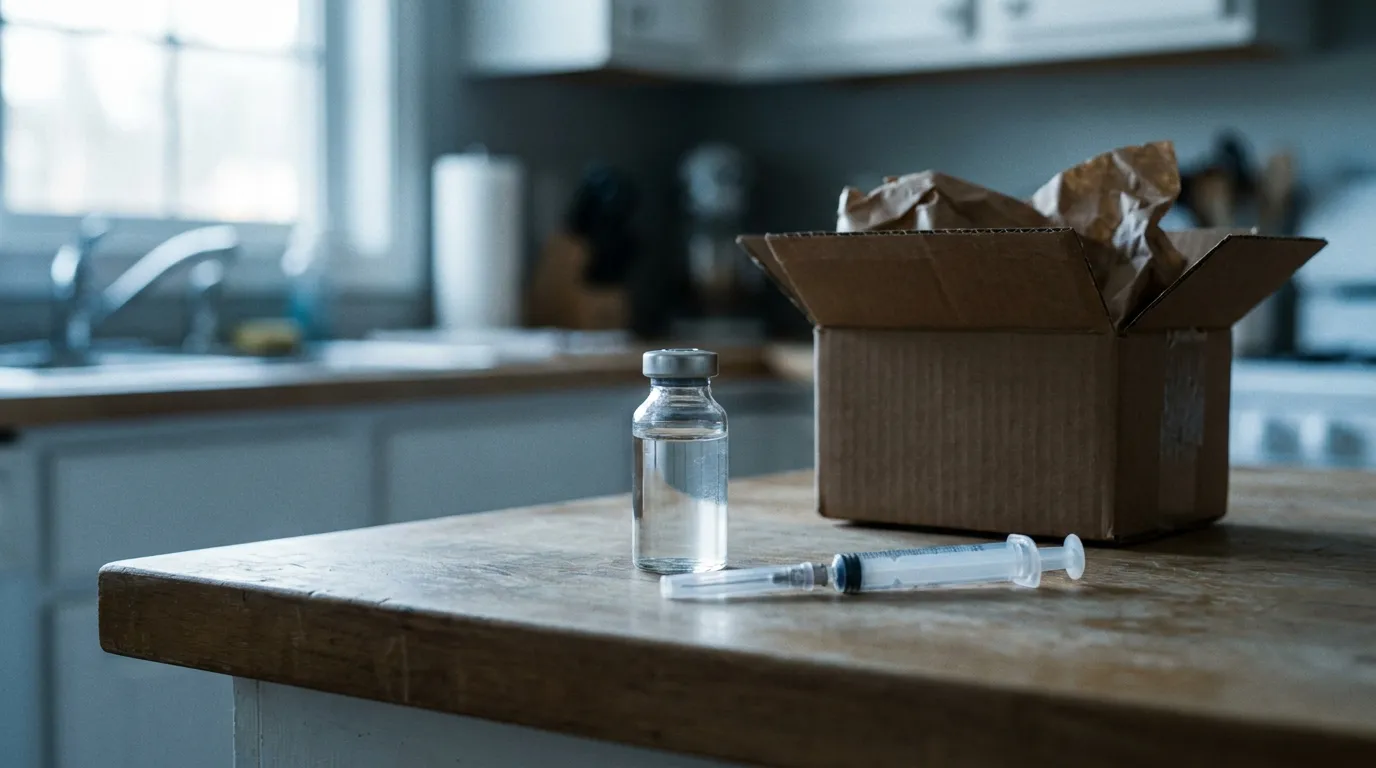
The ad finds you eventually. Semaglutide for a fraction of the pharmacy price, no insurance needed, shipped to your door in days. You fill out a short quiz, someone you never meet approves it, and a vial shows up in the mail. No blood draw. No follow-up visit. Often, no way to find out which pharmacy actually made the medication you're about to inject.
The FDA has been watching the same ads. During the week of June 15, 2026, the agency sent 25 warning letters to telehealth companies over misleading claims about compounded GLP-1 products. That was the third enforcement wave in about a year, following roughly 80 letters in September 2025 and around 30 more in March 2026. Three rounds of letters in twelve months tells you the agency sees an ongoing problem, and it isn't finished.
If one of those offers has tempted you, or you're already using one, this is worth ten minutes. What the letters say, the red flags worth checking before you buy any GLP-1 online, and how a supervised local program actually differs.
What the FDA Warning Letters Actually Say
Two complaints repeat across all three waves.
The first is the word "same." Companies keep marketing compounded semaglutide as if it were identical to the FDA-approved drug. It isn't. A compounded version is made by a compounding pharmacy and never goes through FDA review for safety, effectiveness, or quality. The agency has also clarified that compounders can't legally produce what amounts to "essentially a copy" of a commercially available drug. So a seller claiming their vial is the same as the brand is making a claim the product can't legally support.
The second is silence about sourcing. Many of the flagged companies never disclose which pharmacy compounded the medication they sell. You know the price and the shipping window. You don't know who made your medication, where they made it, or under what oversight.
Neither complaint is about weight loss medication itself. GLP-1s are among the most studied weight loss tools in modern medicine, and we cover the full landscape in our guide to GLP-1 medications. The letters are about how these particular products get marketed and made.
Why the FDA Keeps Coming Back to This
People are getting hurt. By early 2025, the agency had received more than 455 adverse event reports linked to compounded semaglutide and more than 320 linked to compounded tirzepatide. Many of those reports traced back to dosing errors, usually patients drawing their own doses from multidose vials at home, with nobody showing them how and nobody checking their math.
The enforcement has been building for over a year. In February 2026, FDA Commissioner Makary announced targeted enforcement against misleading GLP-1 advertising, unauthorized importation, and pharmacies shipping large volumes of prescriptions across state lines. In May 2026, the agency proposed permanently barring large-scale compounding of semaglutide, tirzepatide, and liraglutide.
The public comment period on that proposal closed on July 30, 2026, having been extended once from the original June deadline. Now the FDA reviews what was filed and decides whether to finalize. That decision has not been made yet, and no timeline for it has been published, so anyone telling you compounded GLP-1s are banned as of today is ahead of the facts. What is fair to say is that the proposal exists, the comment window has closed, and the direction of travel has been consistent across three enforcement waves.
Compounded GLP-1s are on a narrowing path. The companies marketing them loudest are the ones collecting the warning letters.
The Compounded Market Did Not Disappear When the Shortage Ended
A common assumption is that compounded GLP-1s were a temporary workaround during the shortages, and that they went away once supply recovered. Researchers checked, and they had not.
A secret-shopper study published in JAMA Health Forum on July 17, 2026 by a University of Colorado Anschutz team contacted weight-loss clinics and med spas across Oklahoma and West Virginia. They found 75 businesses still offering compounded semaglutide or tirzepatide after the shortages ended. Of the 23 compounding pharmacies supplying them, 4 did not hold the license required for sterile compounding, and several carried recent disciplinary actions or FDA warning letters tied to sterile compounding specifically.
Read that carefully, because it is narrower than a scare headline. The researchers looked at marketing and sourcing, not at whether anyone was harmed. What they documented is an oversight gap: businesses selling an injectable medication sourced from pharmacies that in some cases were not licensed to make injectable medication safely. Sterile compounding is its own licensure for a reason, since anything going into your body by needle has to be made in conditions that keep it sterile.
There is a second finding worth knowing, with a caveat attached. A 2026 analysis in Expert Opinion on Drug Safety identified a previously unrecognized impurity in mass-compounded tirzepatide products that had vitamin B12 added, formed by a reaction between the tirzepatide and certain B12 analogs. Its effects in people have not been studied. The caveat: that finding was publicized through an open letter from Eli Lilly, which manufactures the brand-name version and has an obvious commercial interest here. The underlying analysis is peer-reviewed and stands on its own, and we mention it because it is one more reason to know who made your medication, not because a manufacturer says so.
None of this means every compounded product is dangerous. Plenty of people have used them without incident, often for real cost reasons. It means the question worth asking is not whether compounding is legal. It is whether the specific pharmacy behind your specific vial is licensed for sterile work and willing to be named.
September 2026: FDA Says a Vitamin in the Vial Does Not Make It a Different Drug
On September 18, 2026, the FDA sent a warning letter to a compounding pharmacy in Houston over three products: semaglutide mixed with cyanocobalamin (vitamin B12), and two strengths of tirzepatide mixed with niacinamide (a form of vitamin B3). The agency wrote that they "appear to be essentially copies of FDA-approved semaglutide and tirzepatide products."
The added vitamin is the whole question. A pharmacy can't regularly compound what is essentially a copy of a commercially available drug, so the letter turns on whether B12 or niacinamide makes the product a different one. For these three products the FDA's answer was no. In its words: "The volume of products you are producing suggests that differences between products you are compounding and the FDA-approved products are pretextual."
The letter also looks at the prescriptions behind those products. It describes "orders/prescriptions with purported prescriber determinations of 'significant difference' that appear to be repeated verbatim across many records." And as an example of what undermines a prescriber's individual judgment, it names "third-party technology platforms that provide prescribers with pre-selected menu options for choosing a statement of significant difference."
Two limits on what this means. A warning letter is the FDA's allegation, and the pharmacy gets fifteen working days to respond. It's one pharmacy's products, assessed under the patient-specific compounding rules (section 503A), which is a separate track from the large-scale compounding proposal described above. It doesn't make compounded GLP-1s illegal, and it says nothing about any one patient's prescription.
What it gives you is a more specific question. If your vial lists semaglutide or tirzepatide with B12 or niacinamide, ask your prescriber what the added ingredient is for in your case, and which pharmacy made it.
Red Flags When Buying GLP-1s Online
You don't need a pharmacy degree to vet a GLP-1 seller. A few questions do most of the work.
- No labs before prescribing. Weight gain has drivers: thyroid dysfunction, insulin resistance, hormone imbalances, chronic inflammation. If nobody measured anything before writing the prescription, nobody knows whether the medication fits your biology or what it's about to paper over.
- A quiz instead of a provider. A questionnaire reviewed in minutes by someone you'll never speak to is not a medical evaluation.
- Marketing that calls the product "the same as" Ozempic or Wegovy. That exact claim is what the FDA keeps citing in its letters.
- No pharmacy named anywhere on the site. A legitimate program can tell you exactly where your medication comes from. If a seller won't, that silence is the answer.
- A price that only works if corners are cut. Real medication, real oversight, and real follow-up cost money. We broke down honest numbers in our tirzepatide cost guide.
- Nobody plans to see you again. No scheduled labs, no dose check-ins, no one tracking whether you're losing fat or losing muscle.
The same vetting logic applies to clinics you can walk into, and the JAMA study above is the reason it matters. We published a checklist for vetting any med spa or clinic that covers the licensing and oversight questions in more detail, and our own med spa services run under the same medical oversight as everything else here rather than as a separate retail counter.
One question does more work than the rest: which pharmacy compounded this, and are they licensed for sterile compounding? Ask it out loud. A program that cannot answer has told you something.
How a Supervised Local Program Differs
Start with the vial itself. Med Matrix prescribes FDA-approved GLP-1 medications, so the sourcing question never comes up. You can name the drug, the manufacturer, and the provider who prescribed it.
Sophia Viner, DNP, APRN, FMCP-M, leads weight loss care here, and she builds and monitors every protocol personally. Before either of them writes a prescription, you get an 80+ biomarker panel through our advanced testing. That panel checks full thyroid function, fasting insulin, HbA1c, hormones, and inflammation markers, because if your thyroid or adrenal function is driving the weight, that needs treatment too, not just appetite suppression stacked on top of it. The same goes for an underlying hormone imbalance, which is easy to miss when the only tool on the table is an injection.
Then the medication decision gets made against your labs. Semaglutide and tirzepatide work differently, and which one fits depends on your results, not on which vial is cheapest this month. Our semaglutide vs tirzepatide comparison walks through the differences, and there's now a daily pill option as well, which we covered in GLP-1 pills vs injections.
Once you start, someone is actually watching. Doses begin low and increase gradually to limit nausea. An InBody 770 scan at each visit tracks fat mass and muscle mass separately, so rapid weight loss doesn't quietly cost you muscle. Questions between visits go to your care team, and dose adjustments happen when your body needs them. That structure is the core of our semaglutide weight loss program.
What Happens If the Compounding Ban Is Finalized
If you're currently using a compounded GLP-1 from an online seller, the practical question is your supply. The comment period closed on July 30, 2026, and the FDA has not said when it will decide. Should the agency finalize its exclusion proposal, large-scale compounded versions of semaglutide, tirzepatide, and liraglutide would go away, and patients using them would need to transition to FDA-approved versions. Waiting until your supplier stops shipping is the worst time to start figuring that out.
That transition deserves supervision. Guessing at an equivalent dose on your own repeats the exact at-home pattern behind those hundreds of adverse event reports. A provider can look at your current dose, your labs, and your response so far, then move you over deliberately. We wrote about what a supervised change looks like in switching from semaglutide to tirzepatide, and the same principle applies to any product change.
How Med Matrix Approaches GLP-1 Weight Loss
Every patient moves through the same process, whether weight is the whole story or one piece of it.
It starts with a free discovery call, where a patient coordinator hears what you're dealing with and matches you with the right provider. Then testing: the 80+ biomarker panel, a full body composition scan, and in-depth health questionnaires. The medical team reviews everything together, cross-referencing your symptoms with your biomarker patterns to find what's actually driving the weight. After that, you get a full hour with your provider going over every result, and the plan gets built with you in the room. From there it's ongoing support: labs rechecked, doses adjusted as your body responds, direct access to the care team in between.
Onboarding runs $1,500 all-in, covering labs, the scan, provider prep, and the one-hour consultation, and new patients receive a $100 voucher toward the first visit. Nobody mails you a vial and disappears. And if medication turns out to be the wrong tool for you, our broader weight loss treatment options come from the same lab-first thinking that anchors our functional medicine practice.
Frequently Asked Questions
Is compounded semaglutide safe?
It depends entirely on who made it, which is the honest answer and also the frustrating one. Compounded drugs are not FDA-approved, and the FDA states plainly that it does not verify the safety, effectiveness, or quality of a compounded drug before it reaches the market. Quality therefore varies by pharmacy. The July 2026 JAMA Health Forum study found that 4 of 23 pharmacies supplying compounded GLP-1s to clinics in two states lacked the license required for sterile compounding. Before using any compounded version, ask which pharmacy made it, whether that pharmacy holds sterile compounding licensure, and who is supervising your dose.
Is compounded semaglutide illegal?
Compounding itself is a legal part of pharmacy practice in limited circumstances. What the FDA has said is that compounders can't produce essentially a copy of a commercially available drug, and it has proposed permanently barring large-scale compounding of semaglutide, tirzepatide, and liraglutide. The public comment period on that proposal closed on July 30, 2026. The agency has not announced a final decision, so compounded versions are not banned as of this writing. The warning letters target something narrower: misleading marketing, including "same as the brand" claims and sellers that never disclose which pharmacy made the product.
How do I find out who made my compounded GLP-1?
Ask the seller directly which pharmacy compounded it and where that pharmacy is licensed. A legitimate program answers without hesitation. Failure to disclose the compounding pharmacy is one of the specific issues the FDA keeps citing in its warning letters, so if you can't get a straight answer, treat that as your answer.
Is a compounded GLP-1 the same as the FDA-approved drug?
No. Compounded versions never go through FDA review for safety, effectiveness, or quality, and marketing them as "the same" is one of the claims the warning letters specifically cite. By early 2025, the FDA had logged more than 455 adverse event reports linked to compounded semaglutide alone, many involving at-home dosing errors from multidose vials.
What should I do if I'm already using a compounded GLP-1 from an online company?
Get labs and a provider involved before you change anything. A supervised program can evaluate where you are now, confirm the medication and dose that fit your labs, and manage a transition to an FDA-approved version if that's the right move. Changing doses or products on your own is the pattern behind most of the adverse event reports the FDA has collected.
Does Med Matrix prescribe compounded semaglutide?
No. We prescribe FDA-approved GLP-1 medications, and every prescription follows an 80+ biomarker panel, a body composition scan, and a full one-hour provider consultation. The sourcing and dosing problems named in the FDA's warning letters don't apply to our program, and a finalized compounding ban wouldn't disrupt supply for our patients.
If the online offers keep pulling at you because they seem like the only affordable path, at least get a real workup first, so you know what you're actually treating. Start Feeling Like Yourself Again with lab work, a provider who reads it with you, and medication that comes from a source you can name.